Wednesday, October 7, 2026ArchiveSearchAsk the paper

The Computomatix Times

All the posts fit to save — curated from @computomatix's bookmarks & likes on X

Search

49 stories

Bryan Johnson Details Sleep Metrics and a Five-Point Sleep Routine

Bryan Johnson Details Sleep Metrics and a Five-Point Sleep Routine

Bryan Johnson shares his latest sleep data, including over four restorative hours and a resting heart rate of 42, and lists five habits: finishing food four hours before bed, screens off an hour before, a fixed bedtime, morning light and daily exercise. He argues sleep underpins most other life outcomes.

Original post · 1 min read
I promise you that if you build your life around sleep, everything you care about will get better.

High quality sleep is like a daily dose of the world’s best longevity drug.

Sleep is key for...

+ will power
+ self control
+ sex
+ mood
+ recovery
+ focus
+ appearance
+ work
+ life

My sleep data last night

+ 4+ hr restorative
+ 53% total sleep restorative
+ resting heart rate 42 (elite athlete)
+ no sleep stress
+ no wake events
+ asleep in 2 min

It feels incredible. Gives me the powers of stamina, focus, motivation, discipline and love.

For fun, I made a sleep facts nutrition panel.

The sleep crash course:

1. Final food 4 hours before bed
2. Screens off 60 min before bed
3. Same bed time every single day
4. Light in eyes in am
5. Exercise daily, even if for 20 min

Here’s the key: make these habits non-negotiable in your life.

Build your life around sleep and I promise everything you care about will get better.
♥ 3.9K · ⟲ 270 · 👁 309.9KView on X ↗

Cardiologist Lists Key Metabolic Health Markers to Track After 40

Cardiologist Afshine Emrani outlines blood markers he tracks beyond standard physicals, including fasting insulin, HOMA-IR, HbA1c, triglyceride-to-HDL ratio and ApoB, with target ranges for each. The post argues these tests detect metabolic decline years earlier than typical panels.

Original post · 6 min read
I'm a cardiologist. After 40, stop guessing about your health. These numbers tell you whether you're building a long, vibrant life — or quietly declining without knowing it.

I run these on myself. I run them on every patient I care about. Most are cheap bloodwork. All are available now. And together, they paint a picture no standard annual physical will ever give you. Print this. Bring it to your next appointment. Your 60-year-old self will thank you.
ꟷꟷꟷ
𝗙𝗮𝘀𝘁𝗶𝗻𝗴 𝗜𝗻𝘀𝘂𝗹𝗶𝗻
Target: below 5 μIU/mL. Ideal: 3-4.
This is the 10-year warning bell your standard panel completely misses. Your glucose and A1c can look "normal" for a decade while your pancreas is working overtime to keep them there. Fasting insulin catches insulin resistance 5-10 years before your A1c moves. By the time A1c rises, the damage is already extensive.

𝗛𝗢𝗠𝗔-𝗜𝗥
Target: below 1.0.
Calculated from fasting insulin and fasting glucose. The single best measure of insulin sensitivity. Above 1.0 and your metabolism is already under strain. Above 2.5 and you're insulin resistant — even if every other number looks fine.

𝗛𝗯𝗔𝟭𝗰
Target: below 5.4%.
Not below 5.7% — that's the threshold where medicine calls you "prediabetic." By then you've been metabolically compromised for years. Optimal is below 5.4%. Blood sugar mastery is longevity mastery.

𝗧𝗿𝗶𝗴𝗹𝘆𝗰𝗲𝗿𝗶𝗱𝗲 : 𝗛𝗗𝗟 𝗥𝗮𝘁𝗶𝗼
Target: below 2. Ideal: below 1.
Your metabolic health crystal ball. This ratio predicts insulin resistance, cardiovascular risk, and metabolic syndrome better than any single lipid number alone. A ratio above 3.5 is a red flag regardless of what your total cholesterol says.

𝗔𝗽𝗼𝗕
Target: below 80 mg/dL for moderate risk. Below 60 for high risk.
I've written about this extensively. ApoB counts every atherogenic particle hitting your artery walls. A 2024 analysis found 54% of patients had dangerous levels that standard LDL testing completely missed. If you only know your LDL, you're driving with one eye closed.

𝗟𝗽(𝗮)
Test once in your lifetime.
100% genetic. 1 in 5 Americans are elevated. Triples heart attack risk independently of everything else on this list. Diet and exercise cannot lower it. The 2026 ACC/AHA guidelines now recommend everyone be tested. Most never have been.

𝗵𝘀-𝗖𝗥𝗣
Target: below 1.0 mg/L.
You can have perfect cholesterol and inflamed arteries silently preparing to rupture. hs-CRP measures the fire behind the plaque. The JUPITER trial proved that finding and treating inflammation saves lives — even when lipids look fine. If this number is elevated, your mouth, your gut, your metabolic health, and your visceral fat are the first places to investigate.

𝗩𝗶𝘁𝗮𝗺𝗶𝗻 𝗗
Target: 50-80 ng/mL.
Not the bare minimum of 30 your doctor accepts. Suboptimal vitamin D is linked to higher inflammation, weaker immunity, increased cardiovascular events, worse mood, and poorer outcomes across nearly every disease I treat. Supplement D3 with K2 — without K2, calcium deposits in your arteries instead of your bones.

𝗧𝗲𝘀𝘁𝗼𝘀𝘁𝗲𝗿𝗼𝗻𝗲 (𝗧𝗼𝘁𝗮𝗹 + 𝗙𝗿𝗲𝗲)
Men: optimal range 600-1000+ ng/dL total.
Declining testosterone is an independent predictor of cardiovascular death in men. It's tied to insulin resistance, arterial stiffness, visceral fat accumulation, and systemic inflammation. DHEA-S drops 10-20% every decade after 30. Tracking these isn't about vanity — it's evaluating your body's systemic resilience.

𝗕𝗹𝗼𝗼𝗱 𝗣𝗿𝗲𝘀𝘀𝘂𝗿𝗲
Target: below 120/80. Aim closer to 110/70.
Every point above optimal is cumulative arterial damage. Buy a home cuff. Measure morning and evening, seated quietly for five minutes, arm at heart level. White-coat readings in the office miss what's really happening. The smartest $40 investment in cardiac self-care.

𝗩𝗢𝟮 𝗠𝗮𝘅
Men over 40: above 40 mL/kg/min. Women over 40: above 35.
Cardiorespiratory fitness is the single strongest predictor of all-cause mortality — stronger than smoking, diabetes, or heart disease as individual risk factors. A landmark study in JAMA found that extreme fitness was associated with the lowest mortality with no upper limit of benefit. You can estimate VO2 max with a timed mile, a rower test, or a wearable. Get faster every year.

𝗡𝘂𝗺𝗯𝗲𝗿 𝗼𝗳 𝗠𝗲𝗱𝗶𝗰𝗮𝘁𝗶𝗼𝗻𝘀
Target: as few as possible.
Every medication you're on should be earning its place. I just wrote about five commonly prescribed drugs that do more harm than good with long-term use. Bring your full medication list to every appointment. Ask: "Do I still need this?" Deprescribing is one of the most powerful and underused tools in medicine.
ꟷꟷꟷ

Thirteen numbers. Most available through cheap bloodwork and simple tests. Get them once or twice a year. Here's what I want you to understand: these numbers don't just tell you where you are. They tell you where you're heading. A fasting insulin of 8 today becomes diabetes in five years. An ApoB of 120 today becomes a heart attack in ten. An hs-CRP of 3 today means your arteries are inflamed right now — regardless of how healthy you feel. The standard annual physical checks a fraction of these. It was designed to find disease that's already there. This panel finds the disease that's coming — years before it arrives.

What gets measured gets improved. Optimize with the foundation I write about every week on this platform:
Zone 2 cardio plus resistance training 3-4 times per week. High-protein whole-food nutrition. Sleep 7-9 hours — non-negotiable. Morning sunlight. Stress management. And the targeted supplements I've covered in detail — creatine, magnesium, CoQ10, D3+K2, glycine, omega-3, psyllium husk.
The breakthroughs coming in the next decade — gene editing for cholesterol, cellular reprogramming, senolytics that clear senescent "zombie" cells driving inflammation and aging, GLP-1 drugs rewriting metabolic medicine — will be most powerful for people who've already built the metabolic foundation to receive them.

The future of medicine is personalized. But it starts with knowing your numbers today. Print this list. Book the bloodwork. Own the data. Prevention isn't passive. It's the most aggressive thing you can do for the decades ahead.
♥ 6.0K · ⟲ 1.2K · 👁 901.1KView on X ↗

Dan Go Compares Apple Watch, Whoop, Oura and Fitbit Air Over One Week

Dan Go Compares Apple Watch, Whoop, Oura and Fitbit Air Over One Week

Dan Go reports wearing an Apple Watch, Whoop, Oura and Fitbit Air simultaneously for a week and found the data diverged more than expected. The post is a teaser with the full findings presented in attached media.

Original post · 1 min read
I wore an Apple Watch, Whoop, Oura, and Fitbit Air at the same time for a week.

I expected the data to be similar but did not expect this.

Here's what every wearable owner needs to know:
♥ 10.1K · ⟲ 795 · 👁 7.0MView on X ↗

Berkeley Researchers Release Corpus of 2.2 Million US Local Laws

Berkeley Researchers Release Corpus of 2.2 Million US Local Laws

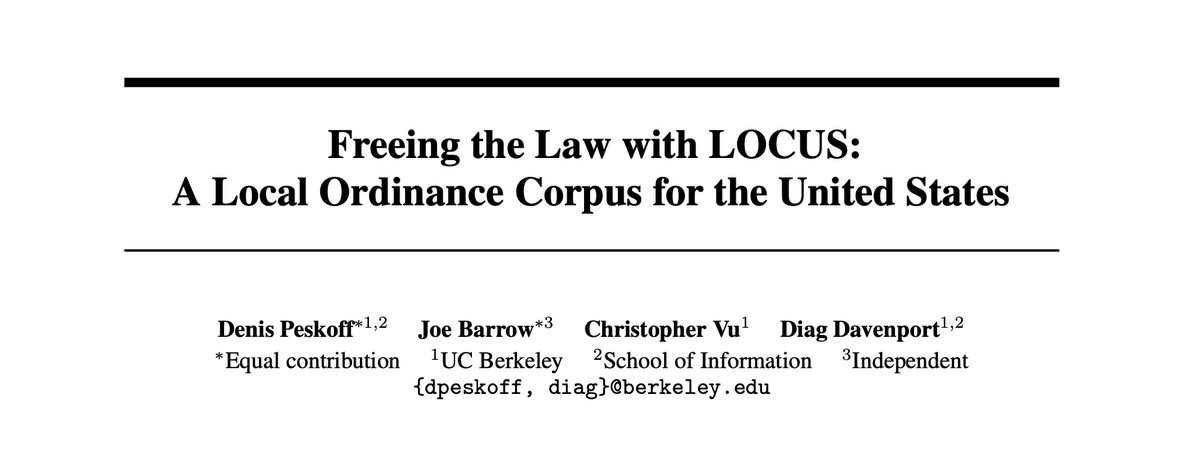
Joe Barrow and Denis Peskoff of UC Berkeley announce a paper releasing a large corpus of nearly all publicly accessible city and county laws in America, totaling about 2.2 million laws. The dataset is positioned as making scattered legal texts usable.

Original post · 1 min read
New paper: every law in America is technically public. But not really, until now!

With @DenisPeskoff at UC Berkeley, we built a corpus of ~every publicly accessibly city and county law, and released a huge chunk of it!

2.2 million laws, you're (probably) covered in it!

🧵
♥ 6.7K · ⟲ 1.4K · 👁 1.2MView on X ↗

Midjourney Unveils Ultrasound Full-Body Scanner in 60 Seconds

Kydo describes Midjourney's new ultrasound-based imaging machine, which scans the full body in about 60 seconds with MRI-level resolution and no radiation, using a warm water pool and half a million sensors. The post highlights that the team building it is only nine people.

Original post · 1 min read
🤯 Midjourney -- yes, the AI image company -- just shipped a brand new type of imaging machine. 🤯

- 100x faster than an MRI.
- 10x cheaper.

Full body scanned in 60 seconds instead of an hour in a tube. Ultrasound based, MRI-level resolution.

And it's real -- not a concept, a working machine. You step into a shallow pool of warm water, a ring of half a million sensors sends sound through your body from every angle, and ~60 seconds later you have a 3D map of your insides down to a fraction of a millimeter. No radiation, no tube, no lying still.

They're not even building it as a hospital machine -- they're building a spa. The scan is a side-effect of a place you'd want to hang out anyway.

Lastly, it is built by 9 people. NINE PEOPLE.

You can just do things.
Midjourney @midjourney
A technical dive inside our new "Midjourney Scanner"
♥ 8.7K · ⟲ 712 · 👁 1.3MView on X ↗

AI Researcher Who Is a Brain Tumor Patient Shares Symptom-Diagnosis Method

AI Researcher Who Is a Brain Tumor Patient Shares Symptom-Diagnosis Method

Amy Deng, an AI researcher and brain tumor patient, says she used AI models to identify the cause of her fatigue faster than her primary care doctor, and shares a method she believes others can apply to their own symptoms.

Original post · 1 min read
I’m an AI researcher turned brain tumor patient, and recently I used the models to crack my mystery fatigue faster than my PCP could.
I believe everyone can do the same with their own symptoms. Here’s how:
♥ 3.4K · ⟲ 323 · 👁 845.0KView on X ↗

Runner Describes Stable Angina Symptoms and Warns of Ignoring Chest Discomfort

Runner Describes Stable Angina Symptoms and Warns of Ignoring Chest Discomfort

Karthik describes experiencing exertion-related chest discomfort that he initially ignored, later identified as stable angina linked to undetected cholesterol problems, and urges readers not to dismiss such symptoms, citing a linked news story about a man who waited too long.

Original post · 2 min read
Please, please read this news thoroughly, for your own sake. I experienced chest discomfort only when I started to run at higher speeds, and it subsided when I just walked or was at rest. That's called 'stable angina' (or stress angina). Unhealthy cholesterol levels, high(er) blood pressure, diabetes are some of the causes for this - in my case, it was unhealthy cholesterol levels, long undetected, while my blood pressure, conversely, continues to be on the lower side because of my running... which my doctor confirmed as healthy since I wasn't experiencing associated fatigue. And I'm prediabetic too, as I discovered during the blood tests for my procedure.

Rana seems to have carried his 'chest discomfort' for 3 days, after which it was too late for any intervention. This is a thin line for most people because it is very easy to mistake a 'discomfort' for stomach acidity, physical symptoms like muscle strain, or even 'heartburn' (which is quite literal!). In a way, I obsess over my daily run more so for this - to include a reasonably stress-inducing activity every day (since there is none) to see if I feel completely alright with it. This helped me identify that I did experience something unusual and it needed medical intervention. And since I felt normal if I stopped the source of stress (running at a faster speed), I ignored it for about a week. But since it persisted exactly only when I stressed, I realized that I was going through something predictably unusual and that needed a check. This 'discomfort' was not a pain at all, ironically. It felt, at best, as a steady tingling sensation on my shoulders and neck - nothing close to my heart! All the more reason to ignore it. But it occurred every single time I stressed myself by increasing the speed of my run, and subsided if I just walked at a slower pace.

Related reading - Two blocks and a second chance tinyurl.com/2stents
♥ 819 · ⟲ 242 · 👁 145.4KView on X ↗

Bryan Johnson Describes Psilocybin Dose Reversing Woman's Alzheimer's Symptoms

Bryan Johnson Describes Psilocybin Dose Reversing Woman's Alzheimer's Symptoms

Bryan Johnson reports that an elderly woman with ten years of Alzheimer's took a single 5-gram psilocybin dose and briefly regained speech, recognition, bladder control and mobility, with gains reportedly lasting weeks. The post is an anecdote with a photo and no cited study.

Original post · 1 min read
This is biblical.

A woman in her eighties. Ten years into Alzheimer's. Hadn't spoken a full sentence in five years.

Takes one, 5 gram dose of psilocybin.

She slept 19 hours and woke up and spoke for hours about her life, recognized family and held real conversations. She regained bladder control after five years, walked on her own. and dressed herself. Gains held for weeks.
♥ 74.6K · ⟲ 8.5K · 👁 4.5MView on X ↗

Hassabis Says AI Could Cure Disease in Ten Years; Isomorphic Raises $2.1B

Ole Lehmann outlines Demis Hassabis's plan to use AI for drug discovery, from AlphaFold's protein structure work to Isomorphic Labs' new $2.1 billion round led by Thrive Capital. The post says its first AI-designed cancer drug enters human trials this year.

Original post · 3 min read
Demis Hassabis says he can cure every disease in 10 years.

Most people roll their eyes when they hear this, but I don't.

Demis is the guy who just won the Nobel Prize for solving protein folding with AI (a problem biologists had been stuck on for 50 years).

But that was just one milestone in his much grander plan.

In 2010, he founded DeepMind with a 2-part mission: "solve intelligence, then use it to solve everything else."

Step 1: make AI good enough to do real science.
Step 2: point that AI at humanity's biggest problems.

Step one was AlphaFold.

He used AI to figure out the 3D shape of every protein in nature (which is basically what every drug attaches to).

Demis said it would have taken "a billion years of PhD time" to do by hand.

Step two is curing all disease.

And as of today, step two is fully funded.

Isomorphic Labs (his AI drug discovery company inside Google) just raised $2.1B led by Thrive Capital.

Here's where the money goes and what Demis thinks happens next:

> Drug discovery currently takes 5-10 years and costs billions per drug. That math is why most diseases don't have good treatments today.

> AI fixes the math. Their drug design engine compresses development from years to months. Maybe weeks.

> Isomorphic's first AI-designed cancer drug enters human trials this year.

> Their pipeline expands beyond the current 17 programs across cancer, immune diseases, and heart disease into more health domains.

> The endgame is personalized medicine: drugs designed overnight for your specific biology and your specific disease.

That last one is the whole point.

Today's drugs are mass-produced for an "average" patient who doesn't really exist.

So most existing treatments work inconsistently from person to person, and most rare diseases never get a treatment at all (no market = no drug).

When drug design gets fast and cheap, that whole calculus flips.

Cancer variants get drugs designed for that specific variant, rare diseases get treatments because economics stop mattering, and drug-resistant infections get new drugs faster than they can evolve.

That's what curing every disease actually looks like.

Now imagine what your life looks like in 2036.

A doctor draws your blood, sequences your genome, sends your disease profile to an AI.

By morning the AI has designed a custom drug for your specific biology.

Side effects, dosage, drug interactions all worked out before you take the first pill.

You and your kids never see a cancer ward.

That's what $2.1B is buying today.

Demis was right about AlphaFold.

If you consider the possibility that he's right again, every disease alive today is on borrowed time.
Demis Hassabis @demishassabis
I’ve always believed the No.1 application of AI should be to improve human health.

That work started with AlphaFold, and now at @IsomorphicLabs with the mission to reimagine drug discovery and one day solve all disease!

We are turbocharging that goal with $2.1B in new funding.
♥ 1.6K · ⟲ 235 · 👁 190.1KView on X ↗

Demis Hassabis Announces $2.1 Billion Funding for Isomorphic Labs

Demis Hassabis Announces $2.1 Billion Funding for Isomorphic Labs▶

Demis Hassabis states that AI should primarily improve human health and says Isomorphic Labs, building on AlphaFold, has received $2.1 billion in new funding to reimagine drug discovery. The post is a video.

Original post · 1 min read
I’ve always believed the No.1 application of AI should be to improve human health.

That work started with AlphaFold, and now at @IsomorphicLabs with the mission to reimagine drug discovery and one day solve all disease!

We are turbocharging that goal with $2.1B in new funding.
♥ 21.1K · ⟲ 2.6K · 👁 3.2MView on X ↗

Chris Powell Promotes Hanging From a Bar to Relieve Shoulder Pain

Chris Powell Promotes Hanging From a Bar to Relieve Shoulder Pain▶

Chris Powell shares a video describing a claim from Dr. John Kirsch that hanging from a pull-up bar can reshape the acromion bone via Wolff's Law and reduce surgery need, citing a 90 of 92 patient success figure from research.

Original post · 1 min read
I wish i knew this years ago. I've had one shoulder surgery already, and refused to do another becuase the recovery was so brutal...and now that i'm doing this...thank goodness that I didnt!

Your shoulder pain might have a free solution. And it sounds almost too simple to be true.

Hanging from a bar.

According to Wolff's Law, you can actually change the shape of a bone based on the degree of mechanical loading. Dr. John Kirsch discovered that when you hang from a pull-up bar, you impose enough force to start reshaping a bone in your shoulder blade called the acromion.

Years of bad posture and the weight of our arms literally HOOK this bone, and it pinches everything in your shoulder when you raise your arms overhead.

In his research, 90 out of 92 patients avoided surgery just by hanging consistently. That is a 98% success rate. And it costs zero dollars!

Now here is the catch. You need to hang for longer than a minute to see real benefits. If you cannot hang that long yet, start with your feet still on the ground, sink into it, and build from there.

Shout out to Scott Bailey for this incredible breakdown. Give him a follow if you want to move better and feel better in your body.

#ShoulderPain #Hanging #WolffsLaw #Mobility #TransformNation #ChrisPowell 💪🏼
♥ 5.0K · ⟲ 485 · 👁 459.2KView on X ↗

Viral Thread Claims Sex Frequency Linked to Longer Lifespan

Viral Thread Claims Sex Frequency Linked to Longer Lifespan▶

LongevityLab shares a thread and video promising ten claims from a sex expert about sexual health, testosterone and lifespan. The post cites a claim that weekly sex is linked to living 49% longer, with no supporting study given.

Original post · 1 min read
The world's most-watched sex expert just broke down what's actually destroying your sex life, your testosterone & your lifespan.

Here are the 10 wildest things she exposed (THREAD):

(1/10) People who have sex once a week live 49% longer...
♥ 9.0K · ⟲ 698 · 👁 5.4MView on X ↗

IIT Madras Startup Sthyr Energy Turns Electricity Into Storable Metal

IIT Madras Startup Sthyr Energy Turns Electricity Into Storable Metal

Varun Guru highlights Sthyr Energy, a startup founded by three IIT Madras scientists, which converts electricity into metal that can be stored for months and later converted back. He argues it could enable long-duration storage and transport of renewable energy.

Original post · 1 min read
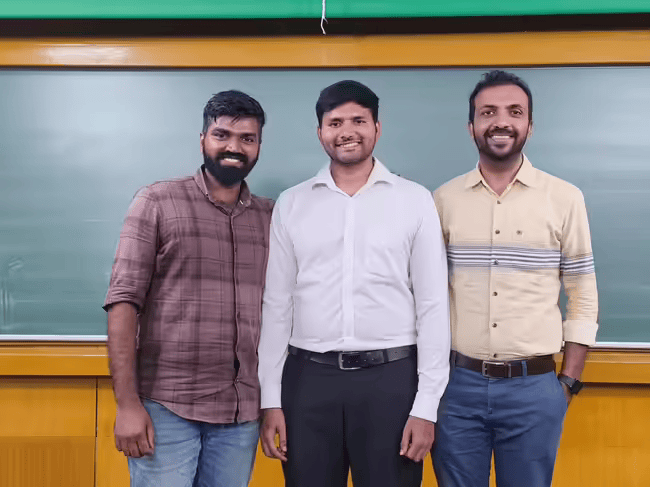
These three IIT Madras scientists are insane.

Their startup Sthyr Energy is literally turning electricity into metal.

Which you can keep for months and turn it back into electricity when you need it.

And this is incredibly huge.

Let's break this down.

Right now, India alone generates enough renewable energy to power countries like France.

But we can either use it as soon as its generated or its lost forever.

Because no one has figured out a way to store electricity for more than a few hours at scale.

If Sthyr's solution works - we won't just be able to store it for years but we could also transport it on roads - without creating any new infrastructure.

And it would change how the world uses electricity forever.
♥ 4.5K · ⟲ 1.3K · 👁 182.3KView on X ↗

Vishal Misra Traces LLM Origins to Claude Shannon's 1948 Paper

Vishal Misra argues that the 1948 Bell Labs paper by Claude Shannon, A Mathematical Theory of Communication, contains the first generative AI model and that modern LLMs trace back to it. He quotes a thread by techNmak recounting Shannon's history.

Original post · 1 min read
1/2 This 1948 paper also has the first “generative AI” model of any kind - all modern LLMs can trace back their origins to what was written in this paper.
Tech with Mak @techNmak
In 1948, a 32-year-old at Bell Labs published a paper nobody fully understood.

Engineers found it too mathematical. Mathematicians found it too engineering-focused. One prominent mathematician reviewed it negatively.

That paper - "A Mathematical Theory of Communication", became the founding document of the digital age.

The man was Claude Shannon. Father of Information Theory.

At 21, he wrote the most important master's thesis of the 20th century.

Working at MIT on an early mechanical computer, Shannon noticed its relay switches had exactly two states - open or closed. He had just taken a …
♥ 16 · ⟲ 1 · 👁 2.8KView on X ↗

Trainer Shares Fitness Tips, Leads With Advice to Quit Alcohol

A fitness coach claiming nine years of experience and 900 clients shares tips for weight loss, beginning with advice to stop drinking alcohol. The post is a short list with no further detail visible.

Original post · 1 min read
After 9 years in the gym and helping over 900 people lose between 9–36 kg, here are the best fitness tips I’ve learned:

1. Stop drinking alcohol.
♥ 6.0K · ⟲ 486 · 👁 5.5MView on X ↗

Two New Papers Sharply Lower Quantum Resource Estimates for Breaking Bitcoin Keys

Justin Drake reports two papers improving Shor's algorithm, one from Google Quantum AI and one from startup Oratomic. Google estimates about 1,000 logical qubits could break secp256k1 signatures, while Oratomic estimates about 26,000 atomic qubits could do so, both pending expert vetting.

Original post · 6 min read
Today is a monumentous day for quantum computing and cryptography. Two breakthrough papers just landed (links in next tweet). Both papers improve Shor's algorithm, infamous for cracking RSA and elliptic curve cryptography. The two results compound, optimising separate layers of the quantum stack. The results are shocking. I expect a narrative shift and a further R&D boost toward post-quantum cryptography.

The first paper is by Google Quantum AI. They tackle the (logical) Shor algorithm, tailoring it to crack Bitcoin and Ethereum signatures. The algorithm runs on ~1K logical qubits for the 256-bit elliptic curve secp256k1. Due to the low circuit depth, a fast superconducting computer would recover private keys in minutes. I'm grateful to have joined as a late paper co-author, in large part for the chance to interact with experts and the alpha gleaned from internal discussions.

The second paper is by a stealthy startup called Oratomic, with ex-Google and prominent Caltech faculty. Their starting point is Google's improvements to the logical quantum circuit. They then apply improvements at the physical layer, with tricks specific to neutral atom quantum computers. The result estimates that 26,000 atomic qubits are sufficient to break 256-bit elliptic curve signatures. This would be roughly a 40x improvement in physical qubit count over previous state-of-the-art. On the flip side, a single Shor run would take ~10 days due to the relatively slow speed of neutral atoms.

Below are my key takeaways. As a disclaimer, I am not a quantum expert. Time is needed for the results to be properly vetted. Based on my interactions with the team, I have faith the Google Quantum AI results are conservative. The Oratomic paper is much harder for me to assess, especially because of the use of more exotic qLDPC codes. I will take it with a grain of salt until the dust settles.

→ q-day: My confidence in q-day by 2032 has shot up significantly. IMO there's at least a 10% chance that by 2032 a quantum computer recovers a secp256k1 ECDSA private key from an exposed public key. While a cryptographically-relevant quantum computer (CRQC) before 2030 still feels unlikely, now is undoubtedly the time to start preparing.
→ censorship: The Google paper uses a zero-knowledge (ZK) proof to demonstrate the algorithm's existence without leaking actual optimisations. From now on, assume state-of-the-art algorithms will be censored. There may be self-censorship for moral or commercial reasons, or because of government pressure. A blackout in academic publications would be a tell-tale sign.
→ cracking time: A superconducting quantum computer, the type Google is building, could crack keys in minutes. This is because the optimised quantum circuit is just 100M Toffoli gates, which is surprisingly shallow. (Toffoli gates are hard because they require production of so-called "magic states".) Toffoli gates would consume ~10 microseconds on a superconducting platform, totalling ~1,000 sec of Shor runtime.
→ latency optimisations: Two latency optimisations bring key cracking time to single-digit minutes. The first parallelises computation across quantum devices. The second involves feeding the pubkey to the quantum computer mid-flight, after a generic setup phase.
→ fast- and slow-clock: At first approximation there are two families of quantum computers. The fast-clock flavour, which includes superconducting and photonic architectures, runs at roughly 100 kHz. The slow-clock flavour, which includes trapped ion and neutral atom architectures, runs roughly 1,000x slower (~100 Hz, or ~1 week to crack a single key).
→ qubit count: The size-optimised variant of the algorithm runs on 1,200 logical qubits. On a superconducting computer with surface code error correction that's roughly 500K physical qubits, a 400:1 physical-to-logical ratio. The surface code is conservative, assuming only four-way nearest-neighbour grid connectivity. It was demonstrated last year by Google on a real quantum computer.
→ future gains: Low-hanging fruit is still being picked, with at least one of the Google optimisations resulting from a surprisingly simple observation. Interestingly, AI was not (yet!) tasked to find optimisations. This was also the first time authors such as Craig Gidney attacked elliptic curves (as opposed to RSA). Shor logical qubit count could plausibly go under 1K soonish.
→ error correction: The physical-to-logical ratio for superconducting computers could go under 100:1. For superconducting computers that would be mean ~100K physical qubits for a CRQC, two orders of magnitude away from state of the art. Neutral atoms quantum computers are amenable to error correcting codes other than the surface code. While much slower to run, they can bring down the physical to logical qubit ratio closer to 10:1.
→ Bitcoin PoW: Commercially-viable Bitcoin PoW via Grover's algorithm is not happening any time soon. We're talking decades, possibly centuries away. This observation should help focus the discussion on ECDSA and Schnorr. (Side note: as unofficial Bitcoin security researcher, I still believe Bitcoin PoW is cooked due to the dwindling security budget.)
→ team quality: The folks at Google Quantum AI are the real deal. Craig Gidney (@CraigGidney) is arguably the world's top quantum circuit optimisooor. Just last year he squeezed 10x out of Shor for RSA, bringing the physical qubit count down from 10M to 1M. Special thanks to the Google team for patiently answering all my newb questions with detailed, fact-based answers. I was expecting some hype, but found none.
♥ 5.9K · ⟲ 1.2K · 👁 1.5MView on X ↗

Google Discloses Quantum Cryptography Findings, Prompting Earlier Transition Deadline

Safeguarding cryptocurrency by disclosing quantum vulnerabilities responsibly

Nic Carter shares a Google Research post on responsibly disclosing quantum vulnerabilities to cryptocurrency, which he links to Google's revised post-quantum cryptography transition deadline of 2029. The linked post describes a new model for disclosing quantum code-breaking capabilities.

Original post · 1 min read
Many are wondering "what Google saw" that caused them to revise their post-quantum cryptography transition deadline to 2029 last week. It was this:

research.google/blog/safeguarding-cryptocurren…
research.googleSafeguarding cryptocurrency by disclosing quantum vulnerabilities responsiblyWe’re exploring a new model for how to elucidate the code breaking capabilities of future quantum computers and outlining steps that should be taken to mit igat
♥ 7.3K · ⟲ 923 · 👁 7.0MView on X ↗

Google's TurboQuant Compresses LLM KV Caches to Three Bits

Google's TurboQuant Compresses LLM KV Caches to Three Bits

Jen Zhu describes Google Research's TurboQuant, which compresses LLM key-value caches to 3 bits per value using random rotation and PolarQuant quantization, reporting at least 6x memory reduction and up to 8x faster attention with no measured accuracy loss. The post links to Google's research blog.

Original post · 1 min read
When I was consulting for @HBO Silicon Valley, zero-loss compression was the holy grail Richard Hendricks chases that perfect middle-out algo could shrink everything w/out breaking a single bit.

Google just did something even more practical for the AI era: TurboQuant compresses LLM key-value caches down to 3 bits per value using random orthogonal rotation + PolarQuant scalar quantization & optional 1-bit QJL residual correction.

=>> 6× memory reduction, up to 8× faster attention (on H100), & 0 degradation on LongBench, Needle-in-a-Haystack, and RULER for models like Gemma. No retraining, no calibration needed.

Fiction just got out-engineered by reality. 😅💚💚
Google Research @GoogleResearch
Introducing TurboQuant: Our new compression algorithm that reduces LLM key-value cache memory by at least 6x and delivers up to 8x speedup, all with zero accuracy loss, redefining AI efficiency. Read the blog to learn how it achieves these results: research.google/blog/turboquant-redefining-ai-…
♥ 8.7K · ⟲ 671 · 👁 1.2MView on X ↗