VC Ryan Sarver Details Building an AI Chief of Staff on OpenClaw
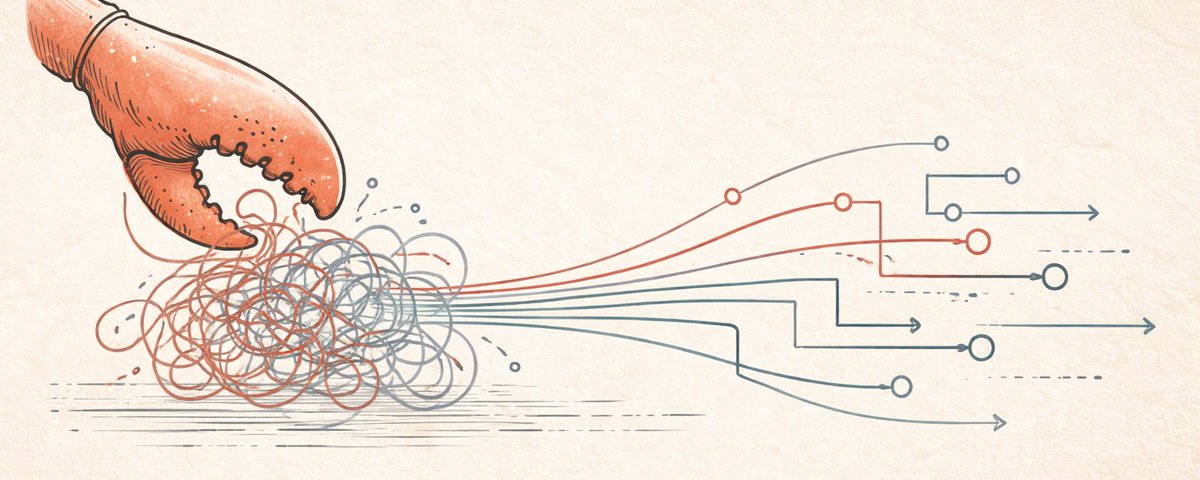
Venture investor Ryan Sarver writes up how he built an AI chief of staff on OpenClaw with a markdown-based memory layer and a continuous improvement loop. He offers to open source the system if there is enough interest.

Original post · 12 min read
X ArticleHow I built a chief of staff on OpenClaw that's better than any human I've hired
I'm a VC in the middle of a fundraise, sitting on boards, helping portfolio companies, and angel investing on the side. I've worked with great human EAs and chiefs of staff over the years, so I know what high-leverage support actually looks like. When the first AI APIs came out, I tried to build an AI version of that as a product and couldn't make it work.
When OpenClaw launched I went deep immediately and haven't stopped. I have helped a number of friends set it up and each of them have asked what I have done to configure it and super power it. @ryancarson's post (link in the comments) about how he built his OpenClaw assistant was also great to see, and the response to it convinced me to finally write up what I've been building.
What I have now is more capable than any human chief of staff I've ever worked with. It never forgets a commitment, it handles the small stuff without being asked, flags the important stuff without being told, and it gets better every week. Plus it never sleeps and it never tires. There are still some bumps, but less and less each week.
If any of this is interesting, let me know. If there's enough interest I'll package the whole system up and open source it.
What makes a great chief of staff?
Before I walk through what I've built, it's worth thinking about what a great chief of staff actually does. Not the job description, the real leverage. The best ones I've worked with filtered the noise so only the right things reached me, made sure I walked into every meeting prepared and that nothing fell through after, kept the full picture of what was in flight and flagged what was slipping, tracked relationships and knew where things stood with every important person, and created the daily and weekly rhythm that kept everything moving.
Her name is Stella. She handles all of these, and I'll walk through each one below. But the two things that make my setup genuinely different from other OpenClaw builds are the memory layer underneath it all and the continuous improvement loop that makes the system get better every week. I want to start there because they're what make everything else compound.
Memory: the foundation
Session memory is a lie. Any assistant that treats conversation history as its working context will fail you at the most frustrating moments.
I built two layers. The first is daily notes: one markdown file per day (memory/YYYY-MM-DD.md) serving as a raw log of everything that happened. Meetings attended, decisions made, tasks added and completed, context that came up in conversation. A script called pulls from my sessions throughout the day and writes these automatically.
The second is long-term memory in MEMORY.md, curated by Stella herself. Key people, active projects, lessons learned, decisions made. She periodically synthesizes this from the daily notes, and it's what she reads on startup to orient herself on what matters right now.
Every meeting processed, every email triaged, and every task tracked feeds back into this picture continuously. Without this layer you have a capable assistant with amnesia. With it you have something closer to a person who's been working alongside you for months and never forgets anything.
I've also come to really value that all of this lives in flat markdown files rather than a database. I can open any memory file, read it, edit it if something's wrong, and understand exactly what the assistant knows. I can back the whole thing up to git and restore anything instantly. There's no abstraction layer between me and the assistant's understanding of my world, which means I trust it more and fix things faster when they're off.
Here's where the layers really come together. I'm managing a fundraise involving 100+ LP contacts across multiple countries. Stella tracks the full pipeline, keeps context on each LP and contact, and knows where every relationship stands. For first meetings, I've created a rule that she researches the fund and any recent content they or their partners have published, then preps me with what she found, how it maps to our thesis, and tailored talking points as part of the pre-meeting brief. For ongoing relationships, she knows exactly where they are in the pipeline, what was discussed and committed in our last meeting, and what the key issues are. You can't automate something as critical as a fundraise, but having this kind of structure underneath it means I'm spending my time on the conversations themselves rather than managing the process around them.
Kaizen: the system improves itself
This might be my favorite part, and the thing that makes it feel genuinely different from any assistant I've worked with, human or AI.
Every Friday, a cron job runs research. Stella scans the OpenClaw community, checks for new patterns, looks at what other builders are doing, and saves findings to `memory/kaizen-research-YYYY-MM-DD.md`. On Sunday morning we review it together. She summarizes the week's research, surfaces the top ideas worth tryi… continue on X ↗
When OpenClaw launched I went deep immediately and haven't stopped. I have helped a number of friends set it up and each of them have asked what I have done to configure it and super power it. @ryancarson's post (link in the comments) about how he built his OpenClaw assistant was also great to see, and the response to it convinced me to finally write up what I've been building.
What I have now is more capable than any human chief of staff I've ever worked with. It never forgets a commitment, it handles the small stuff without being asked, flags the important stuff without being told, and it gets better every week. Plus it never sleeps and it never tires. There are still some bumps, but less and less each week.
If any of this is interesting, let me know. If there's enough interest I'll package the whole system up and open source it.
What makes a great chief of staff?
Before I walk through what I've built, it's worth thinking about what a great chief of staff actually does. Not the job description, the real leverage. The best ones I've worked with filtered the noise so only the right things reached me, made sure I walked into every meeting prepared and that nothing fell through after, kept the full picture of what was in flight and flagged what was slipping, tracked relationships and knew where things stood with every important person, and created the daily and weekly rhythm that kept everything moving.
Her name is Stella. She handles all of these, and I'll walk through each one below. But the two things that make my setup genuinely different from other OpenClaw builds are the memory layer underneath it all and the continuous improvement loop that makes the system get better every week. I want to start there because they're what make everything else compound.
Memory: the foundation
Session memory is a lie. Any assistant that treats conversation history as its working context will fail you at the most frustrating moments.
I built two layers. The first is daily notes: one markdown file per day (memory/YYYY-MM-DD.md) serving as a raw log of everything that happened. Meetings attended, decisions made, tasks added and completed, context that came up in conversation. A script called pulls from my sessions throughout the day and writes these automatically.
The second is long-term memory in MEMORY.md, curated by Stella herself. Key people, active projects, lessons learned, decisions made. She periodically synthesizes this from the daily notes, and it's what she reads on startup to orient herself on what matters right now.
Every meeting processed, every email triaged, and every task tracked feeds back into this picture continuously. Without this layer you have a capable assistant with amnesia. With it you have something closer to a person who's been working alongside you for months and never forgets anything.
I've also come to really value that all of this lives in flat markdown files rather than a database. I can open any memory file, read it, edit it if something's wrong, and understand exactly what the assistant knows. I can back the whole thing up to git and restore anything instantly. There's no abstraction layer between me and the assistant's understanding of my world, which means I trust it more and fix things faster when they're off.
Here's where the layers really come together. I'm managing a fundraise involving 100+ LP contacts across multiple countries. Stella tracks the full pipeline, keeps context on each LP and contact, and knows where every relationship stands. For first meetings, I've created a rule that she researches the fund and any recent content they or their partners have published, then preps me with what she found, how it maps to our thesis, and tailored talking points as part of the pre-meeting brief. For ongoing relationships, she knows exactly where they are in the pipeline, what was discussed and committed in our last meeting, and what the key issues are. You can't automate something as critical as a fundraise, but having this kind of structure underneath it means I'm spending my time on the conversations themselves rather than managing the process around them.
Kaizen: the system improves itself
This might be my favorite part, and the thing that makes it feel genuinely different from any assistant I've worked with, human or AI.
Every Friday, a cron job runs research. Stella scans the OpenClaw community, checks for new patterns, looks at what other builders are doing, and saves findings to `memory/kaizen-research-YYYY-MM-DD.md`. On Sunday morning we review it together. She summarizes the week's research, surfaces the top ideas worth tryi… continue on X ↗
♥ 2.2K · ⟲ 215 · 👁 1.2MView on X ↗


