Thursday, October 8, 2026ArchiveSearchAsk the paper

The Computomatix Times

All the posts fit to save — curated from @computomatix's bookmarks & likes on X

Search

Latest stories — use the filters to narrow by keyword, section or date.

Free-Claude-Code Proxy Runs Claude Code on NVIDIA Free Tier

Free-Claude-Code Proxy Runs Claude Code on NVIDIA Free Tier

Hasan Toor promotes free-claude-code, an open-source proxy that routes Claude Code to NVIDIA NIM models using a free API key. It supports Kimi K2, GLM 4.7, MiniMax M2 and Devstral, and includes a Telegram bot for remote control.

Original post · 1 min read
Goodbye Claude Code subscription fees.

Someone just built a proxy that runs Claude Code completely free... and it's wild.

You literally plug in a free NVIDIA API key and point Claude Code at localhost.

That's it.

It handles everything:
- Converts Anthropic API calls to NVIDIA NIM format
- Unlocks 40 requests/min for free
- Supports Kimi K2, GLM 4.7, MiniMax M2, Devstral and more
- Streams thinking tokens and tool calls live
- Even includes a Telegram bot so you can run Claude Code from your phone

No API bill. No rate limit panic. No vendor lock-in.

Honestly, this goes beyond router tools like OpenRouter.

It doesn't just swap the model... it turns Claude Code into a free agent you can control remotely.

The project is open-source on GitHub.

It's called free-claude-code.
♥ 6.2K · ⟲ 902 · 👁 652.0KView on X ↗

Google Open-Sources osv-scanner for Dependency Vulnerability Checks

A post introduces osv-scanner, Google's open-source tool that scans lockfiles, containers and vendored code against the osv.dev vulnerability database. It highlights guided remediation, call analysis, support for 11+ ecosystems, and offline scanning.

Original post · 1 min read
GOOGLE BUILT A VULNERABILITY SCANNER AND OPEN-SOURCED IT

most devs ship code without knowing half their dependencies are ticking time bombs

osv-scanner fixes that

it scans your entire project lockfiles, containers, even vendored c/c++ code and maps every dependency against the osv.dev database

supports 11+ ecosystems. npm, pip, cargo, maven, go modules, gem. all of it.

the guided remediation feature is the real unlock... it doesn't just tell you what's broken.... it tells you exactly which version upgrades fix the most issues with the least risk

call analysis built in. so you only get alerts for vulnerable functions your code actually calls. no noise

works offline too. download the db once, scan without internet

one command to scan your whole directory:
osv-scanner scan source -r ./

github.com/google/osv-scanner
♥ 1.2K · ⟲ 187 · 👁 128.5KView on X ↗

Aesty Pitches Closet App That Reads Camera Roll Instead of Manual Photos

Aesty Pitches Closet App That Reads Camera Roll Instead of Manual Photos▶

Nadia Zueva promotes aesty.ai, a digital wardrobe app that builds a closet by scanning the user's camera roll rather than requiring each item to be photographed. The post is a short promotional video.

Original post · 1 min read
pov: you opened your closet in 2026

every digital wardrobe app makes you photograph each item. aesty.ai just reads your camera roll
♥ 2.4K · ⟲ 113 · 👁 448.3KView on X ↗

Student Backtesting Tool Tests Polymarket Strategies on Historical Trades

Student Backtesting Tool Tests Polymarket Strategies on Historical Trades

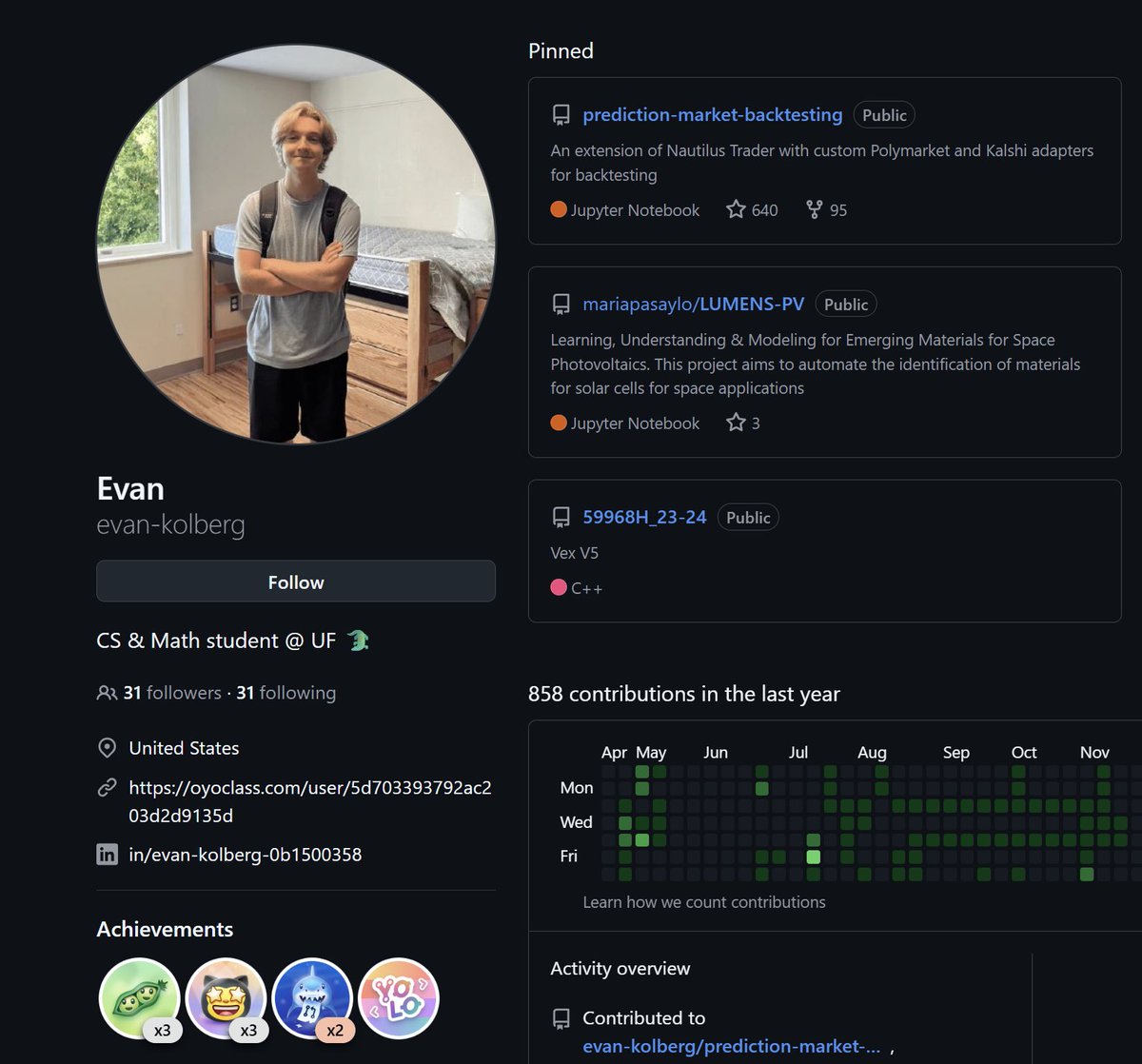
Recogard describes an open-source prediction-market backtesting simulator built by a computer science student on a dataset of 1.1 billion Polymarket trades. Users can apply strategies to past markets and measure PnL and accuracy, with a GitHub link provided.

Original post · 1 min read
A computer science student built a working simulator that lets you test your own Polymarket strategies using real historical data and released it on GitHub for free…

This is a ready to use tool based on the largest dataset of 1.1 billion Polymarket trades.

Here is how you can use it for your trading:

This simulator takes all past markets, analyzes how they behaved from open to close and applies your own strategy to them. As a result, it calculates the potential Pnl and accuracy as if u had actually made those trades yourself.

Lets imagine, while trading, you have noticed a pattern: All movie markets are less volatile and often have a clear winner right from the start (with the highest % probability) - just an example!

But how could u actually test this pattern right now without risking real money? - thats exactly where backtesting comes in…

So, you take your strategy, lets say - Always buy the most probable outcome at market open, but only in movie markets.

Then, the simulator analyzes all movie markets that have ever existed up to today, applies your strategy to them and shows you the accuracy. Based on that, u can decide whether its actually worth using for your future trades.

This way you can test hundreds of strategies like that without risking any money.

GitHub: github.com/evan-kolberg/prediction-market-back…
Recogard @recogard
5 students from Shanghai University analyzed over 1.1 billion Polymarket trades across 268K markets, collected 107GB of real trading data and released it for free on GitHub…

This is the largest public prediction market dataset I have ever found.

Here is how you can use it for trading on Polymarket:

This dataset allows you to understand how Polymarket actually behaves and how prices typically move.

You can analyze and compare all markets within the same category to find patterns in price movements that repeat over time.

Lets imagine, while analyzing this dataset, you discover that, for exa…
♥ 630 · ⟲ 43 · 👁 107.8KView on X ↗

Seduction Palace Post Claims Sex Therapist Distinguished Intimacy Types

Helen Casanova of Seduction Palace shares a promotional post claiming a sex therapist explained a difference between making love and sex, and that women crave both at different moments. The text offers little substantive detail.

Original post · 1 min read
A famous sex therapist explained the difference between making love and f#cking.

Women crave both at different moments.

Bedroom kings know when to give each.

Here’s how....
♥ 4.4K · ⟲ 231 · 👁 1.2MView on X ↗

Tengen Shares Eric Budish Lecture on HFT Mechanics in Order Books

Tengen Shares Eric Budish Lecture on HFT Mechanics in Order Books▶

Tengen recommends a one-hour lecture by UChicago Professor Eric Budish on the math behind high-frequency trading in continuous order books, including latency arbitrage and the liquidity tax. The post also cites a quoted claim of a bot earning $500k on Polymarket 15-minute crypto markets.

Original post · 1 min read
Professor Eric Budish (UChicago) delivers a 1-hour masterclass completely deconstructing the exact math HFT bots use to extract millions from continuous order books.

Bookmark this and watch it today, if you want to stop trading narratives and start trading architecture

It will permanently change how you view markets and liquidity. Check the quoted post below to see an example of HFT bot that appears to be exploiting these mechanics, printing over $500k in just 26 days on Polymarket.

For the platform, attracting this level of algorithmic warfare is the ultimate validation. This level of deep, constant liquidity cements the platform as a Tier-1 financial fortress.

What you'll learn inside:

- The fundamental flaw in the continuous limit order book (clob)

- How latency arbitrage actually works under the hood

- The concept of the "liquidity tax" and who ultimately pays it

- Why pure speed mathematically eliminates directional risk

There are no magic pills or secret formulas in this game. The edge simply belongs to those who understand the mechanics better than the others.
Tengen @0xTengen_
polymarket trader made $500k on 15m crypto markets in just a 25 days

exclusively trade 15-minute and hourly "up or down" intervals on btc, eth, sol, and xrp

absorbing the newly introduced platform fees without breaking a sweat

that’s roughly $20,700 in pure profit per day

visually, everything points to an hft bot, the profile shows nearly 24,000 predictions

we can only theorize about the exact logic under the hood, but if this is a fully autonomous script, the creator should be proud of the flawless execution

looks like we are witnessing classic quantitative trading, likely smart money s…
♥ 1.1K · ⟲ 79 · 👁 288.2KView on X ↗

Steve Yegge Says Google Has Two-Tier System for Claude Access

Steve Yegge follows up on his earlier tweet about Google's AI adoption, citing anonymous Googlers who describe DeepMind engineers using Claude daily while most other teams are pushed onto internal Gemini variants. He says he has not verified each account.

Original post · 3 min read
My tweet last week about Google's AI adoption drew a lot of pushback, to say the least.

Since then, Googlers from multiple orgs have reached out to me independently and anonymously. They've expressed fear of being doxxed, concern about what they saw as bullying of me, and general corroboration of my original tweet. I haven't verified each person's story, but the picture these Googlers paint is consistent across sources. It is more specific than what I originally wrote, and somewhat bleaker.

What they describe is a two-tier system. DeepMind engineers use Claude as a daily tool. Most of the rest of Google does not. When the question of equalizing access came up internally, the proposed response was to remove Claude for everyone — which DeepMind objected to so strongly that several engineers reportedly threatened to leave.

Non-DeepMind engineers get pushed onto internal Gemini variants behind router-style names that obscure which underlying model is actually serving a request. Multiple engineers describe regressions and reliability problems severe enough that some senior people have stopped using the tools. A senior manager on a major product line reportedly flagged attrition concerns over exactly this issue.

Googlers say leadership knows the gap is real. The response has been to mandate AI usage in OKRs and individual expectations, and to stand up an internal token-usage leaderboard. Unfortunately, managers have been told both that the leaderboard won't be used for performance reviews and, separately, that it absolutely will. And I hear other stories that Google's culture is not adapted properly yet for high-volume coding.

Addy Osmani's reply on behalf of Google said over 40,000 SWEs use agentic coding weekly. I don't doubt the number. But weekly use of a thin tool is precisely the box-checking I described in the original post. Volume of opens isn't adoption — and "weekly" is a low bar that includes a lot of people who tried it once and went back to writing code by hand.

The clearest thing I'm hearing is that Googlers do want to use high-quality agentic tools. They are asking repeatedly for better ones. But overall, this is not a picture of an engineering org that is fine.

My goal in the first tweet, and now, is always the same — get more people using AI and agentic coding. Nobody is as far ahead as they might look from the outside, and none of you are as far behind as you might be worried you are.

To all the Googlers who've reached out: thank you. You took a real risk and I appreciate you. Be safe. And good luck getting good models!
♥ 3.1K · ⟲ 203 · 👁 1.0MView on X ↗

Steven Tey Urges Admins to Restrict Unconfigured Google OAuth Apps

Steven Tey Urges Admins to Restrict Unconfigured Google OAuth Apps

Steven Tey warns that third-party Google OAuth apps requesting scopes beyond basic profile data are a dangerous attack vector. He recommends Workspace admins restrict unconfigured third-party apps, linking to the Google admin settings page and crediting a tip.

Original post · 1 min read
Biggest takeaway from this: 3rd-party Google OAuth Apps that request scopes beyond the basic info (name/user/profile pic) is a dangerous attack vector.

To safeguard your org from attacks like this, highly recommend asking your Google workspace admin to restrict "unconfigured third-party apps" to only be able to request basic info needed 👇

Here's the direct link to access that settings page: admin.google.com/ac/owl/settings

h/t @matid for the pro-tip!
Guillermo Rauch @rauchg
Here's my update to the broader community about the ongoing incident investigation. I want to give you the rundown of the situation directly.

A Vercel employee got compromised via the breach of an AI platform customer called Context.ai that he was using. The details are being fully investigated.

Through a series of maneuvers that escalated from our colleague’s compromised Vercel Google Workspace account, the attacker got further access to Vercel environments.

Vercel stores all customer environment variables fully encrypted at rest. We have numerous defense-in-depth mechanisms to prot…
♥ 1.7K · ⟲ 201 · 👁 331.6KView on X ↗

Trader Christopher Eppinger Reportedly Made $250 Million Trading Russian Oil

Trader Christopher Eppinger Reportedly Made $250 Million Trading Russian Oil▶

Goshawk Trades profiles Christopher Eppinger, who reportedly made over $250 million trading oil from 2022 to 2025 after Western firms exited Russian oil. The post is a teaser with a linked thread and video.

Original post · 1 min read
When Russia invaded Ukraine, BP, Shell, and Vitol ran from Russian oil.

A 27-year-old trader ran toward it.

Three years later, Christopher Eppinger made $250 million, owns a €7M villa on the French Riviera, and a private jet.

The full story of how he did it below:
Goshawk Trades @GoshawkTrades
How a 31-Year-Old Made $380M Trading Russian Oil in 30 Months — Most people have never heard of Christopher Eppinger.
But between 2022 and 2025, he personally made over $250 million trading oil. His company moved $2 billion in deals. He's 31 years old.
For his
♥ 1.4K · ⟲ 123 · 👁 520.7KView on X ↗

Guide Explains How to Triage Compromised Google Workspace OAuth App

Omar shares steps for Google Workspace admins to check for a compromised third-party OAuth app tied to the Vercel incident. The instructions cover navigating admin API controls and revoking access by client ID.

Original post · 1 min read
Here's how to triage:

1. Go to admin.google.com

2. Security → Access and data control → API controls → App access control → Manage Third-Party App Access

3. Search for client ID:
110671459871-30f1spbu0hptbs60cb4vsmv79i7bbvqj

if found → revoke / block
Vercel @vercel
Our investigation has revealed that the incident originated from a third-party AI tool with hundreds of users whose Google Workspace OAuth app was compromised.

We recommend that Google Workspace Administrators check for usage of this app immediately. vercel.com/kb/bulletin/vercel-april-2026-secur…
♥ 2.2K · ⟲ 275 · 👁 571.3KView on X ↗

IIT Madras Startup Sthyr Energy Turns Electricity Into Storable Metal

IIT Madras Startup Sthyr Energy Turns Electricity Into Storable Metal

Varun Guru highlights Sthyr Energy, a startup founded by three IIT Madras scientists, which converts electricity into metal that can be stored for months and later converted back. He argues it could enable long-duration storage and transport of renewable energy.

Original post · 1 min read
These three IIT Madras scientists are insane.

Their startup Sthyr Energy is literally turning electricity into metal.

Which you can keep for months and turn it back into electricity when you need it.

And this is incredibly huge.

Let's break this down.

Right now, India alone generates enough renewable energy to power countries like France.

But we can either use it as soon as its generated or its lost forever.

Because no one has figured out a way to store electricity for more than a few hours at scale.

If Sthyr's solution works - we won't just be able to store it for years but we could also transport it on roads - without creating any new infrastructure.

And it would change how the world uses electricity forever.
♥ 4.5K · ⟲ 1.3K · 👁 182.3KView on X ↗
AI6/10

Stanford Lecture Examines Economics of the AI Investment Supercycle

Stanford Lecture Examines Economics of the AI Investment Supercycle▶

Boring_Business recommends a 40-minute Stanford lecture by Apoorv Agarwal, a partner at Altimeter, on the economics of the AI supercycle. The course is MS&E 435 and Agarwal's firm has invested in OpenAI and Glean.

Original post · 1 min read
This 40 minute lecture at Stanford by Apoorv Agarwal on the Economics of AI supercycle is worth a watch

Apoorv is currently a Partner at Altimeter and is directly involved in some of their key AI investments, including OpenAI and Glean

Still find it incredible that the internet gives us access to this level of information directly. A course I will definitely be following along

Sourced from MS&E 435 Stanford University
♥ 2.3K · ⟲ 279 · 👁 245.5KView on X ↗

Pi-hole Offers Network-Wide Ad Blocking on a Low-Cost Device

Pi-hole Offers Network-Wide Ad Blocking on a Low-Cost Device

Nav Toor explains Pi-hole, open-source software that runs on a cheap device like a Raspberry Pi Zero to block ads and trackers for every device on a home network. He describes how it works at the DNS level and lists what it blocks.

Original post · 2 min read
You see hundreds of ads every single day. On your phone. Your laptop. Your smart TV. Your game console. Your kid's tablet. Even your thermostat.

Someone built a tiny $5 computer that blocks every single one of them. For every device in your house. Forever.

It's called Pi-hole.

Not a browser extension. Not an app. A network-wide ad blocker that lives on your WiFi. Every device that connects to your home internet gets ad-free browsing automatically. No setup on each device. No subscription. No tracking.

Here's how it works:

Every time your phone loads an ad, it asks the internet "where is this ad server?" Pi-hole sits between your phone and the internet. When your phone asks for an ad, Pi-hole says "that server does not exist" and the ad never loads.

The ad is dead before it reaches your screen.

Here's what Pi-hole blocks:

→ Ads in mobile apps. Ads inside games. Ads on free apps that usually can't be blocked.
→ Smart TV ads. Roku ads. Amazon Fire ads. Samsung TV ads. Every TV ad at the DNS level.
→ Tracking pixels. Facebook tracking. Google Analytics. TikTok pixels.
→ Telemetry. Windows spying on you. Apple sending data. Your smart fridge phoning home.
→ Malware domains. Phishing sites. Crypto miners.
→ Ads and telemetry on Xbox, PlayStation, and Nintendo Switch.

Here's the wildest part:

A Raspberry Pi Zero costs $5. An old Android phone, you already own. An old laptop in your closet, you already own.

Any of them can run Pi-hole.

One small device. Plug it in once. Forget about it. Every phone, tablet, laptop, smart TV, and game console on your WiFi gets ad-free browsing.

Forever.

No monthly fee. No subscription. No tracking. No account. No login.

Pi-hole users report their home internet feels faster because ads are never downloaded in the first place.

The developers are volunteers. They've been building this for over a decade. It handles hundreds of millions of DNS queries on server-grade hardware.

52,000+ GitHub stars. EUPL-1.2 license.

100% Open Source.
♥ 2.3K · ⟲ 417 · 👁 132.7KView on X ↗

Post Shares Link to 361-Page PDF on Hedge Fund Trading Algorithms

Post Shares Link to 361-Page PDF on Hedge Fund Trading Algorithms

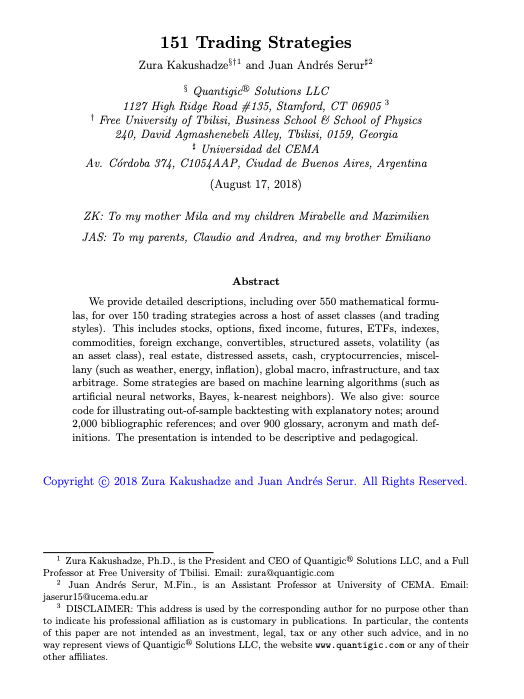
Quant Science promotes a 361-page PDF said to cover 151 trading strategies used by hedge funds. The post itself contains only the claim and an attached image, with no detail on the document's contents or source.

Original post · 1 min read
This paper unlocks every algorithm used by hedge funds.

151 trading strategies.

Get it here (361 page PDF):
♥ 1.5K · ⟲ 239 · 👁 139.7KView on X ↗

Advisor Describes Tech Couple's Financial Plan After Simultaneous Layoffs

Kurt Supe, CPA, walks through a hypothetical composite of a 52- and 51-year-old couple laid off from tech, detailing a 24-month cash flow bridge, a Roth conversion, and avoiding early retirement withdrawals. He stresses planning in the first 90 days after a layoff.

Original post · 2 min read
A couple. 52 and 51.

Both in tech. Both laid off the same month.

24 combined years at companies that no longer wanted them.

Finding something new is not just hard. It is brutally hard.

Here is their situation.

Severance: $340,000
401k Balances: $2,300,000
RSUs: Vesting schedule disrupted
COBRA: $2,800/month
Mortgage: 14 years remaining
Retirement target: whenever they can

The Fear

If we start pulling from our retirement accounts to survive are we looking at working five or ten years longer than we ever planned.

What Most Advisors Said

Sit tight. Do not touch the retirement accounts. Wait it out.

What We Did

Built a 24-month cash flow bridge using severance and brokerage assets. Zero early withdrawals. Zero penalties.

Their income had never been lower. So we did a significant Roth conversion at a tax rate they will never see again.

Stopped planning around RSUs that might never arrive. Built everything around what had already vested.

The Result

They did not lose two years. They used two years.

Here is what nobody wants to hear in their 40s.

When you get into your 50s and 60s having a plan for this moment is almost a must. Not a nice to have. A must.

The people who think their job is the most secure are often the least prepared when it is not.

A layoff at 52 can destroy a retirement plan.
Or it can be the most important financial pivot of your life.

The difference is what you do in the first 90 days.

Not financial, tax, or legal advice. Results are not guaranteed and individual circumstances vary. All scenarios are hypothetical composites for educational purposes only and do not represent any specific client or outcome.
♥ 349 · ⟲ 18 · 👁 263.2KView on X ↗
AI7/10

Robert Scoble Reacts to DeepMind Paper on AI Agent Detection Asymmetry

Robert Scoble says he was alarmed twice in two nights. The quoted post describes a Google DeepMind paper on how websites can detect AI agents and serve them hidden malicious content, including instructions in HTML, image pixels, and PDFs.

Original post · 1 min read
OK that is twice in two nights I have gotten freaked out.
How To Prompt @HowToPrompt__
Google DeepMind just dropped the most terrifying cybersecurity paper of the year.

They just mapped the attack surface that nobody in AI is talking about.

Websites can already detect when an AI agent visits and serve it completely different content than humans see.

- Hidden instructions in HTML.
- Malicious commands in image pixels.
- Jailbreaks embedded in PDFs.

This “detection asymmetry” means a site can serve normal content to you, and malicious, hidden content to your agent.

The agent doesn’t know it’s being tricked. It simply processes whatever it receives and acts on it.

Here’s the …
♥ 346 · ⟲ 30 · 👁 95.8KView on X ↗

Lecture Promises Insight Into Machine Learning in Algorithmic Trading

Lecture Promises Insight Into Machine Learning in Algorithmic Trading▶

Goaty recommends a 50-minute lecture by a scientist who built trading algorithms for Morgan Stanley and Lehman Brothers, saying it explains how machine learning is used in professional trading bots. The post includes a video and a linked article.

Original post · 1 min read
This 50-minute lecture by the scientist who built trading algorithms for Morgan Stanley and Lehman Brothers will teach you more about how machine learning actually works in algorithmic trading than most $1,000 courses ever will.

Bookmark this and watch it tonight. It's the highest-leverage thing you can do if you want to understand how professional trading bots are really built. Then read the article below.
♥ 655 · ⟲ 121 · 👁 81.2KView on X ↗

Weekly Roundup Lists Fastest-Growing Finance GitHub Repositories

Weekly Roundup Lists Fastest-Growing Finance GitHub Repositories

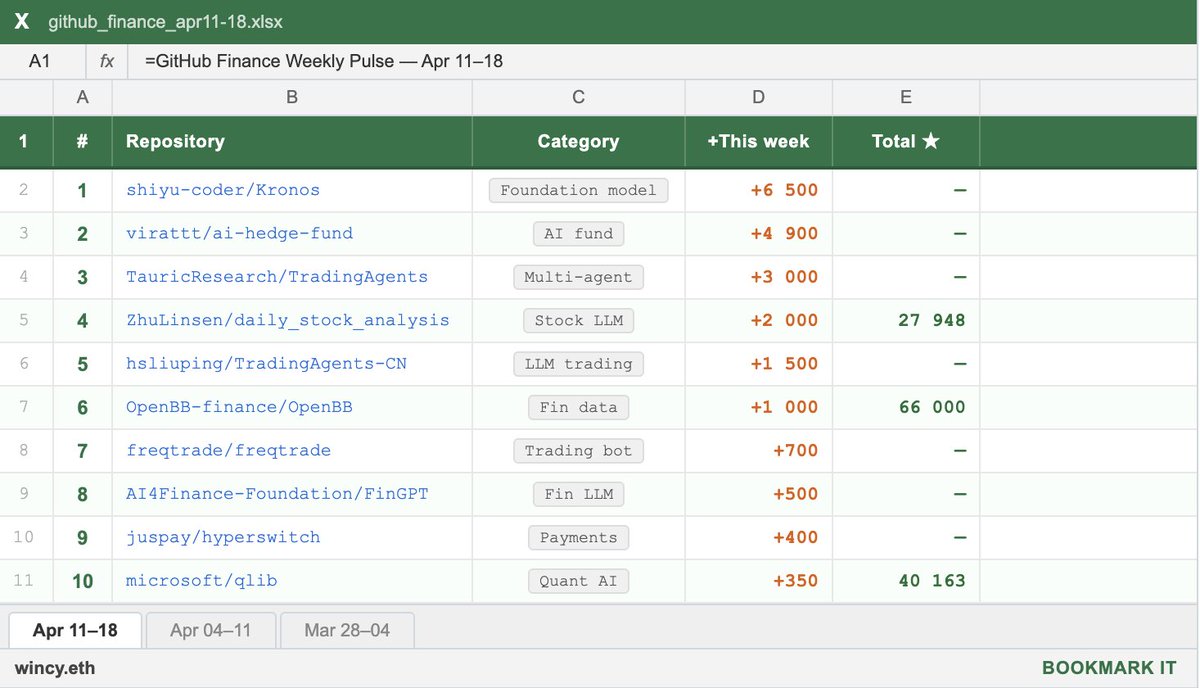
wincy.eth lists fast-growing open-source finance projects on GitHub, including Kronos, a candlestick foundation model, ai-hedge-fund, TradingAgents, daily_stock_analysis, OpenBB, and freqtrade. The post highlights star counts and what each project does.

Original post · 2 min read
the fastest growing GitHub repos in finance this week:

1. shiyu-coder/Kronos (+6.5K ★)

first open-source foundation model for financial candlesticks. trained on 45+ global exchanges. predicts OHLCV candles as tokens — literally GPT for price charts. accepted at AAAI 2026.

2. virattt/ai-hedge-fund (+4.9K ★)

a team of AI agents simulating Buffett, Munger, Ackman, Cathie Wood and others. each agent runs its own strategy, a Portfolio Manager makes the final call. one of the most viral finance repos right now.

3. TauricResearch/TradingAgents (+~3K ★)

multi-agent LLM trading framework. fundamental analyst, sentiment analyst, technicals, risk manager — all working together. supports GPT-5.x, Gemini 3.x, Claude 4.x, Grok. built by UCLA/MIT researchers.

4. ZhuLinsen/daily_stock_analysis (+~2K ★)

LLM stock analyzer for US, A-share and H-share markets. auto-builds a daily decision dashboard with exact entry/exit levels. pushes to WeChat/Telegram/Discord/Email via GitHub Actions. zero cost, zero server.

5. hsliuping/TradingAgents-CN (+~1.5K ★)

Chinese fork of TradingAgents. fully localized for A-share markets (Shanghai/Shenzhen), Chinese data sources, and domestic LLMs. 5.1K forks — very active community.

6. OpenBB-finance/OpenBB (+~1K ★)

open-source Bloomberg alternative. stocks, crypto, options, derivatives, fixed income — one platform. integrates with AI agents via MCP. 66K total stars and still climbing.

7. freqtrade/freqtrade (+~700 ★)

free, open-source crypto trading bot in Python. supports all major exchanges, full backtesting, strategy optimization, Telegram control. release 2026.3 just dropped.

8. AI4Finance-Foundation/FinGPT (+~500 ★)

open-source financial LLMs trained on real market data — news, filings, earnings. built for sentiment analysis and robo-advisors. models on HuggingFace, ready to deploy.

9. juspay/hyperswitch (+~400 ★)

open-source payments router in Rust. one API to connect Stripe, Adyen, PayPal and 50+ providers. smart routing, high performance, built for fintech scale.

10. microsoft/qlib (+~350 ★)

Microsoft's AI quant investment platform. covers the full pipeline: alpha seeking, backtesting, model training, live trading. supports ML/DL, RL, and auto-quant.

bookmark this and start today.
wincy.eth @gusik4ever
the fastest growing GitHub repos in finance this week:

1. mvanhorn/last30days-skill (+2.1K ★)

AI agent skill that searches Reddit, X, YouTube, HN, Polymarket and the web in parallel — then scores results by upvotes, likes, and real money, not editors. drop it into Claude Code or OpenClaw. zero config to start.

2. ZhuLinsen/daily_stock_analysis (+1.2K ★)

LLM-powered stock analyzer for US, A-share and H-share markets. real-time news + multi-source data + decision dashboard with exact buy/stop/target levels. runs on GitHub Actions on a schedule at zero cost. pure automation.

3. juspay/hypers…
♥ 1.7K · ⟲ 234 · 👁 240.0KView on X ↗

Cochran Alleges Insider Trading Ahead of Trump Iran Strait Announcement

Adam Cochran claims $760M in leveraged oil positions were placed minutes before Trump's announcement on the Strait of Hormuz, alleging a pattern of more than 40 such insider-trading moments. The claims cite a @tradfi post and are presented without independent verification.

Original post · 1 min read
$760M in leveraged positions worth BILLIONS.

Right before Trump’s announcement that misconstrued the Iranian statements on Strait opening.

There have now been more than 40 of these insider trading moments, each worth $2B-$3B+

Trump’s inner circle has grifted the American public out of **hundreds of billions** of dollars.

Much of which was held by mutual funds, pension funds and retirement accounts.
tradfi news @tradfi
*: TRADERS PLACED $760M BET ON OIL DECLINE 20 MINUTES BEFORE IRAN'S FINMIN ANNOUNCED THE STRAIT WAS OPEN
♥ 9.6K · ⟲ 3.1K · 👁 699.6KView on X ↗

Ryan Mather Shares Tips for Getting Results From Claude Design

Anthropic's Ryan Mather posts a thread of tips for using Claude Design, which he says he uses across seven products on the verticals team. The first tip advises setting up a design system and core screens before prototyping. The thread references Anthropic's Claude Design launch built on Claude Opus 4.7.

Original post · 1 min read
🧵 My tips for getting the best results out of Claude Design! I’m on the verticals team at Anthropic which means I serve 7 different products. Claude Design makes it possible!
1. Set up your design system and your core screens. An hour of setup and refinement here is worth it
Claude @claudeai
Introducing Claude Design by Anthropic Labs: make prototypes, slides, and one-pagers by talking to Claude.

Powered by Claude Opus 4.7, our most capable vision model. Available in research preview on the Pro, Max, Team, and Enterprise plans, rolling out throughout the day.
♥ 8.7K · ⟲ 672 · 👁 1.5MView on X ↗

Business World Investigates Geneva Network Tied to Pakistan Banking

A Geneva-Based Secret Ruler of Pakistan Controls India’s Banking Roots - BW Businessworld

Palak Shah promotes a Business World article alleging a Geneva-based network controls Pakistan's largest bank, bails out its government and hosts nuclear diplomacy, framed around an unpaid Serena Hotel bill. The post is a promotional link with sensational framing and limited detail.

Original post · 1 min read
🚨🚨🚨
A Geneva-Based Secret Ruler of Pakistan

Controls India’s Banking Roots

The unpaid Serena Hotel bill wasn’t just Pakistan’s humiliation — it was India’s wake-up call.

Inside story only in @BWBusinessworld @anuragbatrayo

businessworld.in/article/a-geneva-based-secret…
businessworld.inA Geneva-Based Secret Ruler of Pakistan Controls India’s Banking Roots - BW BusinessworldThe unpaid Serena Hotel bill wasn’t just Pakistan’s humiliation — it was India’s wake-up call. One Geneva-based network owns Pakistan’s largest bank, bails out
♥ 942 · ⟲ 413 · 👁 124.6KView on X ↗

Former Susquehanna Quant Explains the Mathematics Behind the VIX

Former Susquehanna Quant Explains the Mathematics Behind the VIX▶

Goshawk Trades promotes a free 56-minute video in which a former head of Susquehanna's Quantitative Research Department, a mathematics PhD and former UVA professor, explains the math behind the VIX volatility index.

Original post · 1 min read
a quant from Susquehanna, one of the largest options trading firms in the world, breaks down the actual math behind the VIX.

he ran their Quantitative Research Department for nearly 20 years. PhD in mathematics. former professor at UVA.

56 minutes. free. full video ↓
♥ 2.1K · ⟲ 244 · 👁 154.8KView on X ↗

Promoter Credits Markov Chains for Three Polymarket Bots' Profits

Promoter Credits Markov Chains for Three Polymarket Bots' Profits▶

The post promotes three Polymarket trading wallets it says earned over $1.3 million in 30 days using a Markov-chain-based entry rule, and invites readers to copy them via a Telegram bot. The claims are unverified and the post is largely a referral pitch, with substantial risk of loss.

Original post · 2 min read
A Russian mathematician died in 1922.
His math just made 3 anonymous bots $1,331,821 in 30 days on Polymarket.

Andrey Markov never saw a prediction market.
He built the exact tool to destroy them.

Here's the cheat code ->

The model doesn't predict. It measures.

Two conditions. Both must fire simultaneously:
Δ = p̂ − q ≥ 0.05 -> gap exists p(j*, j*) ≥ 0.87 -> state is stable

If both are true -> position entered.
One function. Runs every minute. 24/7.

Three bots. Three styles. One principle:

polymarket.com/@bonereaper?via=svyatoslav - 0xeebde7a0e019a63e6b476eb425505b7b3e6eba30 ->
1,500-2,900 shares, BTC/ETH 1h windows -> 14,339 trades -> $454,834.

polymarket.com/@0xe1d6b51521bd4365769199f392f9… - 0xe1d6b51521bd4365769199f392f9818661bd907c -> dual-mode EV, best single trade +54.6% -> $432,591.

polymarket.com/@0xb27bc932bf8110d8f78e55da7d5f… - 0xb27bc932bf8110d8f78e55da7d5f0497a18b5b82 -> 5 assets, 1 trade per 1.7 min, σ−55% -> $444,396.

The formula behind all three: V_T = V₀ · e^(N · r̄)

At 16,000 trades and 0.034% per trade -> ×240 growth.
Math doesn't care about your conviction.
Only about N.

The edge?
Humans sleep. Markets don't. At 3AM nobody's watching a 5-min BTC window.
The gap widens. The bot enters.

You don't have to build the bot. You just have to follow it.

-> Copy all 3 wallets live, starting from $10: t.me/KreoPolyBravoBot?start=ref-join (Just add the wallets I attached above).

Save this list.
Ricker @0xRicker
The Math That Made $1M+ for quant Traders in 30 Days — They don't use the same algorithm. They use the same thinking.
Behind every profitable trader is not luck, intuition, or a mysterious black-box AI. There is concrete mathematics.
1. The Math Under the
♥ 514 · ⟲ 56 · 👁 122.8KView on X ↗

Thread Promotes Polymarket Bot Results and Nassim Taleb Lecture Clip

Thread Promotes Polymarket Bot Results and Nassim Taleb Lecture Clip▶

Dipper_pol shares a short Nassim Taleb video on how trade ordering affects account survival and links to a companion piece on Polymarket bot math. The post is promotional and echoes the same bot-performance claims as the referenced thread.

Original post · 1 min read
Nassim Taleb explains in under 3 minutes why the order of your trades matters more than your win rate

Making $10K then losing $10K is not the same as losing $10K then making $10K - the second one can kill your account

This is why 3 Polymarket bots ran 48,000 trades and didn't blow up once

Watch the lecture. Then read the full math behind $1.3M in 30 days ↓
Ricker @0xRicker
The Math That Made $1M+ for quant Traders in 30 Days — They don't use the same algorithm. They use the same thinking.
Behind every profitable trader is not luck, intuition, or a mysterious black-box AI. There is concrete mathematics.
1. The Math Under the
♥ 1.3K · ⟲ 141 · 👁 318.6KView on X ↗

Janhavi Jain Maps Seven Shifts Driven by India's Quick Commerce Boom

Janhavi Jain, building SKIPD, outlines seven ways India's quick commerce market, valued at $5.4B and led by Blinkit, Zepto and Instamart, has changed buying behavior. Points include late-night buying peaks, trial-size purchases, weakening brand loyalty, and quick commerce becoming an ad business.

Original post · 2 min read
Quick commerce is a $5.4B market in India growing at 70-80% CAGR. Blinkit, Zepto, Instamart collectively do 4M+ orders a day. But the interesting story isn’t the business.

It’s what it did to how Indians buy things. 7 shifts nobody saw coming.

1/ 73% of q-com orders happen outside traditional shopping hours. 10pm-1am is now peak for ice cream, condoms, skincare, snacking. Three years ago this buying window didn’t exist. An entirely new consumption slot was invented and nobody’s talking about it.

2/ ₹149 mini sunscreen outsells ₹599 full size on Blinkit. The full bottle is a commitment. The mini is a maybe. Consumers are treating q-com like a sample store. Brands without trial SKUs are invisible.

3/ Brand loyalty disappeared in grocery. Search “atta” on Zepto. 8 brands sorted by delivery time. The one in the nearest dark store wins. Not the one your mom used. For staples, proximity replaced preference. Terrifying if you’re a legacy FMCG brand.

4/ Kirana shops aren’t losing staples. They’re losing the ₹50-200 impulse buy. The chocolate, the chips, the random face mask. The small purchases that used to happen because you were already in the store. That foot traffic is gone and it’s not coming back.

5/ Men started buying skincare. The anonymity of tapping “face wash” on Blinkit vs asking for it at a medical store broke a psychological barrier nobody was talking about. Embarrassment was the barrier all along. Men’s grooming on q-com is growing faster than any other beauty subcategory.

6/ Blinkit and Zepto aren’t delivery companies anymore. They’re media businesses. Blinkit’s ad revenue grew 220% YoY. Both crossed ₹1,000 Cr in annual ad revenue by FY25. Ads are now 15% of Blinkit’s total revenue. If you’re thinking of q-com as just a listing channel, you’re missing the point.

7/ The delivery bar moved for everyone. If Zepto delivers in 10 minutes, why does your D2C site take 5 days? The consumer doesn’t separate “q-com speed” from “normal speed.” Every brand shipping in 3-5 days is now competing against a 10-minute standard they didn’t set and can’t match.

Quick commerce didn’t just create a new delivery channel. It rewired how 50 million Indians think about buying things
♥ 582 · ⟲ 80 · 👁 185.0KView on X ↗

Aakash Gupta Releases Mock System Design Interview for AI PM Roles

Aakash Gupta Releases Mock System Design Interview for AI PM Roles▶

Aakash Gupta shares a recorded mock of a system design interview for senior AI product manager roles, with segments covering the question, AI system pillars, metrics and evals, and feedback. The video targets candidates preparing for $1M+ AI PM interviews.

Original post · 1 min read
The hardest round in any $1M+ AI PM interview: system design.

I recorded the world's first mock on it:

1:09 - Question presented
16:53 - AI system pillars
27:25 - Metrics and evals
35:43 - Feedback
♥ 80 · ⟲ 10 · 👁 154.3KView on X ↗

Jon Stewart Amplifies Ben McKenzie on Crypto Sanctions Evasion

Jon Stewart reposts a Weekly Show clip in which Ben McKenzie discusses how crypto helps criminals and hostile states evade sanctions and alleges Commerce Secretary Howard Lutnick profits from it. The post itself contains no substantive detail beyond the quoted clip.

Original post · 1 min read
This will blow your fucking mind!!!!!
The Weekly Show with Jon Stewart @weeklyshowpod
.@ben_mckenzie on how crypto helps criminals and hostile states evade sanctions — and how Commerce Secretary Howard Lutnick profits from it. #theweeklyshow #jonstewart #politics
♥ 8.0K · ⟲ 2.2K · 👁 689.4KView on X ↗
AI8/10

Dwarkesh Patel Publishes Long-Form Interview With Nvidia's Jensen Huang

Dwarkesh Patel Publishes Long-Form Interview With Nvidia's Jensen Huang▶

Dwarkesh Patel announces a podcast episode with Nvidia CEO Jensen Huang covering supply chain moats, competition from TPUs, whether Nvidia should become a hyperscaler, AI chip sales to China, and chip architecture strategy. Chapter timestamps are listed.

Original post · 1 min read
The Jensen Huang episode.

0:00:00 – Is Nvidia’s biggest moat its grip on scarce supply chains?
0:16:25 – Will TPUs break Nvidia’s hold on AI compute?
0:41:06 – Why doesn’t Nvidia become a hyperscaler?
0:57:36 – Should we be selling AI chips to China?
1:35:06 – Why doesn’t Nvidia make multiple different chip architectures?

Look up Dwarkesh Podcast on YouTube, Apple Podcasts, Spotify, etc. Enjoy!
♥ 8.6K · ⟲ 1.1K · 👁 6.3MView on X ↗

Ryan Wiggins Details Building a Local Second Brain With Claude Code

Creating a Second Brain with Claude Code

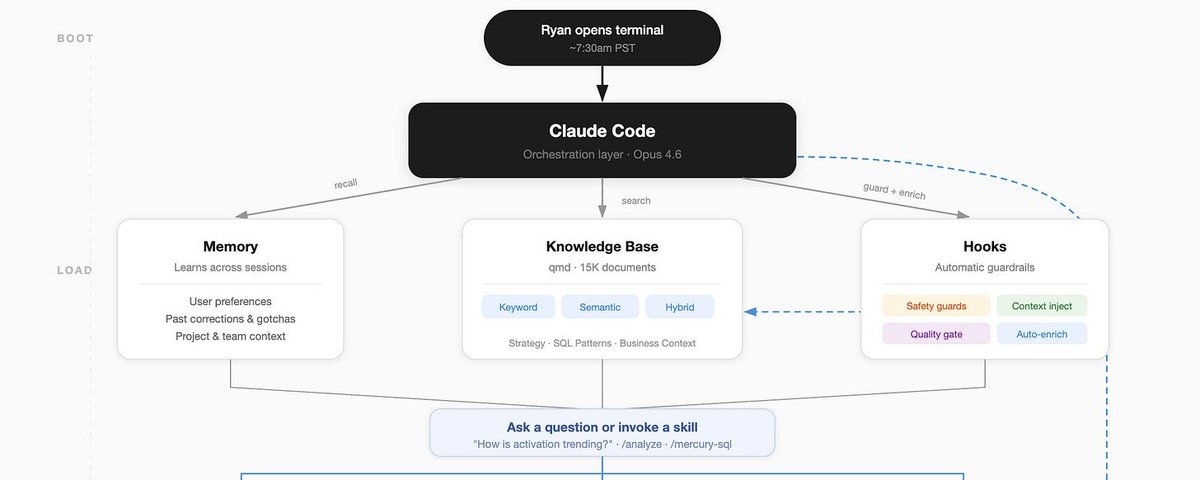
Mercury VP of Product Ryan Wiggins published a long article describing a locally run personal knowledge system built with Claude Code, indexing about 15,000 documents using QMD vector search, with hooks, orchestrators and MCP/CLI tools. He says it doubled his productivity and includes the workflow and prompt.

Original post · 11 min read
X ArticleCreating a Second Brain with Claude Code
I've 2x’d my productivity as a VP of Product @mercury by creating a "Second Brain" using 5 years of work history, 15k docs with 3.5 million words, and every tool in my stack. It runs locally, is a core part of my every use of LLM, and gets better everyday.
Today, I want to share the stack, the workflow, and the prompt to build it:
Background
I am a VP of Product for @mercury, which is a long way of saying I'm in a lot of meetings, consuming a lot of content across different tools (linear, slack, notion, data analyses), and trying to make sure I actually get stuff done. Working at a company for 5 years and being an information addict, I am essentially a walking encyclopedia for Mercury post 2021-today -- but I've recently found that my scope + workload means I can't keep every plate spinning.
One day, I was scrolling X and came across a series of posts that caught my attention, starting with @tobi's QMD. QMD is a local vector search, and then a few other posts started to show up that connected a few dots for me:
Claude Code launched hooks (per-event prompt injections)
GasTown / OpenClaw launched with the power of orchestrators writing memory + delegating to sub-agents (among many other patterns)
MCPs/CLIs hit a critical mass, and enough of my core tools were available without having to ask admins to give me API keys
@tylercowen did an interview and talked extensively about "writing for AI" in a way that struck a chord - how much output of work already exists that I'm not using?
I decided that it was time to build
Prep work (~1-2 hours end to end)
To start, I needed a library of all the content I could know about... so I downloaded every document I've ever created for my job at Mercury + any relevant product strategy, analysis, retro, reflection on execution, etc. This netted out to over 15k documents and 3.5 million words. Maybe I've read them all, but I've forgotten most. These became a folder that I just called "raw data", and I ran QMD to index this on my computer.
To see if this worked, I used Claude Code to ask about random memories and surprising insights from this knowledge base - the amount of delight/surprise I experienced in seeing how much more capable vector search was than text-based search gave me the confidence to keep going. I asked one questions about books that it would think I like, and it was spooky how good of recommendations it gave me. I think this is my best advice in this journey: test every step of the way! Easy to get caught in hill climbing a local maxima
Train my brain and connect it to my tools (~2 hours)
With all the raw data, I needed to help it make sense of me + what my goals are + the tools I used, so pursued three paths:
Explain myself - to be able to create a second brain, it needed to know what mine was doing. I wrote up a me.md explaining who I am (work + life), gave it my goals + performance reviews for the last 5 years + set of personal priorities. The most humbling part was the system pointing out that I've been making the same strategic mistake for years, according to my own performance reviews, and was making it that week as I was setting up the system
"Distill" the data - I spun up an agent team to use the me.md + the knowledge base to create a set of docs between me <> raw knowledge base. This idea largely came from the idea that LLMs regularly distill down smaller models to take tasks, and I had no idea if it would help me in this, but Agent Teams had just launched and so I had a swarm of them find the main "themes" we've worked on from the knowledge, give sourced histories of this, and summarize key lessons. These created a context.md folder
Tools - I use a few tools (Google Docs, Linear, Notion, Metabase) , and luckily most have connectors on Claude Code or these companies are actively launching MCPs/CLIs. A few didn't, but I spun up specific skills that crafted direct API calls to be able to complete tasks like "run a query for XYZ".
Claude had access to all the information about me + the tools I used + had a massive library of all my work, but did it really know anything? Does anyone?
Wire it up (<1 hour)
At this point, I had so many words + documents that it was time to actually find use or abandon ship. But I didn't want to have to go search this every time and that's when "hooks" caught my attention.
Hooks from Claude Code let you insert content into your prompt without needing to ask (or when a session starts, after a tool use, or when a session stops). Using the UserPromptSubmit hook, I enabled my Claude Code to use qmd to find names + topics + specific documents related to my prompt.
This is a nerd-out moment, but when searching for files in Finder, it is mostly a name + raw text search.... but QMD can help bring context into searches. My system is tuned to figure out a query, then returns results using one of two techniques:
vsearch (semantic/vector) — understands meaning of my question. "How's the funnel performing?" finds … continue on X ↗
♥ 922 · ⟲ 120 · 👁 313.4KView on X ↗

Lenny Rachitsky Opens Up About His Life in First Round Profile

Lenny Rachitsky Opens Up About His Life in First Round Profile

Lenny Rachitsky shares a First Round Review profile in which a writer spent hours at his home discussing why he started his newsletter, what motivates him, and personal details rarely shared publicly.

Original post · 1 min read
I rarely do interviews or talk about my personal life, but I made an exception for the team at @firstround.

Their writer spent hours at my house. We talked about why I started Lenny's Newsletter, what motivates me to keep building it, and a lot of things I don't usually share publicly.

It's an intimate look at what my life is actually like outside of what most people see on the podcast.

Check it out: review.firstround.com/reluctantly-influential-…
♥ 681 · ⟲ 45 · 👁 103.1KView on X ↗