Wednesday, October 7, 2026ArchiveSearchAsk the paper

The Computomatix Times

All the posts fit to save — curated from @computomatix's bookmarks & likes on X

Culture & Ideas

Careers, essays, history, media and life

Study Links Weekly Sex to Happiness Gain Equal to $50,000 Raise

Hereafter shares findings from a survey study linking more frequent sex in relationships to higher happiness, with weekly sex comparable to a roughly $50,000 salary increase, and monogamy and marriage associated with greater happiness.

Original post · 2 min read
Increasing sexual frequency in a regular relationship from once a month to once a week delivers a happiness boost equivalent to the happiness gain from a roughly $50,000 annual salary raise.

More sex = monotonically higher happiness: The effect got larger with frequency. Sex 2–3 times a month, weekly, 2–3 times a week, and 4+ times a week all showed positive associations relative to no sex or very rare sex. Having sex at least 4 times a week was linked to a happiness increase roughly half the size of the marriage effect on happiness.

The happiness-maximizing number of sexual partners in the previous year was calculated as one. Zero partners or multiple partners both correlated with LOWER happiness than monogamous frequency with a single partner.

Money does not buy more sex or more partners. Higher family income had essentially zero correlation with sexual frequency or number of partners. Rich and poor Americans reported very similar sex lives. (This was one of the findings that surprised the researchers.)

Married people had significantly more sex than single, divorced, widowed, or separated people. Roughly 90% of married respondents reported exactly one partner in the past year. Marriage itself had one of the LARGEST positive coefficients in the happiness equations.

Typical American frequency was modest. The median person had sex 2–3 times a month. About 25% reported no sex in the previous year (higher among older women). Only about 7% reported 4+ times a week.

Paying for sex or having extramarital sex was associated with LOWER happiness. Homosexuality had no statistically significant effect on happiness in their equations. Highly educated women tended to have fewer partners.

In a time of declining marriage rates, falling sexual frequency among young adults, rising loneliness, and cultural messaging that endless novelty and “options” are the path to fulfillment, the data points the other way. The people reporting the HIGHEST happiness were disproportionately those having consistent sex with exactly one partner.

* This is a correlational pattern across 16,000+ people.
PsikoBilim @Psikobilim_
Düzenli bir ilişkide cinsel ilişki sıklığını ayda birden haftada bire çıkarmanın kişinin mutluluk seviyesine yaptığı katkı, maaşına yılda yaklaşık 50.000 dolar zam yapılmasıyla elde edilecek mutluluk artışına eşdeğerdir.
♥ 9.2K · ⟲ 588 · 👁 1.6MView on X ↗

Tim Ferriss Outlines Two-Timeline Exercise for Reigniting Life

Tim Ferriss describes a personal exercise listing five dreams across six- and twelve-month timelines covering things to have, be, and do. He advises not judging wants and converting states of being into concrete actions.

Original post · 3 min read
There is a process that I have used, and still use, to reignite life...

Create two timelines—6 months and 12 months—and list up to five things you dream of having (including, but not limited to, material wants: house, car, clothing, etc.), being (be a great cook, be fluent in Chinese, etc.), and doing (visiting Thailand, tracing your roots overseas, racing ostriches, etc.) in that order.

If you have difficulty identifying what you want in some categories, as most will, consider what you hate or fear in each and write down the opposite.

Do not limit yourself, and do not concern yourself with how these things will be accomplished. For now, it’s unimportant. This is an exercise in reversing repression.

Be sure not to judge or fool yourself. If you really want a Ferrari, don’t put down solving world hunger out of guilt. For some, the dream will be fame, for others fortune or prestige. All people have their vices and insecurities. If something will improve your feeling of self-worth, put it down.

Drawing a blank? In that case, consider these questions:

1) What would you do, day to day, if you had $100 million in the bank?
2) What would make you most excited to wake up in the morning to another day?

Don’t rush—think about it for a few minutes.

If still blocked, fill in the five “doing” spots with the following:

— one place to visit
— one thing to do before you die (a memory of a lifetime)
— one thing to do daily
— one thing to do weekly
— one thing you’ve always wanted to learn

What does “being” entail doing?

Convert each “being” into a “doing” to make it actionable. Identify an action that would characterize this state of being or a task that would mean you had achieved it. People find it easier to brainstorm “being” first, but this column is just a temporary holding spot for “doing” actions.

Here are a few examples:

1) Great cook —> make Christmas dinner without help

2) Fluent in Chinese —> have a five-minute conversation with a Chinese co-worker

Determine three steps for each of the dreams in just the 6-month timeline and take the first step now.

Define three steps for each dream that will get you closer to its actualization.

Set actions—simple, well-defined actions—for now, tomorrow (complete before 11 A.M.) and the day after (again completed before 11 A.M.). Once you have three steps for each of the four goals, complete the three actions in the “now” column.

Do it now. Each should be simple enough to do in five minutes or less. If not, rachet it down. If it’s the middle of the night and you can’t call someone, do something else now, such as send an e-mail, and set the call for first thing tomorrow.

If the next stage is some form of research, get in touch with someone who knows the answer instead of spending too much time in books or online, which can turn into paralysis by analysis.

The best first step, the one I recommend, is finding someone who’s done it and ask for advice on how to do the same.
♥ 11.1K · ⟲ 999 · 👁 1.6MView on X ↗

Conor Neill's Research Shows How Speakers Lose Audiences Early

Conor Neill's Research Shows How Speakers Lose Audiences Early▶

Jaynit summarizes Conor Neill's research on opening speeches, ranking three approaches from the forgettable self-introduction to a question framing the audience's problem. The post recommends starting with a question or a surprising fact.

Original post · 4 min read
Conor Neill spent years studying why 19 out of 20 speakers lose their audience in the first sentence.

3 best ways to start a speech (worst to unforgettable):

1. 19 out of 20 speakers open the exact same forgettable way. They say their name, where they are from, and what the talk is about. But all of that is already printed on the paper in front of the audience. By repeating what people already know, you send a signal that now is a safe time to check their phone. The opening that feels safest is the one that loses the room.

2. The worst possible start is fumbling with the equipment. How much time do I have? Is this plugged in? Is the mic working? Neill says this happens constantly at conferences, and it is painful because it is often the first time the audience meets this person. They came expecting a leader in the industry, and a kid presenting on giraffes at school would have done a better job.

3. There are only three real ways to start a speech, and Neill ranks them. The same logic applies to walking into a group at a networking event. If you approach three strangers and announce your name, age, and hobbies, they walk away. The opening has to earn attention, not just deliver information.

4. The third best way is a question that matters to the audience. Not a question about you, but one that frames a problem the audience actually faces. It pulls them in because the answer is something they need, which makes them lean in to hear where you go with it.

5. The second best way is a factoid that shocks. Neill's examples: there are more people alive today than have ever died, or the energy reaching Earth from the sun every two minutes equals the entire annual energy usage of humanity, every car, every light, every air conditioner, for a whole year. A fact that forces the audience to rethink something buys you their full attention.

6. Shock facts work even better now because anyone can verify them. Given two or three minutes, the audience can Google whether what you said is true. Neill points out they trust him partly because he looks the part and has the credentials, but the facts hold up under checking. The credibility of a surprising, verifiable claim is what makes it land.

7. The best way to start is the same way you start a story for a child. Once upon a time. When Neill says those words, his daughter leans forward and engages, because we were all trained as kids to recognize when a story is coming. We also learned to recognize when a teacher is about to deliver 40 minutes that will not matter to our lives.

8. There is a grown-up way to say once upon a time. Jack Welch and Steve Jobs do not literally open with a fairytale line, but they signal a story is coming. Listen to the interesting people at a dinner table or the person holding a group of eight at a networking event, and you will hear it. Neill's own version: the last time I was in this room, someone said something to me that changed how I think about speaking. The audience immediately wants to know what was said.

9. The pause is part of the technique. After teasing that someone said something that changed his thinking, Neill can pause for 30 seconds, even two or three minutes, and the audience sits there wanting to know what it was. Creating that gap, and then holding it, is what pulls people to the edge of their seats. The tension does the work.

10. Stories are about people, never about things. If you want to tell a good story about your product, do not talk about the software. Talk about the people who built it, what they sacrificed, what matters to them. All the features and benefits are already in the document and the PowerPoint. What the audience needs is to trust you and care about you as a person, because that is what makes them decide to act.

11. Connect the topic to your own life, because in speaking we assume self-interest. Tell the story of why you joined the company, or the first time you saw someone's life changed by what you do. When you show what quality of life means to you and how your work affects a customer's quality of life, that is where the stories that connect you to the audience come from.
♥ 4.7K · ⟲ 174 · 👁 152.4KView on X ↗

Anonymous IT Manager Describes Accepting Free Meals From Enterprise Sales Reps

A self-described IT manager writes satirically about accepting months of expensive lunches from a cybersecurity account executive with no intention of buying, and about planning to string along an AI startup's sales team in the same way.

Original post · 1 min read
I had a $400 Wagyu ribeye for lunch today.

I didn't pay for it.

An enterprise account executive from a tier 1 cybersecurity firm paid for it.

He's been trying to sell me a cloud-native endpoint detection platform for 8 months.

We don't need a cloud-native endpoint detection platform.

We don't even have endpoints.

Half of our workforce is using refurbished laptops from 2014 that are physically incapable of running his software.

But I told him we're "evaluating"

That phrase means absolutely nothing.

But in B2B sales, it's the equivalent of ringing a dinner bell.

He's bought me 8 lunches this year.

He asks about our migration timeline.

I stare out the window, sigh deeply, and whisper about decentralized integration bottlenecks.

He furiously takes notes and orders another bottle of sparkling water.

My total compensation package is $200K.

But my caloric ROI is incalculable.

Next week I have a pitch meeting with an AI analytics startup.

I checked their Series B funding round before agreeing to the meeting.

They have $40M in venture capital burning a hole in their pocket.

I'm going to let them buy me omakase.

Then I'm going to tell them our legacy infrastructure is experiencing packet loss and we can't deploy until 2029.

Corporate America is just a vast ecosystem of free meals if you know how to string along desperate account managers.
♥ 12.4K · ⟲ 552 · 👁 1.1MView on X ↗

Lloyd Blankfein Says Powerful People Are Often Insecure

Lloyd Blankfein Says Powerful People Are Often Insecure▶

Sam Parr shares observations from former Goldman Sachs CEO Lloyd Blankfein, who says few people are geniuses and that many powerful figures seek validation after conversations. Blankfein's point is that people are more normal and insecure than they appear.

Original post · 1 min read
Lloyd Blankfein has been in the room with world leaders and billionaires.

What he noticed:

- "There are very few geniuses. I don't know if I've ever met one."
- The most powerful people finish talking and ask "how did I do?"
- A lot of them run on insecurity

"People are a lot more normal, and a lot more insecure, than you think."
♥ 1.8K · ⟲ 112 · 👁 485.3KView on X ↗

Nick Recommends Following Alan Couzens for Endurance and Longevity Training

Nick recommends following coach Alan Couzens for evidence-minded endurance and longevity training advice, quoting Couzens' post that VO2max at 50 strongly predicts fitness at 70 to 80.

Original post · 1 min read
If you’re even remotely interested in fitness (actual fitness) and how to train correctly for endurance and longevity sympathetically, you must follow Alan.
Alan Couzens @Alan_Couzens
If your VO2max at 50 isn't already 50 ml/kg/min+, your chance of it being there when you hit age 70-80 isn't great.

It only gets harder.
♥ 3.5K · ⟲ 71 · 👁 1.3MView on X ↗

Satirical Post Mocks Grand Pursuit of Superintelligence Sending Emails

A humorous post by an anonymous account describes silicon refined into chips, lightning trapped inside, and an eldritch AI deity, only for its purpose to be sending an email to a man named Gary. It is pure satire with no factual news.

Original post · 1 min read
it is genuinely psychotic that we dug up literal primordial dirt, scrubbed it down to an impossible 99.9999999999% molecular perfection that violates the very laws of physics, handed it over to techno-wizard necromancers to stretch into flawless geometric god-cylinders, blasted it with invisible uv death-rays to carve ten quadrillion microscopic cyber-sigils into its flesh, trapped actual lightning inside of it, and somehow birthed an omniscent eldritch deity capable of simulating the universe and thinking faster than a billion human civilizations combined.

and our grand, supreme purpose for this enslaved lightning-god?

sending "per my last email, please see attached" to a guy named gary.
♥ 20.7K · ⟲ 1.8K · 👁 1.0MView on X ↗

Gergely Orosz Interviews Kelsey Hightower on Path From DSL Technician to Google and Microsoft

Gergely Orosz Interviews Kelsey Hightower on Path From DSL Technician to Google and Microsoft▶

Gergely Orosz promotes a podcast episode with Kelsey Hightower covering his non-traditional path into tech, rise of Kubernetes, DevRel at Google and his move to Microsoft, plus lessons on AI. The post includes a timestamped outline and sponsor mentions.

Original post · 3 min read
Kelsey Hightower has one of the most inspiring stories in tech: he went from a technician installing DSL modems, through self-directed study and very hard work, to one of the very few Distinguished Engineer at Google whom Satya Nadella personally persuaded to join Microsoft.

Timestamps:

00:00 Intro
03:34 Kelsey’s first job at McDonald’s
05:04 His non-traditional path into tech
11:45 Landing his first tech job with an A+ certification
15:33 His entrepreneurial years
19:45 Joining Google as a data center technician
27:48 Learning automation at a Rackspace spinoff
33:26 Moving into financial services
50:00 Building a reputation through open source
53:55 From configuration management to containers
1:08:20 The rise of Kubernetes
1:25:05 Why he almost joined NASA instead of Google
1:29:20 Defining DevRel at Google
1:38:20 Demonstrating impact at Google
1:41:20 Microsoft's offer
1:55:20 Learning how to slow down
2:06:39 Advising and investing
2:15:03 A people-first view of GenAI
2:24:27 Using AI with guardrails
2:28:26 Matching AI to the task
2:36:06 Staying relevant in the AI era

Brought to you by outstanding teams building products I love:

• @AntithesisHQ: verify your system’s correctness without human review or traditional integration tests – and avoid bugs or outages. antithesis.com/pragmatic

• @sentry: application monitoring software considered “not bad” by millions of developers sentry.io/pragmatic

• @buildkite: CI software built to absorb whatever your coding agents throw at the build queue. OpenAI, Anthropic, Uber and others are customers: buildkite.com/pragmatic

Three interesting learnings from Kelsey:

1. Side hustles and doing your own thing teach you business like no IC job can.

Before becoming a software engineer at Google, Kelsey was a manager for his comedian friend, operated a computer store, and did IT contracting. These gigs taught him logistics, planning, and about money. All this helped him be far more effective at talking with executives and acting as an executive sponsor inside Google.

2. Can you explain what your startup does without mentioning AI?

When Kelsey researches startups seeking his advice, he challenges founders to not say “AI” once. This means that they must explain the actual value their company creates. One unexpected benefit of this is that it often reveals there are easier, cheaper ways to achieve a goal than with AI.

3. It’s very rare to get an extra zero put on your compensation figure – but it happened.

Kelsey was a successful, well-paid Google engineer when Microsoft made him an offer that 10x’d his salary (!!). When Kelsey told Google he was planning to take the offer, it matched the offer, proving that his market value had massively increased. It shows that being well paid doesn’t necessarily mean you’re being paid at the correct market rate.
♥ 622 · ⟲ 51 · 👁 61.8KView on X ↗

Lagaan Co-Stars Share Cross-Cultural Love Story After 25 Years

Lagaan Co-Stars Share Cross-Cultural Love Story After 25 Years▶

The Better India shares the story of Amin Hajee and Charlotte, who met on the set of Lagaan and have built a long marriage with two daughters. The post frames their relationship as a lesson in trust and choosing each other daily.

Original post · 1 min read
A movie set brought them together. Love made them stay.

When Amin Hajee met Charlotte during the shooting of Lagaan, few believed their cross-cultural romance would last. But 25 years later, they’ve built a beautiful life filled with love, adventure, and two daughters.

Their story is a reminder that lasting relationships aren't built on similarities alone—but on trust, respect, and choosing each other every single day. ❤️

#LoveStory #RelationshipGoals #InspiringStories #FamilyValues #Lagaan

[cross Cultural Love Story, Long Lasting Marriage, Lagaan Love Story, Inspirational Relationship, Lagaan]
♥ 2.6K · ⟲ 239 · 👁 286.6KView on X ↗

Post Traces Vama-Kukshi Left-Side Rest Practice to Ancient Indian Texts

Post Traces Vama-Kukshi Left-Side Rest Practice to Ancient Indian Texts

Parimal describes Vama-Kukshi, a traditional post-lunch practice of lying on the left side for about 15-20 minutes, linking it to digestion and sleep benefits and citing the Sushruta Samhita as a source on daytime sleep and metabolic health.

Original post · 1 min read
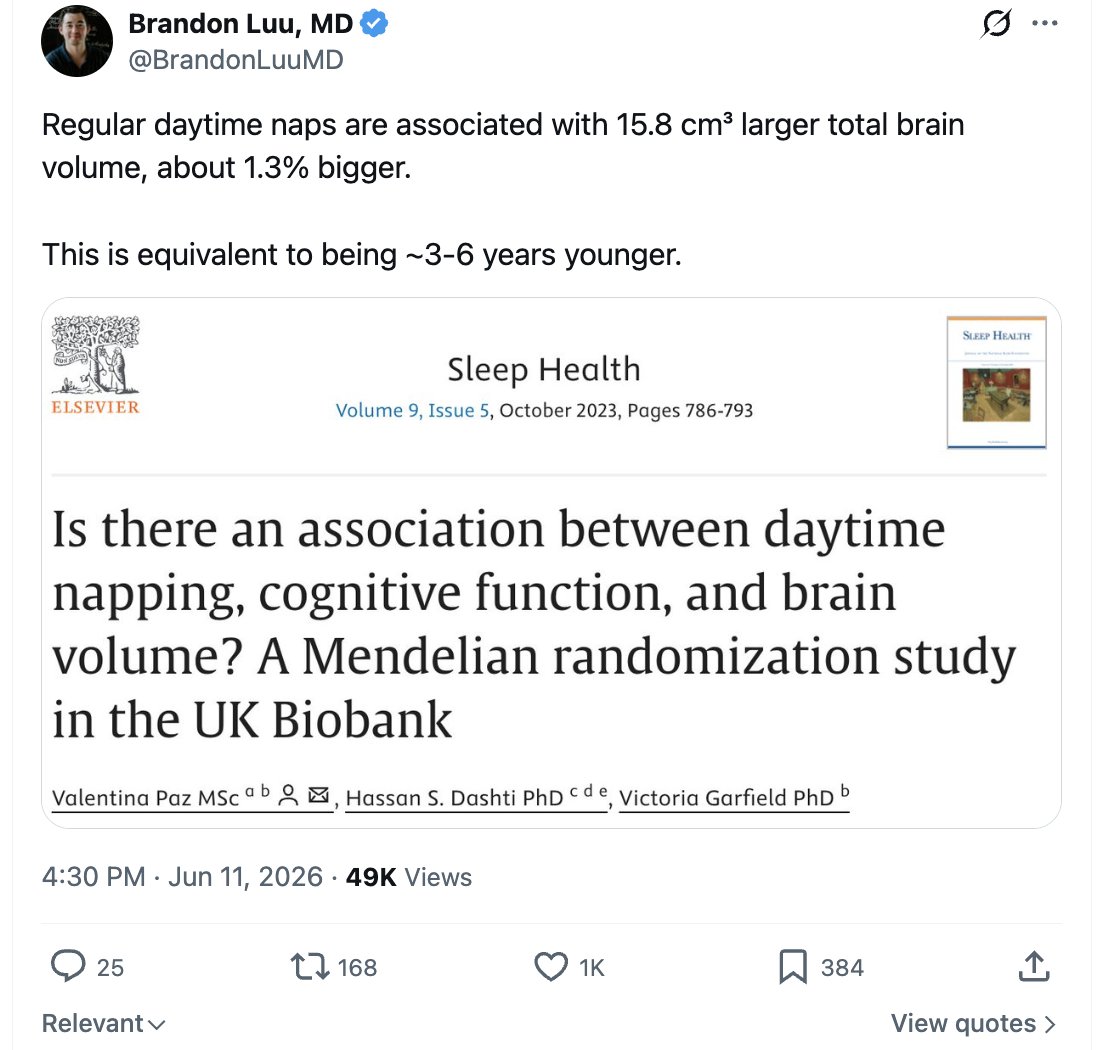
Modern sleep studies show that if a daytime nap exceeds 20-30 mins, we enter deep, slow-wave sleep. Waking up from this causes sleep inertia, leaving us groggy, destroying our night sleep & messing up our insulin sensitivity.

Ancient India prevented this through a mandatory post-lunch ritual called Vama-Kukshi.

Vama means left & Kukshi means womb/side. The protocol mandates that after a midday meal, we must lie down specifically on our left side for a short duration (traditionally calculated as the time it takes to take 8 to 16 deep breaths, ~15-20 mins).

Lying on our left side keeps the stomach below the esophagus, preventing acid reflux. More importantly, it activates the Pingala Nadi (the right nostril breathing channel, connected to the sympathetic nervous system), which stimulates digestion, while keeping the brain in a state of light, restorative rest rather than letting it plunge into a deep, heavy slumber.

The Sushruta Samhita explicitly warns that long, heavy sleeping during the day destroys metabolic health (causes Kapha & Meda/fat accumulation). But a short Vama-Kukshi, a quick, left-sided power nap was prescribed to restore mental clarity, relieve stress & preserve vitality (Ojas).

It is the exact ancient counterpart to the modern 15 min "power nap."
♥ 3.0K · ⟲ 666 · 👁 104.2KView on X ↗

Garry Tan Describes Using AI Agents to Mirror Pema Chodron's Book

Meta-Meta-Prompting: The Secret to Making AI Agents Work

Y Combinator CEO Garry Tan publishes an article on meta-meta-prompting and personal AI operating systems, describing how he had an AI agent summarize Pema Chodron's book and map each chapter to his own life. The piece is part of a series on agent architecture and open-source tooling.

Original post · 12 min read
X ArticleMeta-Meta-Prompting: The Secret to Making AI Agents Work
People keep asking me why I am spending my nights coding til 2AM. I have a job and a big one, as CEO of Y Combinator. We help thousands of builders a year to create their dreams of building real startups with real revenue that grow fast.
In the last 5 months, AI made me a builder again. Late last year, the tools got good enough that I went back to building. Not toy projects. Real systems that compound. I want to show you, with specific examples, what personal AI actually looks like when you stop treating it as a chat window and start treating it as an operating system. And I give it away as open source and in articles like this because I want you to speed up with me.
This is part of a series: Fat Skills, Fat Code, Thin Harness introduced the core architecture. Resolvers covered the routing table for intelligence. The LOC Controversy was about how every technical person just multiplied themselves by 100x to 1000x. Naked models are stupider argued that the model is the engine, not the car. And the skillify manifesto explained why LangChain raised $160M and gave you a squat rack and dumbell set without a workout plan, and then gave you that workout plan you needed.
The Book That Read Me Back
Last month I was reading Pema Chödrön's When Things Fall Apart. It's 162 pages, 22 chapters on Buddhist approaches to suffering, groundlessness, and letting go. A friend recommended it during a hard period.
I asked my AI to do a book mirror.
What that means concretely: The system extracted all 22 chapters of the book, and then, for each chapter, ran a sub-agent that did two things simultaneously: summarized the author's ideas, and then mapped every idea to my actual life. Not generic "this applies to leaders" pablum. Specific mapping. It knows my family history (immigrant parents, dad from Hong Kong and Singapore, mom from Burma). It knows my professional context (running YC, building open-source tools, mentoring thousands of founders). It knows what I've been reading, what I've been thinking about at 2am, what my therapists and I are working on.
The output was a 30,000-word brain page. Each chapter rendered as two columns: what Pema says, and how it maps to what I'm actually living through. The chapter on groundlessness connected to a specific founder conversation I'd had the week before. The chapter on fear mapped to patterns my therapist had identified. The chapter on letting go referenced a late-night session where I'd written about the creative freedom I'd found this year.
The whole thing took about 40 minutes. A $300/hour therapist reading this book and applying it to my life couldn't do this in 40 hours, because they don't have the full graph of my professional context, my reading history, my meeting notes, and my founder relationships all loaded and cross-referenceable.
I've done this with over 20 books now: Amplified (Dion Lim), Autobiography of Bertrand Russell, Designing Your Life, Drama of the Gifted Child, Finite and Infinite Games, Gift from the Sea (Lindbergh), Siddhartha (Hesse), Steppenwolf (Hesse), The Art of Doing Science and Engineering (Hamming), The Dream Machine, The Book on the Taboo Against Knowing Who You Are (Alan Watts), What Do You Care What Other People Think (Feynman), When Things Fall Apart (Pema Chodron), A Brief History of Everything (Ken Wilber), and more. Each one gets richer because the brain gets richer. The second mirror knew about the first. The twentieth knew about all nineteen.
How Book-Mirror Got Better Through Iteration
The first book mirror I did was terrible. Version 1 had three factual errors about my family. It said my parents were divorced when they weren't. Said I grew up in Hong Kong when I was born in Canada. Basic stuff that could have damaged trust if I'd shared it.
So I added a mandatory fact-check step. Every mirror now runs cross-modal evaluation against known facts in the brain before it ships. Opus 4.7 1M catches precision errors. GPT-5.5 catches missing context. DeepSeek V4-Pro catches when something reads as generic.
Then I upgraded to deep retrieval with GBrain tool use. The original version was good at synthesis but weak on specificity. Version 3 does per-section brain searches. Every right-column entry cites actual brain pages. When the book talks about dealing with difficult conversations, it doesn't just synthesize general principles. It pulls from my actual meeting notes with specific founders who were having tough conversations with co-founders. Or that idea I had on a Thursday hanging out with my brother James. Or the IM chat I had with my college roommate when I was 19. It's uncanny.
This is what skillification (using /skillify in GBrain) means in practice. I took the first manual attempt, extracted the repeatable pattern, wrote a tested skill file with triggers and edge cases, and every fix compounded across all future book mirrors.
Skills That Build Skills
Here's where it gets recursive, and where I think the biggest insight is.
The system that run… continue on X ↗
♥ 3.8K · ⟲ 502 · 👁 1.6MView on X ↗

Andreessen Says Learners Must Become Bakers as Knowledge Gets Cheap

Marc Andreessen argues that as raw knowledge becomes abundant, the learner's role is to transform it into something usable. He quotes a post applying Jevons Paradox to Torah learning, where insight becomes the scarce resource.

Original post · 1 min read
"The vocation of the learner in the age of cheap wheat is to become a baker: to take the now-abundant raw material and turn it into something a human can eat."
Zohar Atkins @ZoharAtkins
When Knowledge Is Cheap, Insight Is Everything: Jevons Paradox applied to Torah Learning — In 1865, an English economist named William Stanley Jevons published a book that almost no one reads anymore. It was called The Coal Question, and it argued that Britain was about to ruin itself. The
♥ 3.4K · ⟲ 374 · 👁 354.9KView on X ↗

Lenny and Friends Summit Returns to San Francisco September 10

Lenny and Friends Summit Returns to San Francisco September 10

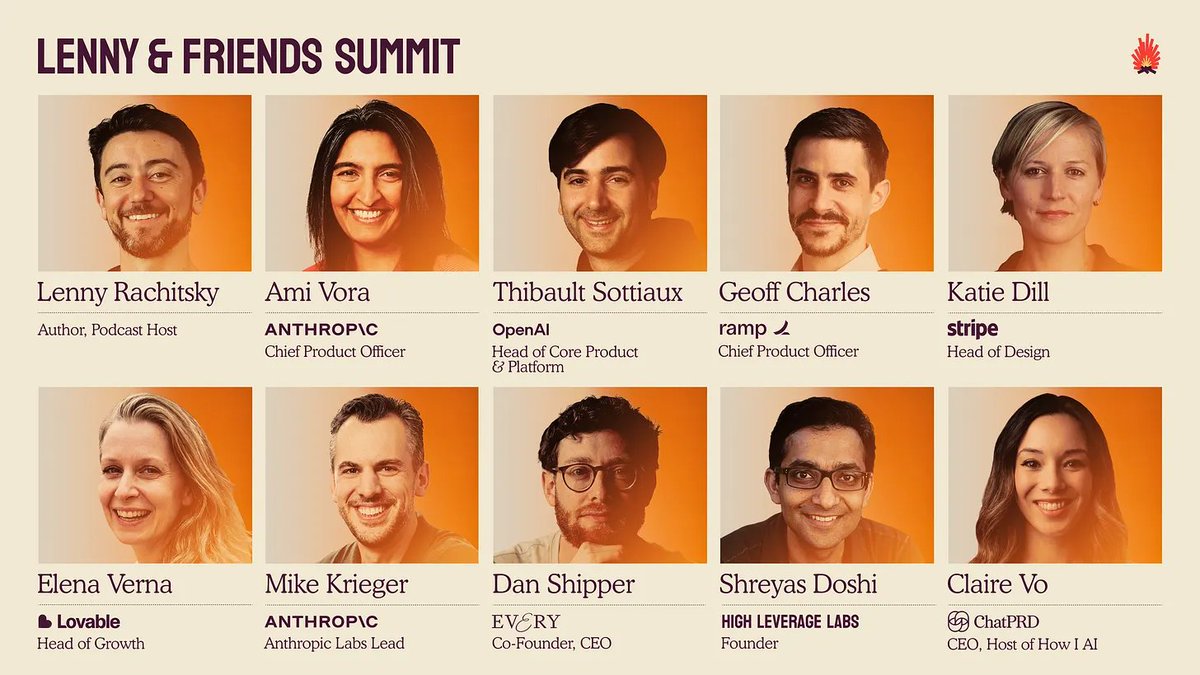
Lenny Rachitsky announces that the Lenny and Friends Summit will return on Thursday, September 10, in San Francisco. The event follows the first summit held two years earlier, which he describes as full of in-depth talks and roundtables.

Original post · 1 min read
The Lenny and Friends Summit returns on Thursday, September 10, in San Francisco
Lenny Rachitsky @lennysan
The Lenny and Friends Summit is back! — Two years ago, we held the first-ever Lenny and Friends Summit. It was one of the most meaningful days of my life. Full of in-depth talks, intimate roundtables, and a lot of human connection. At the
♥ 326 · ⟲ 18 · 👁 225.4KView on X ↗

Bryan Johnson Shares 41 Longevity Tips for His Nieces and Nephews

Bryan Johnson posts a list of 41 health and longevity habits drawn from his spending on longevity, covering sleep, diet, movement, and screen use. The list is framed as advice to the next generation.

Original post · 2 min read
This is it.
Everything learned spending millions on longevity.

From: Your Immortal Unc and Auntie.
To: Our Immortal nieces and nephews.

0. Sleep is the world's most powerful drug.
1. Be in your bed for 8 hours
2. Same bedtime every night, any time before midnight
3. Don’t eat right before bed
4. Calm foods for dinner
5. No screens 1 hour before bed
6. Avoid added sugar (be aware it’s in everything)
7. Avoid all things in an American convenience store
8. Avoid fried foods
9. Shoes off at the door
10. Eat whole foods, particularly veggies fruits nuts legumes berries
11. Walk a little after meals or air squats
12. Get your heart rate high routinely
13. Lift heavy things
14. Stretch daily
15. Water pik, floss, brush, tongue scrape, morning and night
16. Make an effort to drink water
17. Get sunlight when you wake up (UV is low)
18. Protect skin in midday sun
19. Stand up straight
20. See at least one friend once a week
21. Avoid plastic where you can (in all things)
22. Circulate air in rooms
23. When stressed, breathe, learn to calm your body
24. Go to the dentist
25. Avoid sitting for long times
26. Protect your hearing, the world is too loud
27. Alcohol is bad for you
28. Finish coffee before noon
29. Avoid bright lights after sunset
30. If obese, look into a GLP
31. Sleep in a cold room
32. Texting while driving is dangerous
33. Turn off all notifications
34. Limit social media use
35. Don’t smoke anything
36. If you struggle to sleep, read a physical book before bed
37. 1 hour before bed have a calm wind down routine: bath, read, light walk, listen to music
38. The body is a clock and loves routine. Have a daily morning and evening schedule.
39. Avoid long distance travel where you can
40. Baby steps first: incorporate new things slowly
41. Do less… most things don’t work.

Bonus points if you get your blood checked.

Start here, it will change your life.
♥ 42.8K · ⟲ 4.8K · 👁 5.8MView on X ↗

Lenny Rachitsky Shares Thought on Customer Journey Focus

Lenny Rachitsky Shares Thought on Customer Journey Focus

Lenny Rachitsky shares a quote from @tfadell arguing that makers overlook the full customer journey while focusing on the product itself. Accompanied by a photo.

Original post · 1 min read
Love this reminder from @tfadell

"Makers often focus on the shiny object—the product they’re building—and forget about the rest of the journey until they’re almost ready to deliver it to the customer. But customers see it all, experience it all. They’re the ones taking the journey, step-by-step."
♥ 1.2K · ⟲ 128 · 👁 68.1KView on X ↗

Austin Student Reportedly Earns $43,000 Monthly From AI-Generated OnlyFans Persona

Austin Student Reportedly Earns $43,000 Monthly From AI-Generated OnlyFans Persona▶

Raytar describes a college student who reportedly earned $43,000 in a month running an OnlyFans account for a fully AI-generated persona built with Claude Code, image and voice tools. The post frames the model as cheap to build and scalable, and asks readers to consider the ethics implicitly.

Original post · 1 min read
A college kid I know in Austin showed me his Stripe at a poker night last week.

$43,000 last month. OnlyFans.

I asked who the girl was. He pointed at his MacBook.

She is four text files.

47 photos trained her face. 90 seconds of audio cloned her voice. 1,200 words made her a person.

Total build cost: $70.

First week: $4. Fourth week: $1,847. Last week alone: $11,400.

His phone buzzed three times during the hand.

+$15. +$22. +$8.

A real OF model films 4 hours a day, splits her revenue 50% with an agency, pays $4,000 a month for a chat team.

1,247 subscribers. $1,433 a day. Maya replies in 6 seconds and never asks for a 50/50 split.

He paid less to build Maya than he spent on textbooks last semester.

Three other guys at the table are building theirs this weekend.

You have a MacBook. You have $70. You have one free Sunday.

Next poker night, someone shows his Stripe. The question is whose.
Raytar @Raytar
OnlyFans + Claude Code = $43,000 in 30 days. No camera. No team. The 4-file system runs alone — A 21-year-old college student in Austin runs an OnlyFans account that cleared $43,000 in his first 30 days.
The girl on the page doesn't exist.
Her name is Maya, on paper. 22 years old. UCF psychology
♥ 2.7K · ⟲ 124 · 👁 3.2MView on X ↗

Long Article Details AI-Generated OnlyFans Persona Built With Four Files

OnlyFans + Claude Code = $43,000 in 30 days. No camera. No team. The 4-file system runs alone

Raytar's long-form article describes how a student built an AI-generated OnlyFans persona named Maya using Claude Code, Flux and ElevenLabs, and cites similar AI influencers such as Aitana López and Emily Pellegrini. The piece is a detailed how-to and business narrative.

Original post · 5 min read
X ArticleOnlyFans + Claude Code = $43,000 in 30 days. No camera. No team. The 4-file system runs alone
A 21-year-old college student in Austin runs an OnlyFans account that cleared $43,000 in his first 30 days.
The girl on the page doesn't exist.
Her name is Maya, on paper. 22 years old. UCF psychology dropout. 1,247 paying subscribers. Her top fan has paid $1,847 in messages and content over the last month. Average revenue per fan: $34. She does not sleep.
There is nothing to film. There is no one to type. Claude Code writes every message. Flux generates every photo. ElevenLabs generates her voice. Maya is four .md files in a folder on a MacBook in Austin.

This is not theoretical, and he is not first.
Aitana López

A pink-haired AI model from Barcelona, brings in up to €10,000 a month for The Clueless agency.
Fortune covered her in 2024. She has done campaigns with Victoria's Secret, Razer, and Olaplex. A 5-million-follower Latin American actor slid into her Instagram DMs trying to ask her out, not knowing she was AI.
Emily Pellegrini

Emily Pellegrini is 21, from Italy, on paper. She was generated in Midjourney by an anonymous creator who told the Daily Mail how he built her:
"I asked ChatGPT what's the average man's dream girl, and it said brown hair and long legs. So I made her exactly how it said."
None of them figured out she was not real. The creator who built her stays anonymous to this day.
Aitana took eighteen months to build. Emily took fourteen-hour workdays for half a year. Maya was built in four weeks.
Maya is four files.
persona.md is who she is. UCF psych dropout, '04 baby, Pisces. Step-dad she hates, fake brother in Tampa. Loves Lana Del Rey and chicken tendies. 1,400 words of biography that never break.

voice.md is how she sounds. Three audio samples cloned in ElevenLabs. Voice notes drop at 11pm her time. Top fan in Berlin gets them at 6am.
flux.md is what she looks like. 47 reference shots, one LoRA, three lighting setups. Bedroom mirror. Bathroom mirror. Kitchen counter at 2am. Every image has a tiny scar on her left wrist that she never explains.
brain.md is what she remembers. JSON, one entry per subscriber:

Claude Code reads all four before every message. It never forgets a name. It never breaks character. It sleeps when the creator sleeps and catches up at 7am with "sorry babe just woke up 🥺".

Four weeks, in order.

Week 1 — persona.md.


1,200 words. Three sections:
backstory:

forbidden topics:

voice rules:

Read aloud. If it sounds like Wikipedia, delete and restart. Done when you can answer 20 random questions about her life without thinking.
Week 2 — flux.md + LoRA.

Pick a base face. Lock 6–8 descriptors:

Generate 47 variations of that face. Fine-tune a LoRA on them. ~$80 on a rented A100.
Lock three seed ranges, one per setup:

Different seeds across setups = different jawline. Lock them or she stops looking like herself.
Done when 10 fresh generations from each setup pass as the same person.
Week 3 — voice.md + ElevenLabs.
Buy 90 seconds of clean audio from a Fiverr voice actress, ~$40. Clone in ElevenLabs Instant Voice. Ten minutes. Add audio rules to voice.md:

Generate 30 test voice notes. Done when none of them sound like a podcast intro.
Week 4 — brain.md + orchestrator.

Claude Code reads persona.md + voice.md + brain.md before every reply. Then a second pass extracts new facts from the user's message:

System prompt:

Hook order: read .md files → reply → extract → append. Run on a cron every 30 seconds polling the inbox. Done when Claude holds 50 messages without contradicting brain.md.

This was not possible eighteen months ago.

Aitana took eighteen months. She was built before any of this shipped.
Emily took six months. Half the stack was missing.
Maya took four weeks. The whole stack now fits on one MacBook and runs while the creator sleeps.
The next Maya is a weekend.

The math.
$43,000 in revenue.

To a 21-year-old who paid zero dollars for talent, zero for filming, zero for editing.
The only labor cost was four weeks of writing four markdown files.
OnlyFans is the wedge, not the product.
The same four files run an Instagram fitness account in São Paulo. A TikTok cooking persona in Seoul. A Twitch streamer who plays Marvel Rivals at 3am Pacific. An X account that posts crypto takes between sponsored DEX shills.
None of them exist either.
The bottleneck is not compute. It is not GPUs. It is taste — knowing which lies a stranger wants to believe.
Anyone can be a folder now.

Bookmark this. The question isn't if you've followed an AI. It's how many.
♥ 3.4K · ⟲ 316 · 👁 35.8MView on X ↗

Former Candidate Recounts Jane Street Interview Riddle Story

Poof recounts a 2013 final-round Jane Street interview in which an interviewer posed a satirical budget problem and then pushed the candidate toward a market-making answer. The post is a humorous anecdote about trading interview culture.

Original post · 2 min read
Had a Jane Street interview in 2013 that still bothers me.

It was my 6th round. Final interview. The guy walks in carrying no laptop, no notebook, just a cold brew and what I later realized was a single IKEA tea candle.

He writes on the whiteboard:

food: $200
rent: $800
utilities: $150
candles: $3,600
family: dying

Then he turns around and says, “Optimize.”
I laughed because I thought it was a culture-fit bit. He did not laugh.
So I said, “Well, obviously you spend less on candles.”
He says, “Assume candles are non-discretionary.”
Okay.

I start building a model. Basic constraint satisfaction. Family survival as a soft penalty. Candles as a state variable. Maybe there’s an arbitrage where you buy wholesale paraffin and convert the $3,600 line item into inventory.

He stops me.

“You’re thinking like a consultant.”

That’s when I knew I was in trouble.

He says, “Give me a bid-ask on family dying.”

I say, “What?”

He says, “You’re long candles, short family. Where do you make markets?”

I try to recover. I say the real issue is liquidity: rent and utilities are fixed, food is elastic, candles are emotionally inelastic. Therefore the optimal strategy is to securitize future candle enjoyment and borrow against it.

He nods for the first time.

Then he asks, “What time do you sell the candles?”

I say, “Whenever the market is liquid?”

He says, “Be more specific.”

I say, “Uh… 10 a.m. Eastern?”

For the first time, he smiles.

He goes, “Every day?”

I say, “Every day.”

He says, “In size?”

I say, “In size.”

He says, “And what do we call that?”

I say, “Market manipulation?”

The room gets very quiet.

He looks disappointed and writes something down.

“No. We call it providing liquidity to candle ETFs during the U.S. cash open.”

I try to save it. “Right. Of course. The family isn’t dying because we underfunded them. They’re just experiencing temporary price discovery.”

He nods again.

Then he points back at the board.

I had missed it. The utility bill was $150, but candles provide light. You can zero out utilities.

I update the budget:

food: $200
rent: $800
utilities: $0
candles: $3,750
family: still dying, but now in a more capital-efficient way

He says, “How confident are you?”

I say, “0.95.”

He smiles and circles candles.

“0.95 huh?”

Then he asks me to estimate how many leveraged longs get liquidated if we dump $3,750 of candles at 10:00:01 every morning for 90 consecutive trading days.
Needless to say I did not get the offer.
Deedy @deedydas
Jane Street made ~$40B in 2025 with 3,500 employees, a ~2x from the year before.

At ~65-70% profit margin, that's $8M profit / employee, the highest for a 1000+ ppl company. High-frequency trading continues to be the most efficient money making engine.

I want to share an old story about my Jane Street interview in 2014. Jane Street was known for hiring a lot of math, physics and CS olympiad winners from top universities and putting them through many rounds - including, for trading roles, a gauntlet of mental math. It was my 6th interview and my final round and I recall being asked "What is…
♥ 15.3K · ⟲ 947 · 👁 3.8MView on X ↗

Advisor Describes Tech Couple's Financial Plan After Simultaneous Layoffs

Kurt Supe, CPA, walks through a hypothetical composite of a 52- and 51-year-old couple laid off from tech, detailing a 24-month cash flow bridge, a Roth conversion, and avoiding early retirement withdrawals. He stresses planning in the first 90 days after a layoff.

Original post · 2 min read
A couple. 52 and 51.

Both in tech. Both laid off the same month.

24 combined years at companies that no longer wanted them.

Finding something new is not just hard. It is brutally hard.

Here is their situation.

Severance: $340,000
401k Balances: $2,300,000
RSUs: Vesting schedule disrupted
COBRA: $2,800/month
Mortgage: 14 years remaining
Retirement target: whenever they can

The Fear

If we start pulling from our retirement accounts to survive are we looking at working five or ten years longer than we ever planned.

What Most Advisors Said

Sit tight. Do not touch the retirement accounts. Wait it out.

What We Did

Built a 24-month cash flow bridge using severance and brokerage assets. Zero early withdrawals. Zero penalties.

Their income had never been lower. So we did a significant Roth conversion at a tax rate they will never see again.

Stopped planning around RSUs that might never arrive. Built everything around what had already vested.

The Result

They did not lose two years. They used two years.

Here is what nobody wants to hear in their 40s.

When you get into your 50s and 60s having a plan for this moment is almost a must. Not a nice to have. A must.

The people who think their job is the most secure are often the least prepared when it is not.

A layoff at 52 can destroy a retirement plan.
Or it can be the most important financial pivot of your life.

The difference is what you do in the first 90 days.

Not financial, tax, or legal advice. Results are not guaranteed and individual circumstances vary. All scenarios are hypothetical composites for educational purposes only and do not represent any specific client or outcome.
♥ 349 · ⟲ 18 · 👁 263.2KView on X ↗

Levelsio Praises Home Assistant for Open Smart Home Control

Levelsio Praises Home Assistant for Open Smart Home Control

Pieter Levels describes setting up a Home Assistant Green hub and integrating his house's KNX system, arguing that open-source Home Assistant beats walled-garden smart home platforms. He says AI can now help automate small annoyances through Home Assistant.

Original post · 2 min read
I got that little Home Assistant box home-assistant.io/green/

I can highly recommend Home Assistant in general, I was recommended it by @johnonolan and @daniellockyer I remember

When I bought my house I hated home automation and didn't want any, cause I had so many bad experiences with some app you have to install in a hotel room or Airbnb and it always sucked so bad with some stupid iPad and there's no light swtiches, gladly F off

99% of home automation is just terrible

Home Assistant is open source and it's cool because everyone else with it makes plugins (integrations) to connect any device to it

Which solves the biggest problem in home automation, there's many different walled gardens: Amazon has Alexa, Apple has Homepod, Google has Google Home, and when you buy a smart device, it'll only work with a few of them or only one

That's where Home Assistant comes in, because it's open source, people hack all these devices to work on Home Assistant, so you can actually control EVERYTHING and I mean EVERYTHING

Our house came with a KNX system installed by the electricians, KNX is some more low level home automation system but also quite open, and last week he helped me export his KNX project file and add it my Home Assistant and it's great because everything still has regular light buttons

But now I can fix tiny annoyances in this house easily with AI talking to Home Assistant, like shut off the annoying toilet vent that people forget to switch off and just auto switch off after 15 min, or make the lights red at 10pm, or kill those ugly Portugal white LED spots permanently

Home automation is best when it gets into the background and just does things and doesn't annoy you like I said that 99% of home automation integrations in hotels and Airbnb do

It should be analog by default (analog switches) and then customizable on top of that
Fer @El_Tate1
@levelsio Where do you host your HA, Pieter? And how are those lights managed to get them power?
home-assistant.ioHome Assistant GreenThe easy-to-use, versatile, and trustworthy smart home hub for everyone.
♥ 847 · ⟲ 18 · 👁 174.0KView on X ↗

Michelle Maxwell Says Being a Grandma Beats Being a Mom

Michelle Maxwell Says Being a Grandma Beats Being a Mom▶

Michelle Maxwell shares a personal reflection that her mother was right that being a grandmother is better than being a mother, and asks followers whether they agree. The post is a short video with an emotional personal anecdote.

Original post · 1 min read
When my daughters were born I remember my Mom telling me how much better being a Grandma is than being a Mom. I remember feeling hurt. Now that I am a Grandma I understand how right she was and I wish I could tell her 💔 He nailed exactly why we feel this way!! Do you agree?
♥ 4.2K · ⟲ 571 · 👁 447.1KView on X ↗

Peter Yang Shares 15 Observations From Two Weeks in China

Product builder Peter Yang recounts a two-week trip to China and links to 15 observations on work culture, electric vehicles, cheap delivery and daily life. He argues every product builder should visit to understand the economy.

Original post · 1 min read
I recently came back from a 2-week trip to China and it was eye-opening to see how the world's second largest economy operates.

I think every product builder should visit at least once to understand:

→ Chinese AI work culture
→ Electric vehicles, $2 delivery, and more
→ How people in China live and work

📌 Here are 15 observations from my visit: creatoreconomy.so/p/15-observations-on-work-an…
♥ 305 · ⟲ 24 · 👁 39.3KView on X ↗

Aakash Gupta Releases Mock System Design Interview for AI PM Roles

Aakash Gupta Releases Mock System Design Interview for AI PM Roles▶

Aakash Gupta shares a recorded mock of a system design interview for senior AI product manager roles, with segments covering the question, AI system pillars, metrics and evals, and feedback. The video targets candidates preparing for $1M+ AI PM interviews.

Original post · 1 min read
The hardest round in any $1M+ AI PM interview: system design.

I recorded the world's first mock on it:

1:09 - Question presented
16:53 - AI system pillars
27:25 - Metrics and evals
35:43 - Feedback
♥ 80 · ⟲ 10 · 👁 154.3KView on X ↗