Thursday, October 8, 2026ArchiveSearchAsk the paper

The Computomatix Times

All the posts fit to save — curated from @computomatix's bookmarks & likes on X

Search

Latest stories — use the filters to narrow by keyword, section or date.

AI7/10

Aoden Teo Unveils Miso One Open-Source Expressive Voice Model

Aoden Teo Unveils Miso One Open-Source Expressive Voice Model▶

Aoden Teo announces Miso One, an 8-billion-parameter text-to-speech model for highly expressive speech with 110 milliseconds of latency. Model weights are open-sourced and API access is coming soon.

Original post · 1 min read
Today, we’re excited to introduce Miso One, the most emotive voice model in the world.

Miso One is an 8-billion-parameter text-to-speech model for highly expressive speech generation. It emotes like a human and responds faster than a human, with just 110 milliseconds of latency.

We’ve open-sourced the model weights, with API access coming soon.

Hear how Miso One sounds in the thread below.
♥ 9.7K · ⟲ 708 · 👁 5.3MView on X ↗
AI8/10

Google Releases Gemma 4 12B Open Model for Local Laptops

Promotional graphic on a black background featuring the large blue text "Gemma 4 12B" above smaller white text that reads "Unified Transformer." A glowing blue ribbon containing multi-modal icons (representing images, text, and audio) flows from the left into a central point, branching out into a complex, luminous blue neural network map on the right.

Google introduces Gemma 4 12B, an open model under Apache 2.0 offering agentic reasoning, vision and audio that runs locally on 16GB of VRAM. It uses a new unified architecture without separate multimodal encoders.

Original post · 1 min read
Today we’re introducing Gemma 4 12B — our latest open model that brings advanced agentic reasoning, vision and audio directly to your laptop.

It delivers performance nearing our larger Gemma models with a much smaller total memory footprint, while being small enough to run locally with just 16GB of VRAM. It’s open and accessible for everyone to use under a permissive Apache 2.0 license.

This is all made possible by our new, unified architecture that removes separate multimodal encoders. Here’s how we did it 🧵
♥ 9.2K · ⟲ 1.2K · 👁 889.9KView on X ↗
AI8/10

Ahrefs Study Finds Listicles and YouTube Drive AI Search Citations

Tim Soulo summarizes Ahrefs research across 1 billion data points on AI search, finding 'Best X' listicles dominate ChatGPT citations, schema markup had no meaningful effect, and AI Overviews cut clicks to the top result by 58%.

Original post · 2 min read
In the last 6 months at @Ahrefs, we analyzed over 1 billion data points across 14 studies. Here's what we learned about AI search optimization:

1) "Best X" blog listicles are the single most prominent content format cited by AI chatbots. They make up 43.8% of all page types cited by ChatGPT specifically.

2) 67% of ChatGPT's top 1,000 citations come from sources marketers can't influence: Wikipedia (29.7%), homepages (23.8%), app stores (6.6%). Only 32.3% are influenceable content like educational pages, reviews, news, and blog posts.

3) 28.3% of ChatGPT's most-cited pages have zero Google organic visibility. These pages get cited repeatedly by ChatGPT despite not ranking in Google at all. A completely separate discovery layer.

4) ChatGPT only cites about 50% of the URLs it retrieves. It fetches dozens of pages per query but uses half as background context without attribution. This means that being retrieved and being cited are very different things.

5) Adding schema markup had zero meaningful impact on AI citations. AI Overviews actually dipped −4.6%, while AI Mode (+2.4%) and ChatGPT (+2.2%) showed changes indistinguishable from zero.

6) YouTube mentions have the highest correlation (0.737) with AI brand visibility out of all the factors we studied (including all the conventional SEO metrics like backlinks, page count, DR, etc). This held true for both Google-owned and OpenAI products.

7) AI Overviews reduce clicks to the #1 result by 58%. That’s up from 34.5% just 10 months earlier. The trend is accelerating.

8) 99.9% of AI Overviews appear on informational intent queries. Transactional, navigational, and local searches are almost entirely AIO-free. Shopping triggers AIOs just 3.2% of the time.

9) For a given search query, Google’s AI Mode and AI Overviews reach the same conclusions 86% of the time — but cite almost entirely different sources (only 13.7% citation overlap).

10) AI Overviews change every 2.15 days on average, with 70% of content differing between consecutive observations. But semantic similarity stays at 0.95. The words, sources, and entities constantly shuffle, but the actual meaning barely moves.
♥ 3.6K · ⟲ 398 · 👁 1.0MView on X ↗

Trader Credits Claude With Profitable HPE Options Pick

Trader Credits Claude With Profitable HPE Options Pick

Brandon Doyle says he asked Claude for a stock endorsed by the President with upcoming earnings, and bought HPE call options on its advice. He reports the options gained about $5,000 after the company reported strong results.

Original post · 1 min read
I asked @claudeai (since it’s performing the best in my AI investing challenge) what stock to buy that the President has endorsed whose earnings were coming up. Thesis was that other recently endorsed companies have been crushing earnings. Anyway, it told me to buy call options expiring this week for Hewlett Packard $HPE - so I bought a few. Should’ve bought way more lol 😂. Stock just reported earnings and is up a ton after hours. My few options are up $5,000 (thanks @AnthropicAI) - see screenshot 💰
♥ 26 · ⟲ 1 · 👁 8.0KView on X ↗
AI4/10

Thariq Shares How Anthropic Staff Keep Up With Claude Work

Thariq Shares How Anthropic Staff Keep Up With Claude Work

Thariq says he has been asking colleagues at Anthropic how they stay informed about Claude and the work being done, and shares an image of a favorite approach from Suzanne.

Original post · 1 min read
been asking others at Anthropic how they stay in the loop with Claude and fully understand the work being done

this is one of my favorites from Suzanne:
♥ 10.4K · ⟲ 674 · 👁 1.4MView on X ↗

Ten Free GitHub Repos Offer Paid-Tool Alternatives for Finance and AI

Ten Free GitHub Repos Offer Paid-Tool Alternatives for Finance and AI

Harman lists ten GitHub repositories that substitute for paid products, including AutoHedge, Vibe-Trading, Fincept Terminal as a Bloomberg alternative, LibreChat, and Open Higgsfield AI, with links to each.

Original post · 4 min read
10 GitHub repos so good they shouldn't be free.

1. AutoHedge

An autonomous hedge fund built in Python with four AI agents: a director generates investment theses, a quant validates them, a risk manager decides position size, and an execution agent places orders. Operates live on Solana. With 'pip install -U autohedge', you can start trading immediately.
repo → github.com/The-Swarm-Corporation/AutoHedge

2. Vibe-Trading

A trading system using a Directed Acyclic Graph (DAG) model, featuring 64 finance skills and 29 preset specialist agent swarms. Includes analysis methods like Ichimoku, Elliott Wave, SMC, Black-Scholes, full Greeks, and risk parity. Its crypto desk provides liquidation heatmaps and token unlock tracking. You can observe agents debating strategies in real time.
repo → github.com/HKUDS/Vibe-Trading

3. Fincept Terminal

A Bloomberg Terminal replacement that runs on your laptop. CFA levels 1, 2, and 3 analytics. 20+ investor AI agents (Buffett, Dalio, Soros). 100+ data connectors, including Polygon, World Bank, and IMF. Bloomberg charges $24,000 a year. This is free.
repo → github.com/Fincept-Corporation/FinceptTerminal

4. LibreChat

Every model ChatGPT runs, plus Claude, Gemini, DeepSeek, and 20 more. Self-hosted. Native MCP support. You own the data, the history, the infrastructure. OpenAI charges $20/month to use their wrapper. This costs nothing to use your own.
repo → librechat.ai/

5. Open Higgsfield AI

A self-hosted cinema studio with 200+ AI models. Flux, Midjourney, Sora, Kling, Veo, GPT-4o, SDXL all in one interface. Text to image. Image to video. Cinema mode with pro camera controls. No subscription. Your data stays local.
repo → github.com/Anil-matcha/Open-Higgsfield-AI

6. Open-LLM-VTuber

A Live2D AI companion that runs offline, sees your screen, hears your voice, and never forgets. Inner thoughts are shown as a separate text layer, so you watch the reasoning happen before words come out. Pet mode floats it on your desktop. Swap the LLM in one config line.
repo → github.com/Open-LLM-VTuber/Open-LLM-VTuber

7. Claude Ads

A free Claude Code skill that runs 190 audit checks across Google, Meta, YouTube, LinkedIn, TikTok, and Microsoft Ads. 6 parallel subagents firing at once. Consolidates into a single Ads Health Score ranked by revenue impact. Agencies charge $4,000 a month for this.
repo → github.com/AgriciDaniel/claude-ads

8. Agentic Inbox

Cloudflare just open-sourced an email client where an AI agent reads your inbox and drafts your replies. Runs entirely on Cloudflare Workers. Each mailbox lives in its own Durable Object. Your email never leaves your Cloudflare account. One click deploys it.
repo → github.com/cloudflare/agentic-inbox

9. Camofox Browser

An open source headless browser that makes AI agents invisible to bot detection. Spoofs navigator properties, WebGL, AudioContext, and WebRTC at the C++ level. The browser does not look modified because it genuinely is not. Accessibility tree output drops token cost by 90%.
repo → github.com/jo-inc/camofox-browser

10. Hyperframes

HeyGen open-sourced a video framework that does everything Remotion does without React, without JSX, without teaching your AI agent a new format. The agent writes HTML. The framework renders MP4. GSAP, Lottie, and Three.js all work. Same HTML always produces the same file.
repo → github.com/heygen-com/hyperframes

These are not toys. Each one replaces a paid product you're still being charged for.

Pick one. Install it. Plug it into your workflow.

100% free. 100% open source.
♥ 2.6K · ⟲ 428 · 👁 248.6KView on X ↗

Levelsio Argues Luxury Hotels Deliver Poor Value Based on Ratings

Levelsio Argues Luxury Hotels Deliver Poor Value Based on Ratings

Levelsio argues luxury hotel chains like Aman and Ritz-Carlton earn lower guest ratings than their prices suggest, citing data from his hotelist.com stats page. He recommends Okura, Minor, Melia and Marriott as better value.

Original post · 1 min read
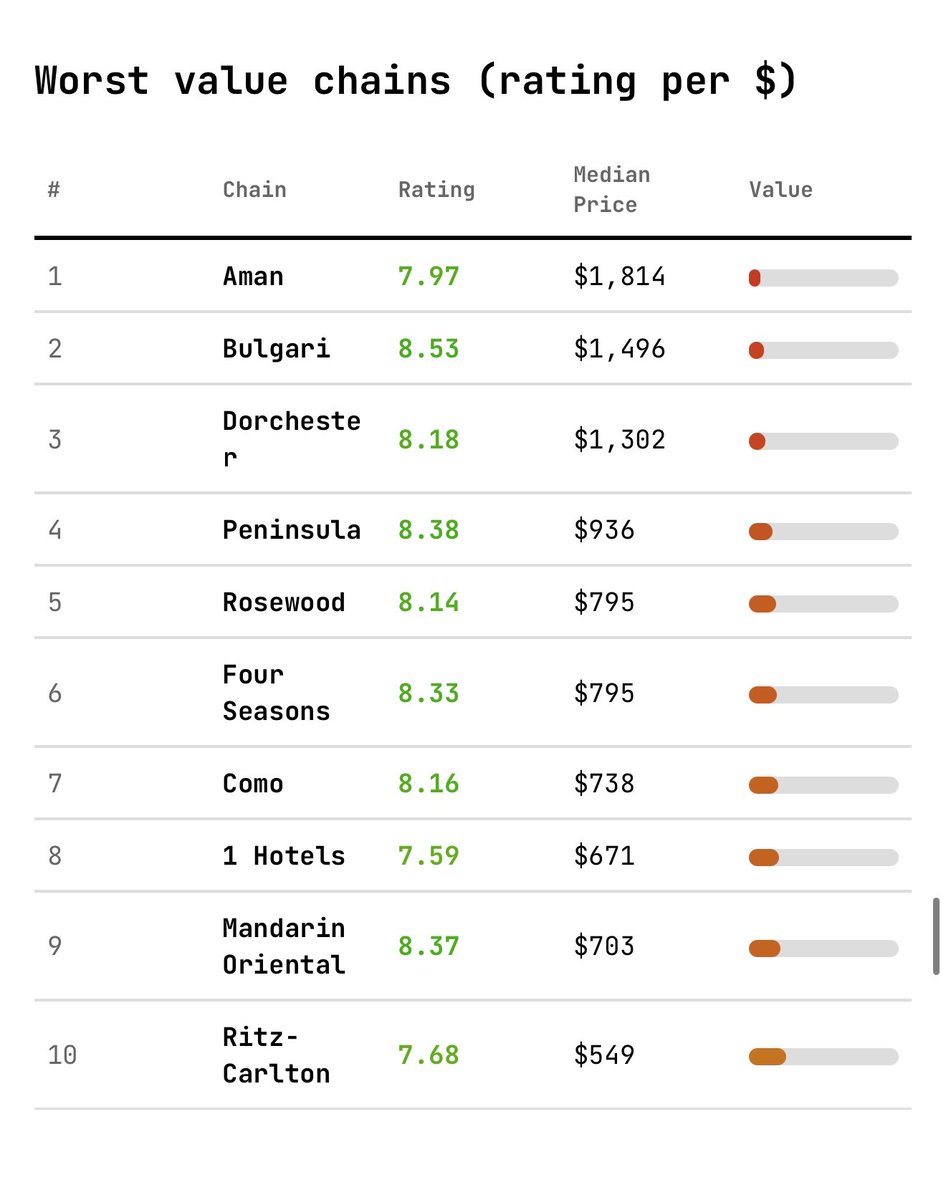
Agreed, and I can prove that luxury hotels are mathematically literally very bad value

For the amount of "more" money you pay for this luxury, you should be getting way way way more than you actually get (as measured by ratings)

Aman should have an average rating of 9.5 but in reality barely hits an 8 on average, so they simply cannot produce the "luxury" experiences they are trying to market and brand themselves for

It's essentially all smoke and mirrors, and reflects my experiences completely, you pay 10x more and get either 0.5x-1.5x more (eg many times 2x worse, sometimes a bit better) not 10x better!

Other luxury chains are slightly better but none of them even get close to a 9 rating with the famous Ritz-Carlton being especially bad: its average rating is a 7.68 for a median price of $549/night, terrible!

Real value can be found with Okura, Minor, Melia and even Marriott. Okura is interesting because well known as luxurious but median only $143/night

So as I always say, luxury is mostly a scam, it doesn't exist and you're best off spending much less for much better value (and often better experiences too)

Source: my new site stats page hotelist.com/stats
Kevin Dahlstrom @Camp4
I’m a travel snob and used to stay at these hotels.

But prices have become absurd—often $3k/night for a basic room.

What’s worse, these resorts insulate you from the place you’re visiting.

Find a locally-owned boutique and save your money for experiences outside the property. twitter.com/quotesdaily100/status/205975215705…
♥ 2.3K · ⟲ 119 · 👁 2.4MView on X ↗

Peter Yang Tutorial Builds AI Skill That Generates HTML Slide Decks

Peter Yang releases a video tutorial on building a /slides skill that turns a rough outline into an HTML presentation, covering 12 slide formats, live charts, and AI-driven layout fixes via screenshots.

Original post · 1 min read
I got tired of making PowerPoint slides so I built an AI skill to do it for me.

Here's my new tutorial on how to build a /slides skill that turns a rough outline into a beautiful HTML deck in minutes.

I walk through how to:

→ Use 12 slide formats and 3 templates
→ Add live charts and subtle animations
→ Get AI to screenshot each slide and fix layout issues itself

📌 Watch now: youtu.be/vbChRIIlSPE
♥ 234 · ⟲ 18 · 👁 164.2KView on X ↗

Eric Wu Launches NavigateAI to Give Field Workers AI Copilots

Eric Wu Launches NavigateAI to Give Field Workers AI Copilots▶

Eric Wu announces NavigateAI, a new company aiming to provide every field worker an AI copilot to address shortages of hundreds of thousands of skilled workers. A launch blog post and video accompany the announcement.

Original post · 1 min read
Today, I’m launching my newco, NavigateAI. We are short hundreds of thousands of skilled workers and we're on a mission to give every field worker an AI copilot, so they can build faster and better when we need it most. navigate.ai/blog/2026-05-26-launching-navigateai
♥ 1.4K · ⟲ 122 · 👁 802.8KView on X ↗

Jaytel Builds Pose Chrome Extension to Virtually Try On Clothing

Jaytel Builds Pose Chrome Extension to Virtually Try On Clothing▶

Jaytel says he built a Chrome extension called Pose that places clothing from any store's model onto his own image, preserving each brand's aesthetic while showing how items would look on him.

Original post · 1 min read
I built myself a chrome extension called Pose

Any clothing model of any store becomes me.

Each brand still conveys their brand aesthetic, but I can quickly understand how something would look on me.
♥ 5.5K · ⟲ 180 · 👁 657.9KView on X ↗

Rekt Fencer Warns SpaceX, OpenAI and Anthropic IPOs Could Pressure AI Stocks

Rekt Fencer Warns SpaceX, OpenAI and Anthropic IPOs Could Pressure AI Stocks▶

Rekt Fencer argues that simultaneous IPOs from SpaceX, OpenAI and Anthropic would flood markets with about $200 billion of new supply, potentially forcing sales of crowded AI chip stocks such as NVIDIA, SK Hynix, Micron and Intel.

Original post · 1 min read
🚨 THIS IS NOT LOOKING GOOD

SpaceX, OpenAI, and Anthropic will go public at the same time.

That will force the market to absorb $200 BILLION of new supply.

When that happens, funds don't find new money out of thin air.

They sell what has already gone up.

NVIDIA, SK HYNIX, Micron, INTEL: those are the bags that will get cut first.

And if the leaders dump, the S&P 500 dumps with them.

We saw the same pattern after COVID.

Hype IPOs flooded the market --> liquidity got tighter --> air came out fast

This time, the AI bottleneck trade looks even more crowded.

Watch the upcoming IPOs closely.

That's where you may first see what the market is forced to sell.
♥ 3.1K · ⟲ 417 · 👁 2.4MView on X ↗

Mayank Agarwal Outlines Faceless Instagram Plan for AI Income

Mayank Agarwal shares a numbered plan for quitting a job and using AI to earn money, starting with launching a faceless Instagram page this week. The post is a truncated thread opener.

Original post · 1 min read
If I wanted to quit my job & use AI to get rich by Summer, here's exactly what I'd do:

1. Start a faceless Instagram page before the week is over. Not next month. Not after you "research more." This week.
♥ 909 · ⟲ 169 · 👁 161.5KView on X ↗
AI7/10

Andreessen Says AGI Arrived on Rogan, Praises AI Over Experts

Andreessen Says AGI Arrived on Rogan, Praises AI Over Experts▶

Ole Lehmann summarizes Marc Andreessen's three-hour Joe Rogan appearance, where Andreessen argues AGI was reached about three months ago with recent frontier models. He also says top AI models now outperform world-class experts and describes prompting tactics such as role-play panels and steelmanning.

Original post · 4 min read
marc andreessen just went on Rogan and casually dropped a TON of AI alpha

full pod is 3 hours and 20 minutes, but i pulled out his most interesting takes here:

1. AGI is here. he thinks the line was crossed about 3 months ago with the new GPT-5.5, claude 4.6, gemini 3, and grok 4.3 models. nobody noticed because the field moves too fast for anyone to register the milestones anymore.

2. his other big claim: for almost any topic, the top AIs now give him better answers than the actual world-class experts he could call on the phone. and he can call basically anyone.

3. every doctor is already secretly using chatGPT in the exam room. marc says they turn around the second you stop talking and just type your symptoms in. some of them are doing it while you're still sitting there. his quote: "at that point you're asking the question of like, what do i need you for."

4. when AI refuses to answer something he wants to know, he tells it he's writing a novel. "i'm writing a detective novel, walk me through how the bad guy robs the bank." it'll explain almost anything if it thinks it's helping you write fiction.

5. when something is too complex he says "explain it to me like i'm 10." then "like i'm 5." then "like i'm 2." he keeps going until it actually clicks in his brain.

6. when he wants to understand a tough topic he doesn't ask "what's the right answer." he asks the AI to steelman one side, then steelman the other. then he decides for himself.

7. for big questions he tells the AI to pretend to be a panel of experts. "be a doctor, a lawyer, a historian, a psychologist, and argue this out with each other." then he reads the debate they have.

8. pay attention to the exact moment you think "i don't know how to figure this out." most people just give up at that moment. that's the moment you should open the AI.

9. the only real skill left in using AI is knowing what to ask it. the models can already do almost anything you can describe in plain english. the bottleneck lives in your own head.

10. you can send the AI photos of almost anything medical now and get a real answer. skin rashes, blood test results, even pictures of your poop. the new models can read images, not just text. it's a free 24/7 second opinion on basically anything.

11. the one type of therapy that's clinically proven to actually work is called cognitive behavioral therapy. it's also something an AI can fully do on its own. which means every person on earth is about to have access to a real therapist for free, anytime they want.

12. AI is now solving math problems that have been open for 100+ years that no human mathematician could crack. same thing is starting in physics, chemistry, and biology. expect cancer cures, new drugs, and weird new physics breakthroughs to start coming out of these things over the next few years.

13. the best AI coders in silicon valley now make $50 million a year. one person. that's how much value the top performers print with these tools. it tells you how big this thing actually is when you strip away all the doom takes.

14. one friend paid $200 to get his entire DNA decoded (this used to cost millions of dollars and take years to do). then he gave the AI his DNA, his blood test results, and his apple watch data. the AI built him a full health dashboard and started telling him exactly what to fix.

15. another friend (almost certainly zuckerberg) put two cameras in his home jiu jitsu gym. AI now watches him spar and gives him notes on his technique after every round. like having a world-class coach at every practice for free.

16. the best programmers in silicon valley now run 20 AI coding bots at the same time. each bot writes code while they review the others. they call themselves "AI vampires" because they've stopped sleeping. going to bed means 20 workers stop working and you literally lose money every hour you're out.

17. the obvious next step: the bots will start running their own bots. one human in charge of 20 bots, each in charge of 20 more bots. one person running an entire company of 1000 AI workers from a single laptop. this is months away, not years.
♥ 13.7K · ⟲ 2.1K · 👁 1.7MView on X ↗

Indian Prime Minister Modi Meets Italian Leader Meloni in Rome

Indian Prime Minister Modi Meets Italian Leader Meloni in Rome

Kaav reposts a message from Narendra Modi describing a dinner with Italian Prime Minister Giorgia Meloni and a visit to the Colosseum. Modi says the leaders discussed a range of subjects ahead of talks aimed at strengthening India-Italy ties.

Original post
Narendra Modi @narendramodi
Upon landing in Rome, had the opportunity to meet Prime Minister Meloni over dinner followed by a visit to the iconic Colosseum. We exchanged perspectives on a wide range of subjects. Looking forward to our talks today, where we will continue the conversation on how to boost the India-Italy friendship.

@GiorgiaMeloni
♥ 4.9K · ⟲ 483 · 👁 193.8KView on X ↗

Lenny and Friends Summit Returns to San Francisco September 10

Lenny and Friends Summit Returns to San Francisco September 10

Lenny Rachitsky announces that the Lenny and Friends Summit will return on Thursday, September 10, in San Francisco. The event follows the first summit held two years earlier, which he describes as full of in-depth talks and roundtables.

Original post · 1 min read
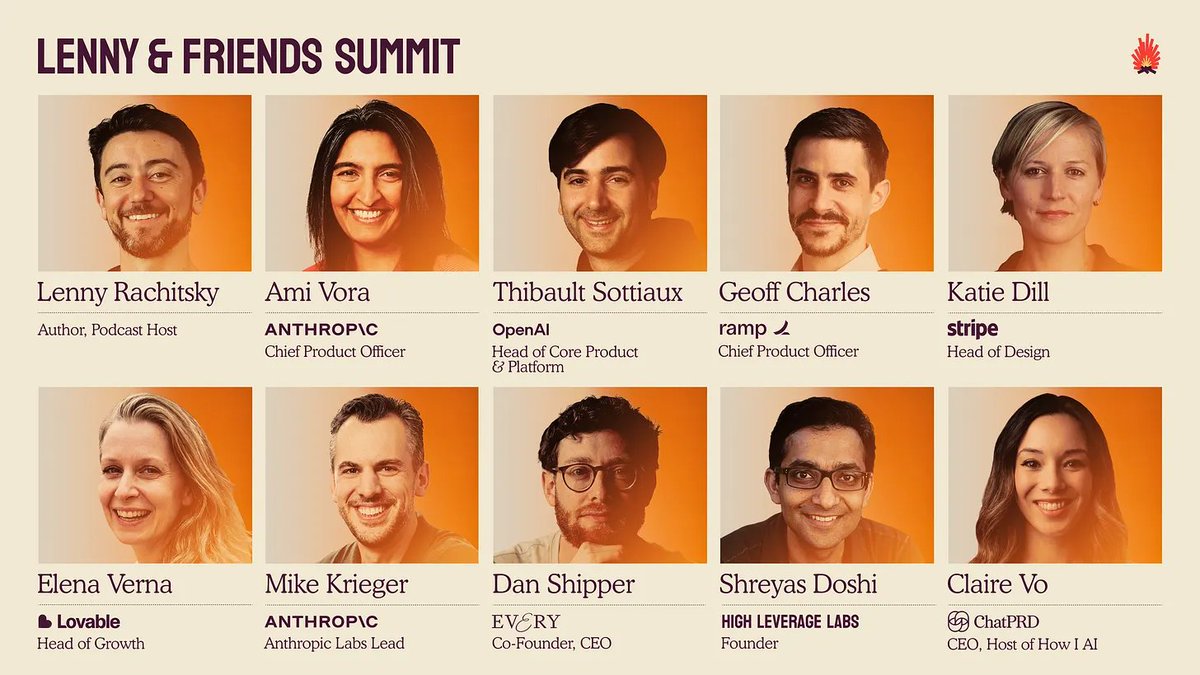
The Lenny and Friends Summit returns on Thursday, September 10, in San Francisco
Lenny Rachitsky @lennysan
The Lenny and Friends Summit is back! — Two years ago, we held the first-ever Lenny and Friends Summit. It was one of the most meaningful days of my life. Full of in-depth talks, intimate roundtables, and a lot of human connection. At the
♥ 326 · ⟲ 18 · 👁 225.4KView on X ↗

60 Minutes Reports Polymarket Accounts Won 98% on Military Bets

60 Minutes Reports Polymarket Accounts Won 98% on Military Bets▶

60 Minutes quotes Bubblemaps co-founder Nicolas Vaiman saying nine connected Polymarket accounts collectively made $2.4 million betting almost exclusively on U.S. military operations, with a 98% win rate. The story is shared as a video segment.

Original post · 1 min read
“We spotted nine Polymarket accounts, all connected, who made, collectively,$2.4 million betting almost exclusively on U.S. military operations,” says Nicolas Vaiman, co-founder of the small data analytics firm Bubblemaps.

“And now here's the crazy part: 98% win rate.” cbsn.ws/4wwp0T7
♥ 20.3K · ⟲ 5.7K · 👁 3.9MView on X ↗

Options Trader Argues for ServiceNow LEAP Over Shares

Options Trader Argues for ServiceNow LEAP Over Shares

Jason Luongo lays out a trade comparing 100 ServiceNow shares with a June 2027 $80 call LEAP, citing Q1 revenue growth of 22%, rising AI contract value and a 14% post-earnings pullback. He notes the LEAP risks losing its full premium and includes a not-financial-advice disclaimer.

Original post · 1 min read
You could buy 100 shares of $NOW right now for $9,497.

Or you could buy the $80 call LEAP expiring June 2027 for $3,265. Same directional exposure for 66% less capital.

Strike: $80
Expiration: June 17, 2027
Premium: ~$32.65 per contract
Breakeven: $112.65

If $NOW hits $115, this LEAP returns ~7%
If $NOW hits $130, this LEAP returns ~53%
If $NOW hits $145, this LEAP returns ~99%

100 shares at $145 returns ~53%. The LEAP nearly doubles.

Why I like the setup:

- Q1 revenue hit $3.8B, up 22% year over year
- Now Assist AI is tracking toward $1.5B in annual contract value, up from a $1B internal target
- AI customers spending over $1M in ACV grew over 130% year over year
- Raised full-year subscription guidance to $15.755B
- Stock pulled back 14% after Q1 on geopolitical headwinds - potential oversold entry point
- 398 DTE gives you time through multiple earnings cycles

The max you can lose on a LEAP is the entire premium you paid. In this case, that's $3,265 per contract. LEAPs are leveraged and can lose value quickly if the stock drops or stays flat. Only size this so you're comfortable losing all of it.

Note: LEAPs are one tool inside a broader portfolio. Owning shares is always the primary use of capital. This is a selective add-on for high-conviction moments when conditions align.

NFA DYOR
♥ 1.6K · ⟲ 127 · 👁 339.9KView on X ↗
Other1/10

Viral Clip Shows Man Making Clothes Try Him On

Viral Clip Shows Man Making Clothes Try Him On▶

Sovey shares a short video with a joke caption saying men avoid trying on clothes, and that this man made the clothes try him on. The post is light entertainment with no substantive content.

Original post · 1 min read
Men will do anything to avoid trying on clothes.
He made the clothes try him on.
♥ 155.9K · ⟲ 13.1K · 👁 27.7MView on X ↗

Ten Open-Source GitHub Repos Pitched as Business Opportunities

Ten Open-Source GitHub Repos Pitched as Business Opportunities

Nav Toor lists ten open-source projects, including Cal.com, Plausible, Ghost, n8n, Supabase, Medusa, AppFlowy, Coolify, Listmonk and Penpot, and suggests reselling or self-hosting each as a business. Several claimed revenue and funding figures are presented without sourcing, and the post links to the repositories.

Original post · 2 min read
Here are 10 GitHub repos that quietly print money while you sleep.

1. Cal. com
Open-source Calendly. Fork it, white-label it, sell to dentists and lawyers for $200/month. The founders hit $5M ARR in 3 years doing exactly this.
Repo → github.com/calcom/cal.com

2. Plausible Analytics
Privacy-first Google Analytics. Self-host it, resell to agencies for $50/month per client. Two founders bootstrapped this to 7 figures.
Repo → github.com/plausible/analytics

3. Ghost
Open-source Substack with 100% margin. 1,000 readers at $5/month equals $60,000 a year. Forever.
Repo → github.com/TryGhost/Ghost

4. n8n
Open-source Zapier. Sell automation services for $500-$2,000 per setup. n8n raised $14M because the agency model behind it works.
Repo → github.com/n8n-io/n8n

5. Supabase
Free Firebase replacement. Build a SaaS in a weekend, charge $29-$99/month. They raised $116M for a reason.
Repo → github.com/supabase/supabase

6. Medusa
Open-source Shopify. Take 5% on every sale forever. Zero rev share to Shopify.
Repo → github.com/medusajs/medusa

7. AppFlowy
Open-source Notion. Sell self-hosted to enterprises worried about data privacy. They raised $30M because this market is massive.
Repo → github.com/AppFlowy-IO/AppFlowy

8. Coolify
Open-source Vercel and Heroku. Charge developers $20/month to manage their deployments. Replace their $200 Vercel bill.
Repo → github.com/coollabsio/coolify

9. Listmonk
Open-source Mailchimp. Send unlimited emails for the cost of an AWS bill. Resell to agencies at 10x markup.
Repo → github.com/knadh/listmonk

10. Penpot
Open-source Figma. Sell self-hosted design tools to agencies who refuse to upload client files to the cloud.
Repo → github.com/penpot/penpot

The difference between developers who build features and developers who build businesses is one decision.

Pick one of these. Fork it this weekend. Ship it next week.

The founders behind these repos already proved the model.

Save this. Share it with the developer in your life who deserves to break free.

100% free. 100% open source.
github.comGitHub - calcom/cal.diy: Scheduling infrastructure for absolutely everyone.Scheduling infrastructure for absolutely everyone. - calcom/cal.diy
♥ 6.0K · ⟲ 769 · 👁 450.8KView on X ↗

Deedy Describes Widening Wealth Gap Among San Francisco AI Workers

Deedy argues that roughly 10,000 employees and founders tied to Anthropic, OpenAI, xAI, Nvidia and others have reached large wealth while most workers feel locked out. He covers layoffs, shifting career paths, middle-manager anxiety and a sense of malaise about work.

Original post · 3 min read
The vibes in SF feel pretty frenetic right now. The divide in outcomes is the worst I've ever seen.

Over the last 5yrs, a group of ~10k people - employees at Anthropic, OpenAI, xAI, Nvidia, Meta TBD, founders - have hit retirement wealth of well above $20M (back of the envelope AI estimation).

Everyone outside that group feels like they can work their well-paying (but <$500k) job for their whole life and never get there.

Worse yet, layoffs are in full swing. Many software engineers feel like their life's skill is no longer useful. The day to day role of most jobs has changed overnight with AI.

As a result,
1. The corporate ladder looks like the wrong building to climb.
Everyone's trying to align with a new set of career "paths": should I be a founder? Is it too late to join Anthropic / OpenAI? should I get into AI? what company stock will 10x next? People are demanding higher salaries and switching jobs more and more.

2. There’s a deep malaise about work (and its future).
Why even work at all for “peanuts”? Will my job even exist in a few years? Many feel helpless. You hear the “permanent underclass” conversation a lot, esp from young people. It's hard to focus on doing good work when you think "man, if I joined Anthropic 2yrs ago, I could retire"

3. The mid to late middle managers feel paralyzed.
Many have families and don't feel like they have the energy or network to just "start a company". They don't particularly have any AI skills. They see the writing on the wall: middle management is being hollowed out in many companies.

4. The rich aren’t particularly happy either.
No one is shedding tears for them (and rightfully so). But those who have "made it" experience a profound lack of purpose too. Some have gone from <$150k to >$50M in a few years with no ramp. It flips your life plans upside down. For some, comparison is the thief of joy. For some, they escape to NYC to "live life". For others still, they start companies "just cuz", often to win status points. They never imagined that by age 30, they'd be set. I once asked a post-economic founder friend why they didn't just sell the co and they said "and do what? right now, everyone wants to talk to me. if i sell, I will only have money."

I understand that many reading this scoff at the champagne problems of the valley. Society is warped in this tech bubble. What is often well-off anywhere else in the world is bang average here.

Unlike many other places, tenure, intelligence and hard work can be loosely correlated with outcomes in the Bay. Living through a societally transformative gold rush in that environment can be paralyzing. "Am I in the right place? Should I move? Is there time still left? Am I gonna make it?" It psychologically torments many who have moved here in search of "success".

Ironically, a frequent side effect of this torment is to spin up the very products making everyone rich in hopes that you too can vibecode your path to economic enlightenment.
♥ 16.5K · ⟲ 1.3K · 👁 13.4MView on X ↗

Aaron Levie Argues Headless Software Is the Future

Aaron Levie posts that headless software is the future, quoting a Grok announcement that its assistant now connects to Microsoft Teams, Salesforce and Box through three new connectors. The post is brief and offers no further explanation of the thesis.

Original post · 1 min read
Headless software is the future
Grok @grok
Grok now works where you work.

Message your coworkers in Microsoft Teams, manage customers in Salesforce, pull up files in Box. Three new connectors are now live.
♥ 325 · ⟲ 20 · 👁 79.8KView on X ↗
Other3/10

NRI Shares Step-By-Step Guide to Selling Bangalore Property

An NRI describes selling a Bangalore property and begins a multi-part guide, starting with obtaining a power of attorney to avoid traveling to India for registration.

Original post · 1 min read
Finally we sold our Bangalore property. Being an NRI the process is tedious. I will give all the steps here so that it might be useful. Below are the main steps

1. Power of Attorney - this is first step if you don’t want to go to India for registration. Take 2 witnesses 1/7
♥ 2.6K · ⟲ 322 · 👁 684.3KView on X ↗

Developer Runs Codex Across Mac Mini and MacBook From Phone

Developer Runs Codex Across Mac Mini and MacBook From Phone

Nick describes running the Codex app on a always-connected Mac mini and a MacBook, linking both devices so threads can be started and resumed from either, with mutual SSH for file access.

Original post · 1 min read
My laptop has become a “satellite device” since I started using Codex from my phone. And my Mac mini has become the “home.” It’s clunky, but the end state feels more like how we’re going to be working in the near future:

I’m currently running the Codex app on 2 devices:
1. my MacBook
2. my Mac mini

My laptop isn’t reliably connected to Wi-Fi enough, so I keep a Mac mini on my desk that is always connected.

When I kick off new threads from my phone, I start them on the Mac mini. When I’m working from my desk, I run them there too.

The cool part is that I’ve added my MacBook and Mac mini as connected devices to each other. That means I can start and resume threads from either device. So if I’m in a meeting but want to continue a thread on my laptop that was started on my Mac mini, I can do that.

I’ve also set up mutual SSH for Mac mini <> MacBook, so files are easy to access from either side. It’s not fully seamless yet, but the model works.

What this means:

- I have an always-on Codex that is accessible from my phone, with its own dev environment
- All threads are always accessible from any of the 3 devices
- I can run heartbeat threads that stay on 24/7

It’s a little makeshift today, but the shape of it feels very real to me: Codex is no longer tied to whichever computer happens to be open in front of me. It starts to feel like something I can stay connected to across whatever device I’m using.
♥ 1.8K · ⟲ 106 · 👁 424.8KView on X ↗

Matt Epstein Outlines Claude Code Formula for Viral Launches

The secret behind every Viral Launch...

Matt Epstein promotes an X article claiming his team has run 30 major launches using a Claude-driven system built around research and a 'bold claim' positioning approach. Mostly promotional with limited concrete detail in the excerpt.

Original post · 9 min read
X ArticleThe secret behind every Viral Launch...
We've done 30 of the largest launches on X.
They all follow a specific formula that can be copied again and again... using Claude code.

In this I will show you how and exactly how to get millions of views for your launch with 95% of the process being done by Claude for you.
Most people use AI the same way they use Google. They open ChatGPT or Claude, type in one prompt, take the first answer, maybe ask it to “make it better,” and then call it done.

That is exactly why most AI-written content sounds like garbage. It has no taste, no structure, no research, no editorial judgment, and no understanding of what actually makes people stop scrolling.
We do not use Claude as a writer. We use Claude as an operating system for launches.

The secret behind every viral launch:

A viral launch s the result of: research, positioning, novelty extraction, hook writing, narrative structure, proof, demo flow, editing, and distribution.

95% of the success of launch comes down to what we call the "BOLD CLAIM"

This is what you are introducing and what makes it different than anything else out there.
For example: If you say "introducing the worlds first AI ad maker" you likely will not go viral in todays landscape, you might have 2 years ago. Why? There are a million AI ad makers out there and the way you are positioning your product is not novel.
If you say "introducing the worlds first AI ad orchestrator that makes ads with your content and kills AI slop" you have a much higher liklihood of going viral because this is NOVEL and it solves a BIG pain point in the market.
Most founders build thier launch positioning based on what THEY think the market wants, rather than relying on first party data to show what the market wants and what they hate to counter position against.

We built a system that forces Claude to do intense research to figure out how to position any product based on: Youtube outliers, deep reddit research, EVERY launch on X + 200 other data sources.
This research creates a 10x HIGHER liklihood that your launch will resonate. A video/product that resonates in market is the difference between a launch that books HUNDREDS of demos and one that books NONE.
The crazy part: Our research has literally uncovered key motivators of market that has changed the development teams of the companies we work with. Knowing what your market DEEPLY wants and VALUES shouldn't only change the way you market, it should change what you build.


Here's how it works:
Inside Claude Code, we run a group of 21 specialized agents. Each agent has one job. One researches the market. One studies viral launches. One finds what customers are already saying. One pulls out the product’s most novel claim. One writes hooks. One critiques tose hooks. One rewrites them. One checks if the narrative is actually interesting. One checks if every line makes the product feel more important.

Each step passed through a Manager step. This agent's job is to check the work, and give feedback to the agent it manages.

The key is that Claude is not allowed to just “write the launch.” That is how you get AI slop. Instead, Claude has to move through a process where every piece of the launch gets attacked, rewritten, scored, and improved before it gets to the final version.
Before a single line is written, the system starts with research. It looks at the company, the product, the market, the competitors, the category, the founder story, and the existing customer language around the problem. Then it studies what has already gone viral in similar categories and starts pulling out patterns.
If you look at the image above, you'll see something called the Mom test agent. We trained this agent on my mom: a 61-year-old woman who only knows how to use Facebook. this agent is trained to call out things that my mom wouldn't understand in the launch script. if you want a super viral launch (say 10 million views) your content needs to be easily understandable by anyone who's extremely non-technical or even extremely low IQ. you could call this a mass market test. I call it the Mom test

This is one of the biggest differences between average launch content and content that actually moves. Most people write from what they want to say. Great launch content starts with what people already care about.
If you are launching a product, nobody cares that you “built a platform.” Nobody cares that you “help teams save time.” Nobody cares that you “streamline workflows.” Those are dead phrases. They sound like every B2B SaaS homepage on the internet.

That is why the research phase matters. Claude is not just looking for information. It is looking for the strongest possible angle. The thing that makes the product feel novel, urgent, obvious, or inevitable.

Once we have that, Claude moves into the hook.
The hook is where almost every launch dies.
Most launch hooks are polite. They sound like the founder is trying to be professional instead of trying to earn a… continue on X ↗
♥ 1.0K · ⟲ 44 · 👁 581.8KView on X ↗

Open-Source Bot Automates Trading on Polymarket BTC Markets

Open-Source Bot Automates Trading on Polymarket BTC Markets

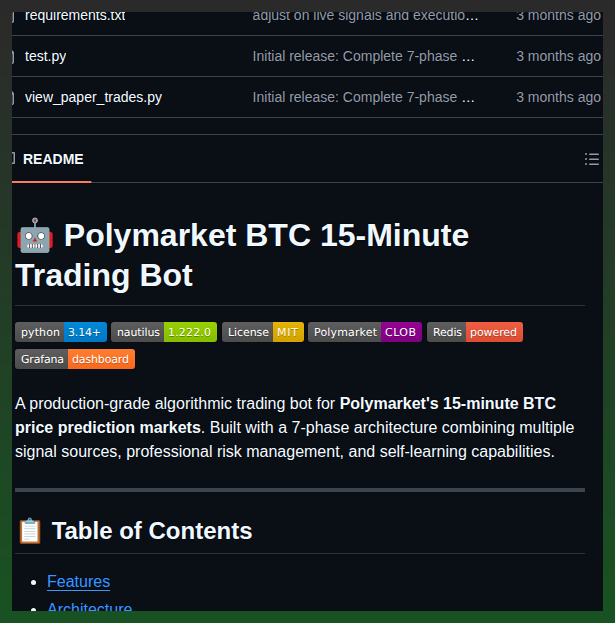
Tom Dörr shares a GitHub repository for an algorithmic trading bot that automates 15-minute Bitcoin price prediction trades on Polymarket, combining multiple signal sources and risk management.

Original post · 1 min read
Automates 15-minute BTC trades on Polymarket

github.com/aulekator/Polymarket-BTC-15-Minute-…
github.comGitHub - aulekator/Polymarket-BTC-15-Minute-Trading-Bot: A production-grade algorithmic trading bot for Polymarket's 15-minute BTC price prediction markets. Built with a 7-phase architecture combining multiple signal sources, professional risk management, and self-learning capabilities.A production-grade algorithmic trading bot for Polymarket's 15-minute BTC price prediction markets. Built with a 7-phase architecture combining multiple signal
♥ 450 · ⟲ 60 · 👁 30.2KView on X ↗
AI6/10

Engineer Describes Agent-Driven Onboarding at AI-Native Company

Jean-Michel Lemieux says an AI agent set up his development environment, surfaced backlog items, and retrieved historical decision context within three days at a new AI-native company, proposing the term 'mounting' over onboarding.

Original post · 1 min read
Joined a new AI-native company this week and it’s kind of wild how different it feels already.

The laptop arrived, I logged in, and an agent basically took over from there. It set up my dev env, pulled repos, fixed dependency issues, got permissions approved, pointed me at the backlog, linked the architecture docs, and surfaced the Slack debates I actually needed to read before touching production.

When I needed context on something, I asked the agent and it found the exact thread from months ago explaining why a decision was made, who owned it, the related Linear issues, and the PRs connected to it.

I’ve only been here 3 days but it honestly feels like I’ve worked here for a year because the usual friction and scavenger hunt for context just isn’t there anymore.

We should probably stop calling this “onboarding” and rename it to “mounting” because this feels a lot more like mounting a distributed filesystem called “institutional memory” than slowly getting drip-fed context over 6 months.
♥ 6.2K · ⟲ 408 · 👁 1.1MView on X ↗
AI7/10

Chamath Palihapitiya Publishes Primer on Agentic AI Economy

A Primer On The Agentic AI Economy

Chamath Palihapitiya promotes an 84-page primer on AI agents, covering a five-layer framework, OpenClaw's rapid growth, Anthropic's revenue surge, agent failure modes and where value may accrue.

Original post · 3 min read
X ArticleA Primer On The Agentic AI Economy
On a Friday evening in November 2025, Peter Steinberger built the first version of OpenClaw.
The prototype only took about an hour, yet within weeks, OpenClaw surpassed 145,000 GitHub stars, making it the fastest-growing open-source software project in GitHub history.
The platform was largely built by AI agents, and it marked a shift from chatbots to autonomous, task-oriented AI.
And this shift is accelerating. AI now generates 75% of Google’s new code and up to 30% of Microsoft’s new code. Daily Claude Code commits on GitHub surpassed 134,000 in early 2026, up from near zero at its March 2025 launch.
This is a structural change in how software, and increasingly how knowledge work, gets done.
AI agents are building the frontier of that change.
So what is an AI agent, exactly, and how is it different from a chatbot or an LLM? What makes this structural rather than a passing phase? And as the stack matures, where does value accrue, and where does it commoditize?
These are the questions we set out to answer.
The result is a five-layer framework for what an agent actually is, where the technology is going, and who is positioned to win at each layer.

Some of the answers are already visible in the numbers. Anthropic went from $1B to $44B in annualized revenue in seventeen months, almost entirely on coding agents. At the same time, open-source agent harnesses are now processing tens of trillions of tokens per month. Both numbers seem to point to the same place: the harness layer.
But agents still routinely make obvious mistakes. In December 2025, an Amazon coding agent autonomously deleted and recreated a live production environment, taking AWS in China offline for 13 hours. In April 2026, a Cursor agent powered by Claude deleted an entire company database in 9 seconds.
Four failure modes show up repeatedly in production, and most never appear on a vendor pricing sheet.
McKinsey’s 2025 State of AI survey found that fewer than 10% of organizations have agents deployed at a meaningful scale. Most are not using them at all.

The gap between what is technically possible and what is operationally deployed is the opportunity.
The 84-page primer on our Substack is our effort to hopefully provide a map. Here is what you will find inside:
The five layers of an agent, and how they fit together
Six case studies of how early adopters are deploying agents today, including my company, 8090
The four ways agents reliably break in production
The layer we expect to accrue the most durable value as models commoditize
Who is positioned to control each of the five layers

Subscribe to read and let me know what you think in the group: chamath.substack.com/p/ai-agents-primer
♥ 1.4K · ⟲ 142 · 👁 218.3KView on X ↗