Kim-Mai Cutler responds to a New York Times interview in which Zohran Mamdani said he changed his mind about the role of the private market in housing construction. Her post is a brief quip with no further argument.
Economist Noah Smith posts a brief one-line statement that the situation reflects unimaginable levels of corruption. The post provides no specifics about the subject.
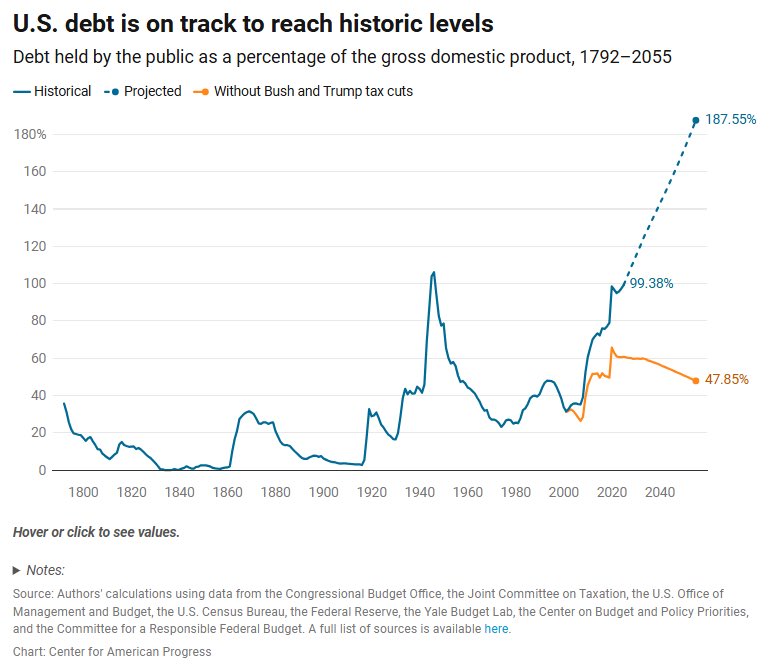
Bobby Kogan argues that Paul Ryan voted for tax cuts that worsened debt repeatedly across his career, and notes he retired at 55. He is responding to a post suggesting Ryan could return to politics in 2028.
Paul Ryan took debt so seriously that he voted for the tax cuts that did this at only 31 years old, and again at 33 years old, and again at 40 years old, and again at 42 years old, and again at 47 years old.
He retired before he could do it yet again at 55 years old.
FWIW, Paul Ryan is only 56 years old. In our age of absolute fiscal irresponsibility, what if the man who took tackling the debt seriously pulls a Winston Churchill and suddenly comes back onto the scene with serious momentum in 2028?
A post recounts that Instagram co-founder Mike Krieger came to the US on an F-1 visa, moved through OPT to an H-1B, and later self-deported amid delays. It argues that a proposed $100,000 H-1B fee would have prevented Instagram's creation.
Instagram co-founder Mike Krieger came to the US on an F-1 visa and then used OPT to get an H-1B. He later decided to self-deport and told Kevin to find a replacement because his H-1B transfer kept getting delayed.
If this administration was in 2010 they would've abused Mike for stealing an American's job, coming on F-1 and using OPT to get H-1B. If the $100k order was passed, Mike would've returned back to Brazil and we wouldn't have Instagram.
Daniel Di Martino says a new rule charging $70,000 for OPT and $30,000 for STEP OPT rests on an unrealistic 44% demand drop assumption, and warns it will harm innovation and cost taxpayers.
It assumes demand drops by 44%, which is an arbitrary and incredibly optimistic scenario. There is no indication that universities will pay this, demand will drop 99%.
This is bad for innovation, and will cost taxpayers.
A post warns of election interference after the administration reportedly refused OSCE observers for the first time in over two decades, a choice that aligns the U.S. with Russia and Belarus. The Justice Department is reportedly preparing to send its own poll monitors.
Trump administration refuses international election monitors for first time in over 2 decades.
The decision not to invite observers from the OSCE puts the U.S. alongside Russia and Belarus, while the Justice Department prepares to deploy its own poll monitors. ms.now/news/trump-midterms-osce-election-obser…
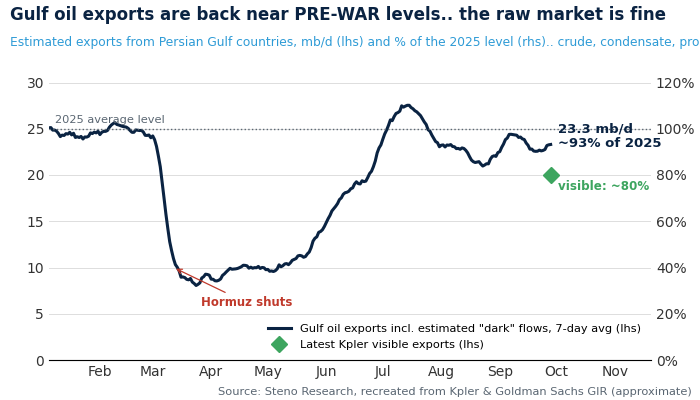
A short post by Andreas Steno Larsen asserts that the United States has essentially won the Hormuz confrontation, accompanied by a photo. The post offers no supporting detail.
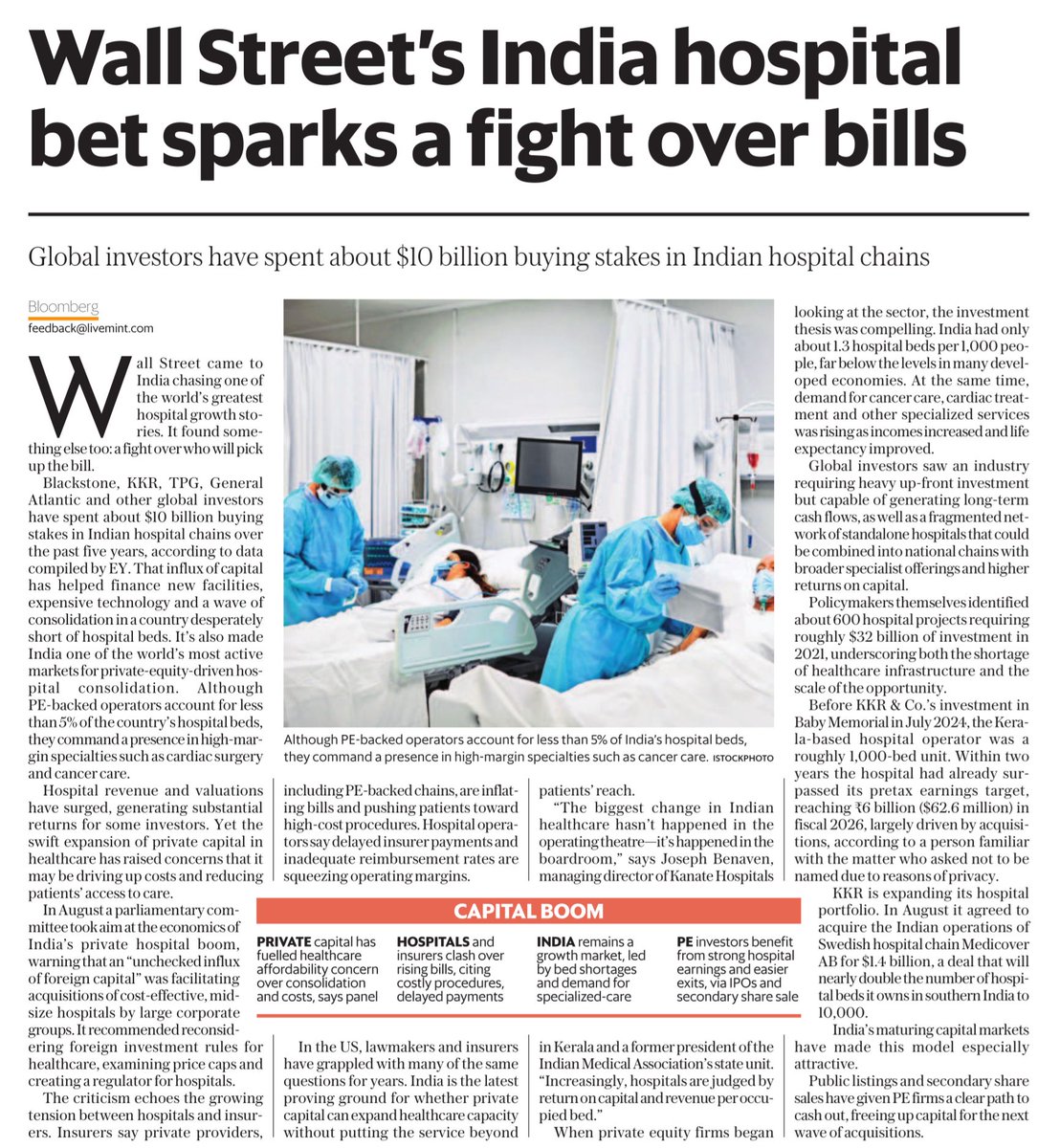
Abhishek Basumallick argues that the corporatization of Indian hospitals should be stopped, criticizes the U.S. healthcare model, and proposes regulating hospitals as public utilities with fixed returns like power companies.
International Cyber Digest reports that ransomware group BYOD leaked personal data of 3,615 Trump Mobile customers, including names, addresses and order details, and claims continued access to the company's backend. Straight Arrow News reported that people in the data confirmed its accuracy.
‼️ BREAKING: Trump Mobile customers have had their personal data leaked by ransomware gang BYOD. The dump covers 3,615 people and includes names, emails, phone numbers, home addresses and order details.
The gang says the company answered news of the breach with "We have no team to handle this."
The leak includes the Trump Organization's own CIO, who oversees its information security.
People listed in the data confirmed their details are accurate and BYOD claims it still has access to Trump Mobile's backend, Straight Arrow News reports.
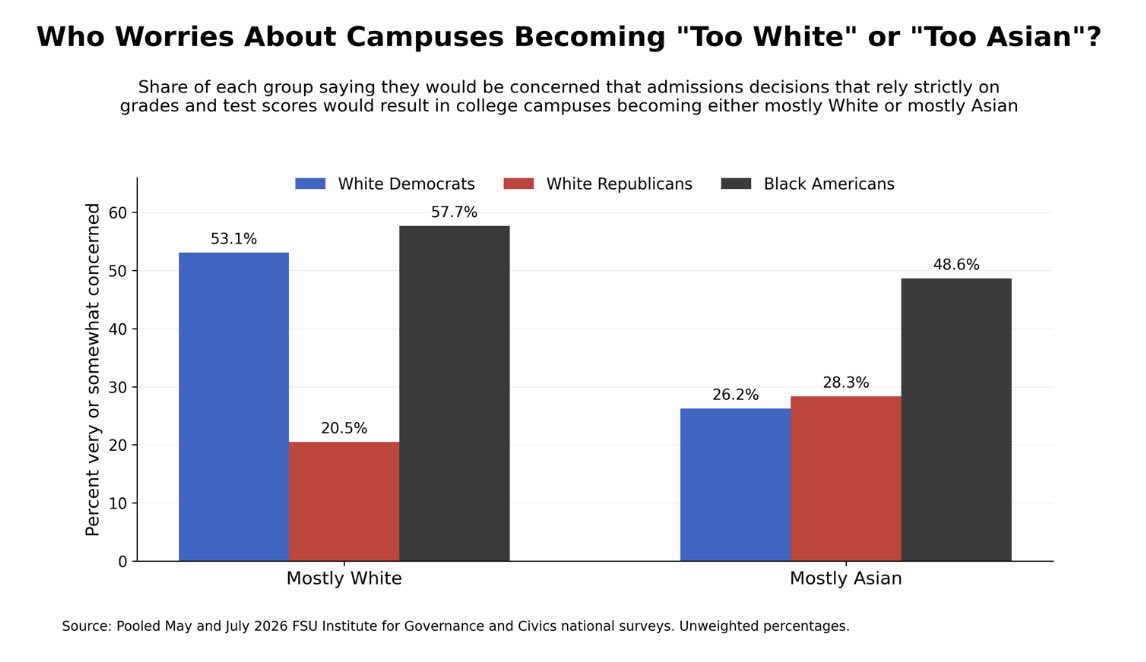
Renu Mukherjee shares research by Michael Hartney finding that only 28% of white Republicans and 26% of white Democrats worry about campuses becoming mostly Asian, and argues the political positions taken on social media may cost candidates support.
Incredible new research from @MichaelTHartney: The Heritage American/Bo French/Woke Right’s position on college admissions is a political loser—even among white Republicans.
ONLY 28% of white Republicans said they were worried about campuses becoming “mostly Asian.” Similarly, only 26% of white Democrats expressed concern. Black Americans were the group most worried about a majority-Asian campus, albeit still under 50% were troubled by the prospect.
X isn’t real life. And if political candidates treat it like it is, then they’re probably going to lose—and they deserve to.
Noah Smith criticizes Christopher Rufo for defending meritocracy when it concerned Black versus White outcomes, yet denouncing it when Indian Americans succeeded. He shares a quoted post from The Atlantic thread on the topic with photos.
Rightists will scream "Colorblind meritocracy!" right up until the point where Indian people start doing well, at which point every rightist turns into Ibram Kendi twitter.com/TheAtlantic/status/210637374192397…
Aakash Gupta argues that Purdue Pharma's guilty pleas and fines failed to deter fraud, as the Sackler family extracted $10.7 billion and the conspiracy continued. He uses this to argue against relying on lawsuits to govern AI, responding to Bill Gates's remarks on AI safety.
In 2007, Purdue Pharma pleaded guilty to lying about OxyContin's addiction risk. The fine was $635 million. Over the next decade, the family that owned Purdue pulled $10.7 billion out of the company.
Bill Gates got asked this week whether lawsuits and corporate self-interest are enough to keep AI safe. He pointed at opioids and called the idea insane. The record backs him up harder than most people realize.
Before the guilty plea, payouts to the Sacklers ran $1.3 billion over twelve years. After it, $10.7 billion in ten. A criminal conviction taught them to move money out of the company faster. OxyContin sales kept growing after the fine.
Here's the detail that should end the debate. When Purdue pleaded guilty a second time in 2020, it admitted the conspiracy to defraud regulators ran from May 2007 to March 2017. May 2007 is the same month as the first guilty plea. The fraud restarted before the ink dried.
The final ledger reads like satire. More than half a million Americans dead from opioid overdoses. Purdue in bankruptcy. The Sacklers settling for $6.5 billion paid out over 15 years, no admission of wrongdoing, nobody in prison.
Liability ran a 20-year live experiment as the safety system for a dangerous product. Every lawsuit happened. Deterrence never showed up, because fines land years after the damage, on whatever shell remains, while the profits moved out long before.
That's why the FDA reviews drugs before they ship, why planes get inspected before takeoff, why cars have to include seat belts.
Gates called AI "the most dangerous thing that humans have ever gone near." You can argue with him on that. But governing it with lawsuits was already tested once, and the people who ran that test kept most of the money.
Noah Smith reacts to a Watcher Guru report that a former senior Federal Reserve official was blackmailed by a Chinese spy after sending nude photos from a government phone via an Asian dating site.
JUST IN: 🇺🇸🇨🇳 Former Senior Federal Reserve official was blackmailed by Chinese spy after using Asian dating site and sending nude photos from his government phone.
Garry Tan recounts an interview with Transportation Secretary Sean Duffy about modernizing air traffic management. Duffy cites the SMART tool from Air Space Intelligence, which predicts congestion and helps spread flights, with controllers still making final decisions.
I asked Secretary Duffy what Americans should be able to do, if we get this decade right, that they can't do today.
Sean Duffy is the Secretary of Transportation, and he sat down with me at our Startup Industrial Base event in DC today. He went straight to how our country's air traffic gets managed.
At the command center, people sit in front of six screens with a paper flight chart above them, trying to make the calls on weather and routing.
His example: four planes reach the same runway at the same time and only one can land. See it two hours out, speed up two, slow one down, and each one lands when the runway is open. "Like, not complicated stuff, but we don't do any of this."
Paper and pencil and minimal human augmentation from software looks like this: Say an airport can take 15 planes in a 15 minute window. "Well, the airlines will schedule 32." He says he's handing the airlines that data and asking them to spread out.
The tool is SMART, from Air Space Intelligence, a small company he says competed with the biggest companies and won. It predicts. His stage example: a 2.5 hour ground stop might only need 45 minutes. He's taken heat for supposedly handing air traffic control to AI. Duffy's answer? "it's dumb AI, not smart AI." Controllers still make every call.
None of this needs a breakthrough. It needs the will of the people to know they need to use software and be ok with AI augmentation instead of insisting on a paper chart and copper wire.
A user shares a reel and argues that social media is harmful for Indians and that countries may make travel visas and immigration harder, reflecting frustration over how Indians are portrayed online.
A post cites US population percentages by ethnic group and questions why Indian Americans, at 1.5 percent, provoke strong reactions. It responds to a podcast episode by Christopher Rufo on demographic change and political preferences.
Non-Hispanic White people are 56% of America. Hispanic Americans are 20.5% Black Americans are 13.5% Native Americans are 2% and Indian Americans are 1.5%
1.5%? That’s what’s freaking these dudes out? Bonkers.
Among other things, this episode cuts to the heart of longstanding foundational political disputes that are simply unreconcilable, but which can longer be brushed aside. Namely that some people (perhaps most people) prefer to live in a homogenous society, and as America tips toward a majority-minority country, that fundamental preference is under threat.
For a long time, liberals, who have more cosmopolitan preferences, have been able to pathologize the desire for homogeneity and subdue any explicit political effort to maintain a white …
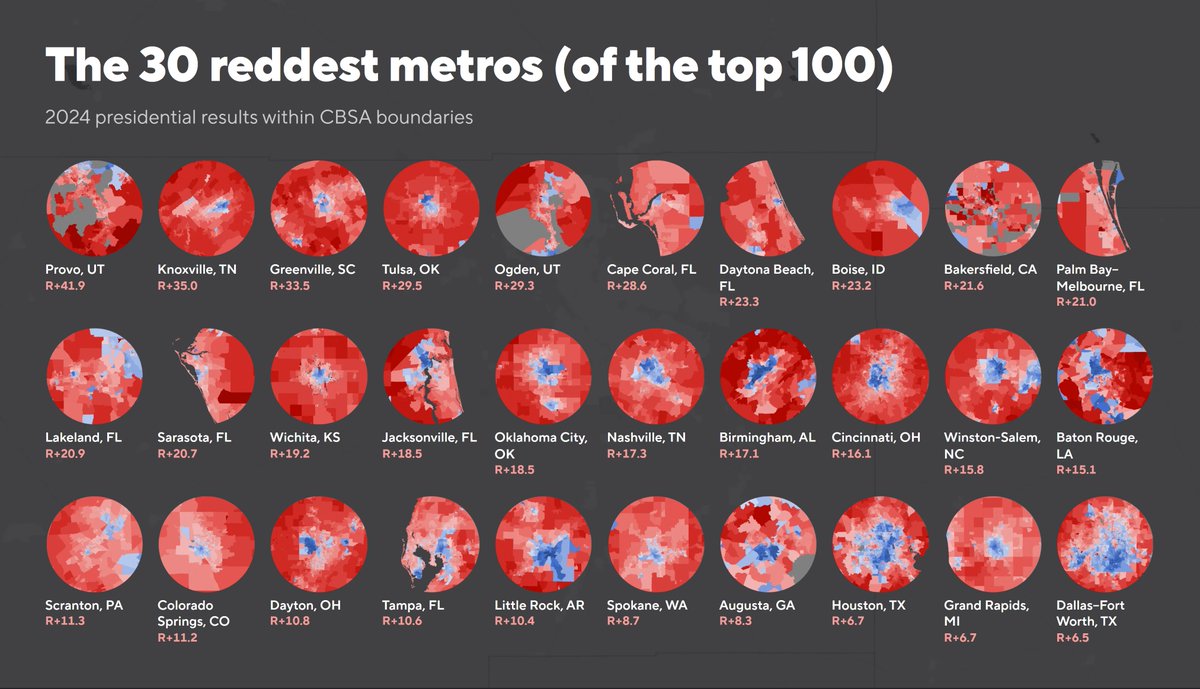
Josh Metcalf shares a chart listing the 30 most Republican metro areas in the United States, posted by popular demand. The post offers no methodology beyond the image.
Jeremiah Johnson summarizes a Christopher Rufo podcast episode in which a guest makes openly racist arguments against Indian Americans. The post is critical of the content and its framing of immigrant assimilation and homogeneity.
I went through and watched Rufo's episode on "The Indian Question" so you don't have to. It's exactly as gross as you think it's going to be.
The typical exchange is something like this:
Rufo: But isn't there actually a sophisticated justification for hating Indians, isn't it secretly about this other factor? The Other Freak: No, no, let me be very clear, we think they're gross and weird and disgusting on a personal racial level, that's the whole thing Rufo: Chagrined smile, concedes the point, moves on
The other freak explicitly makes the arguments that:
* Even though they look assimilated, the Indian American Texas students aren't assimilated because he can notice that they're different. Basically "my racism against them is proof they haven't assimilated" * Racism is actually good, it's good that immigrants should be subjected to "vulgar defamatory racism" (his words) as part of the 'hazing process' of becoming American * It's bad when immigrant groups struggle or use welfare or are poor, but it's also bad when they succeed like Indians do because that's 'cutting in line' for jobs that should have gone to Appalachians * "I don't want to live near non-white people" is a good and normal thing for white people to say and believe, and any attempts to discourage this are leftist shaming. * By the way, I don't owe you an explanation for why I hate living near anyone with dark skin, I just do, so fuck off. * "some of my best friends are indians" * Rufo asks "Is this whole thing just a vehicle for white nationalism?" Other freak "No, that's unrealistic, but god I wish" * At one point, Rufo turns against meritocracy because the Indians are too good at it. * Vivek's tweet about hard work and doing extracurriculars was worse than Bo French's tweet because it criticizes America
It's honestly shocking how much of the conversation is just outright admitting it's a pure racial story and driven by nothing but race. They abandon the idea of high-skill immigrants, they abandon assimilation, they abandon meritocracy, they abandon the idea that we should strive for achievements or growth, all to service the baseline of "I feel icky when I have to see lots of Indians".
Among other things, this episode cuts to the heart of longstanding foundational political disputes that are simply unreconcilable, but which can longer be brushed aside. Namely that some people (perhaps most people) prefer to live in a homogenous society, and as America tips toward a majority-minority country, that fundamental preference is under threat.
For a long time, liberals, who have more cosmopolitan preferences, have been able to pathologize the desire for homogeneity and subdue any explicit political effort to maintain a white …
Aaron Reichlin-Melnick criticizes a podcast episode by Christopher Rufo on the so-called 'Indian Question,' arguing it promotes ethnonationalist ideas. The quoted post describes the episode as discussing a preference for homogeneous society amid America's demographic shift.
Among other things, this episode cuts to the heart of longstanding foundational political disputes that are simply unreconcilable, but which can longer be brushed aside. Namely that some people (perhaps most people) prefer to live in a homogenous society, and as America tips toward a majority-minority country, that fundamental preference is under threat.
For a long time, liberals, who have more cosmopolitan preferences, have been able to pathologize the desire for homogeneity and subdue any explicit political effort to maintain a white …
Todd Schulte condemns a podcast episode titled 'The Indian Question' by Christopher Rufo, calling it xenophobic and arguing the white nationalist framing is strategically flawed. The post quotes an episode description discussing preferences for homogeneous society as America becomes majority-minority.
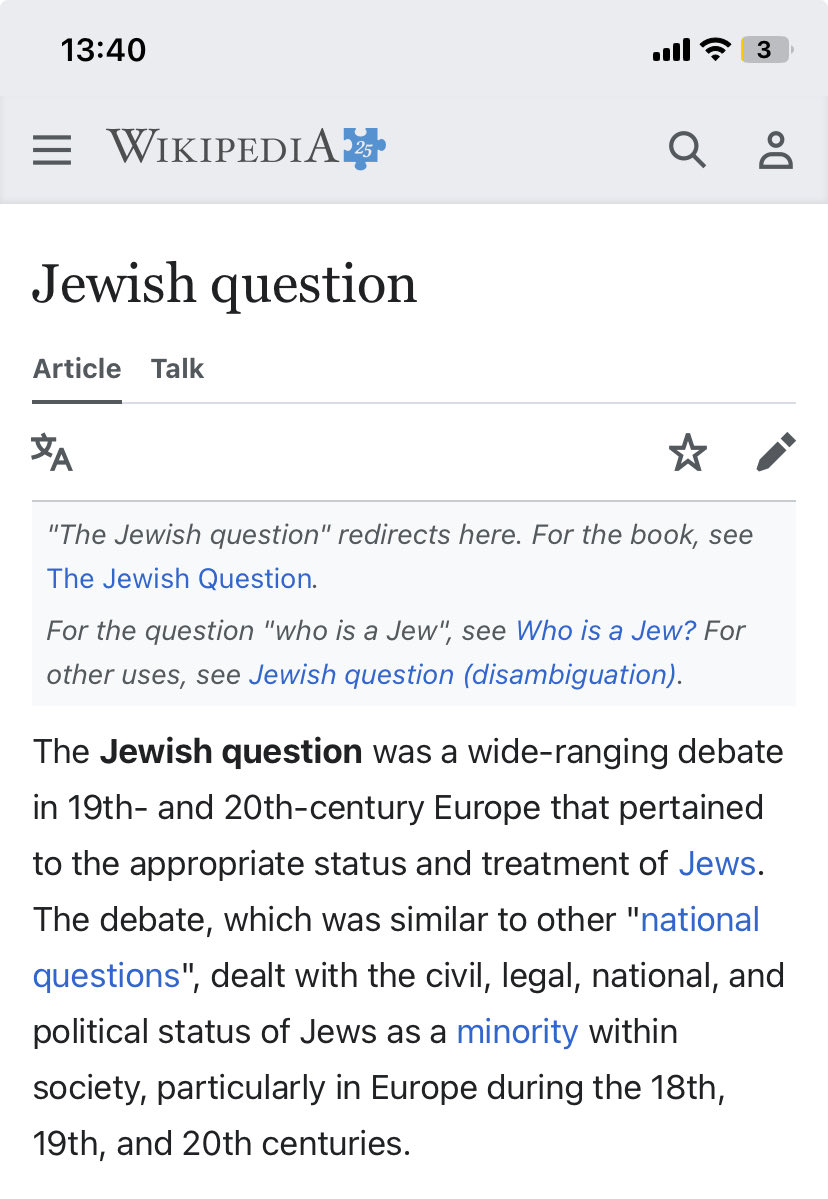
This is really vile stuff. No surprise with the title “The Indian Question” (Google JQ if you’re unclear) but this is just a litany of basic xenophobic garbage, with highlights like “white nationalism’s” — meaning a white ethnostate - problem is it’s not strategic. 1/2
Among other things, this episode cuts to the heart of longstanding foundational political disputes that are simply unreconcilable, but which can longer be brushed aside. Namely that some people (perhaps most people) prefer to live in a homogenous society, and as America tips toward a majority-minority country, that fundamental preference is under threat.
For a long time, liberals, who have more cosmopolitan preferences, have been able to pathologize the desire for homogeneity and subdue any explicit political effort to maintain a white …
Mayukh remarks on the choice of the phrase 'Indian question' in a post quoting a discussion of homogeneity and America's shift toward a majority-minority population. The post is a brief reaction with no further argument.
Among other things, this episode cuts to the heart of longstanding foundational political disputes that are simply unreconcilable, but which can longer be brushed aside. Namely that some people (perhaps most people) prefer to live in a homogenous society, and as America tips toward a majority-minority country, that fundamental preference is under threat.
For a long time, liberals, who have more cosmopolitan preferences, have been able to pathologize the desire for homogeneity and subdue any explicit political effort to maintain a white …
Dr. Joseph Younis responds to claims of H-1B fraud among residency programs, arguing that international medical graduates fill primary care and rural positions because U.S. medical schools produce far fewer graduates than available residency slots. He contends the root problem lies in medical school admissions, not in the programs or the IMGs themselves.
Again, the vast majority of this is not H1B fraud.
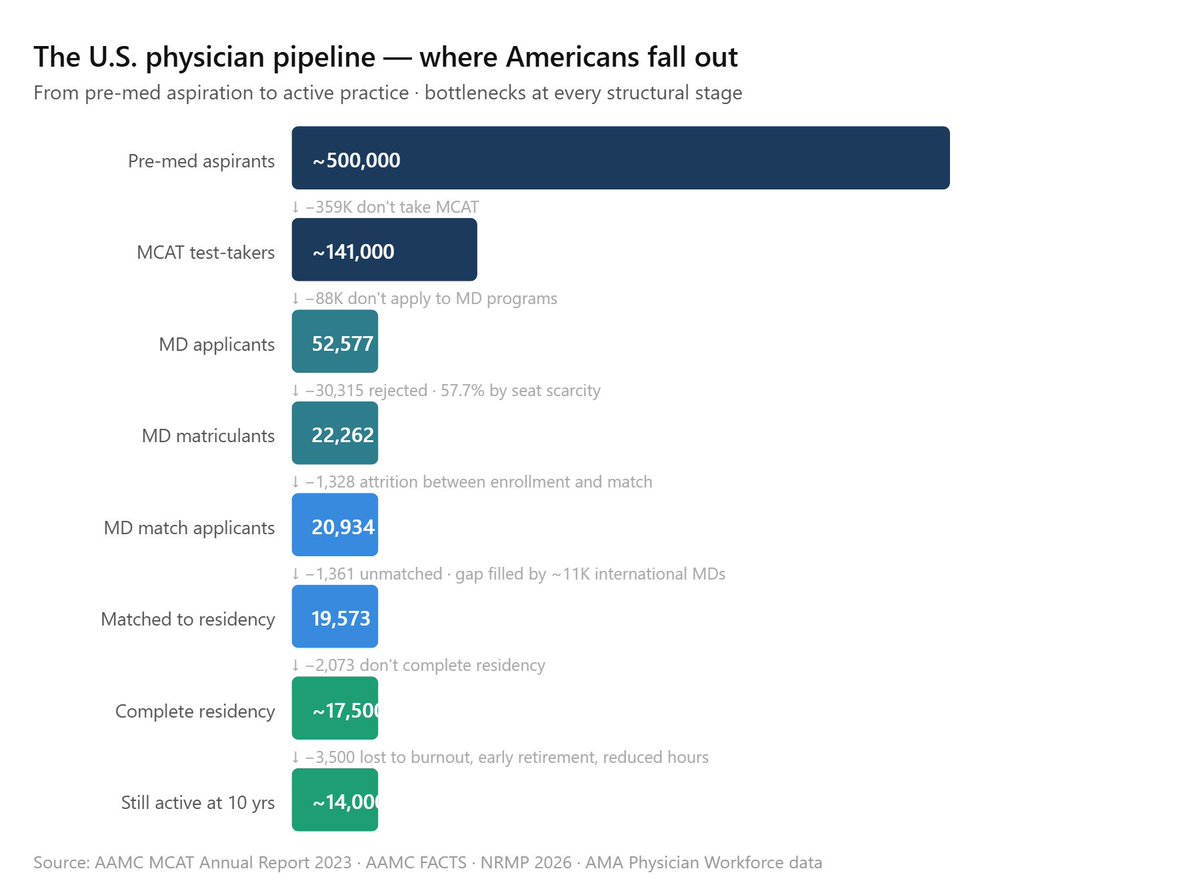
What you’re looking at is a cherry-picked list of community programs that are forced to accept IMGs because U.S. medical schools train 15,000 less medical graduates compared to available residency spots. In 2025, for example, there was 52,577 American college students who applied to medical school and only 22,262 were accepted. BUT, in 2025 there was also ~40,993 residency slots. When you add U.S. MDs and U.S. DOs applying to residency in 2025 you got roughly 27,498. That’s 13,495 short.
Who fills them? Two: U.S. IMGs (American international medical graduates) and non-U.S. IMGs (those are the “foreign” doctors you’re referring to).
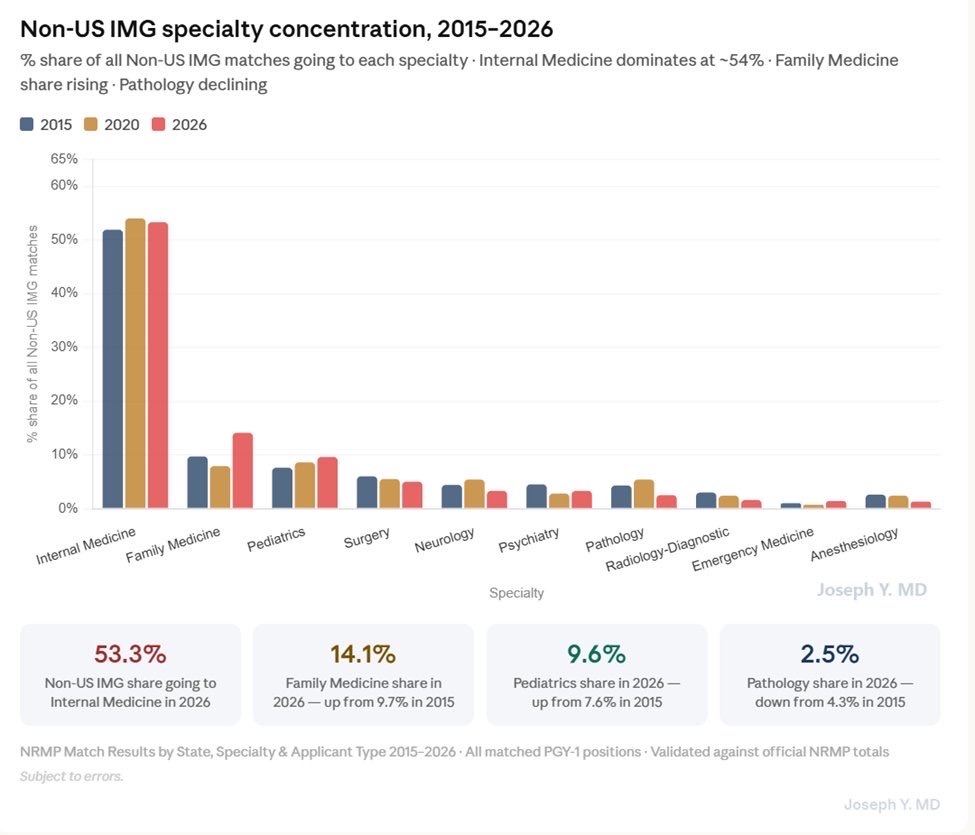
Now, where do these IMGs match? Overwhelmingly in primary care and rural-suburban programs, which historically are areas US MDs don’t prefer. However, AND THIS IS IMPORTANT: JUST BECAUSE US MDs DONT PREFER IT DOES NOT MEAN THEY WOULDNT DO IT IF THAT WAS THEIR ONLY OPTION. Check charts below.
The evidence shows that 67-85% of US MDs would rather take ANY specialty and program over waiting just one more year to try again.
So what does this all mean? 1. The problem is not IMGs 2. The problem is not residency programs 3. The problem is upstream, at the medical school level. Why do we have ~52,000 Americans trying to get into med school and we turn away 58% of them? 4. IMGs are filling a need in a vacuum we created. Getting rid of IMGs would collapse healthcare in its current state 5. No, it’s not true that “Americans wouldn’t take those jobs anyway.” This is a scapegoat that lacks nuance. The match data is evidence against it. We shouldn’t invent arguments to mask bad policy 6. Bad policy persists only when incentives are involved. So who’s involved is the question you should be asking instead of racially targeting doctors. 7. The truth is we do need a diverse workforce, data shows patient-physician congruence is an important aspect of care management 8. We need to stop screwing over American students
It can all be true. This is a complex issue that’s cemented for 100 years now.
Look at this chart. These are American residency programs.
Red = foreign resident doctors. Grey = Americans.
Some hospitals are almost 100% foreign. A lot of these doctors came in on visas. Some have been tied to fake credentials and USMLE cheating scandals.
I pay the premiums. I wait months to be seen. Taxpayer-funded Medicare GME money(over $21 billion a year) is training these foreign doctors instead of Americans.
Noah Smith reacts to a quoted post about homogeneity and immigration politics, calling the figures involved 'creeps' and questioning why anyone would want to live under them. The post is a brief, emotive response with no substantive policy argument.
Among other things, this episode cuts to the heart of longstanding foundational political disputes that are simply unreconcilable, but which can longer be brushed aside. Namely that some people (perhaps most people) prefer to live in a homogenous society, and as America tips toward a majority-minority country, that fundamental preference is under threat.
For a long time, liberals, who have more cosmopolitan preferences, have been able to pathologize the desire for homogeneity and subdue any explicit political effort to maintain a white …
Richard Hanania responds to a post about a Christopher Rufo episode on the 'Indian question,' arguing that most Americans prefer a wealthier, non-racist society. He challenges the view that preferences for homogeneity should prevail.
Among other things, this episode cuts to the heart of longstanding foundational political disputes that are simply unreconcilable, but which can longer be brushed aside. Namely that some people (perhaps most people) prefer to live in a homogenous society, and as America tips toward a majority-minority country, that fundamental preference is under threat.
For a long time, liberals, who have more cosmopolitan preferences, have been able to pathologize the desire for homogeneity and subdue any explicit political effort to maintain a white …
Julius Chapiro, an immigrant doctor, argues that top international medical graduates should be admitted to U.S. residencies while Americans also get fair access. He says programs vary in quality and cites a quoted post on a residency shortfall of about 15,000.
I am an immigrant doctor who came to the U.S. System. I worked my tail off to get in. I believe I add value. I believe I provide good patient care. I love this country more than words can tell. I pay lots of taxes. I am more patriotic than probably 90% of the people around me, including some of those born here. But when I interview, I still expect far more from an IMG and prefer U.S. grads simply because I do not believe the U.S. system should disadvantage Americans. I will say that we can probably do both. Make sure Americans have full access to jobs and education but also accept excellent foreigners. Some programs go too far with IMGs and others can’t fill their spots from the U.S. applicant pool. Not all IMGs are equal. Is the top scoring candidate from the Sorbonne, Heidelberg, Teheran U, AIIMS, Tel Aviv University, etc the same like someone from a provincial hospital in a very below average med school somewhere in Central South East Asia or rural Eastern Europe? Probably not. But even there, each applicant should be fitted on a Gaussian curve. If you are 99th percentile, no matter where you are from, America should bring you in. Top humans exist everywhere. The beauty of America is that everyone can come here and become American. President Reagan said it and I live it.
This is not H1B fraud... These are legitimate applicants from international medical schools who have put in the effort to match into American residencies. Do not displace real problems onto scapegoats.
The real problems are clear in the 3 attachments below, and the summary is: 1. There is a mismatch between how many American students are trained in American medical schools and how many residents we need to train annually (about a 15,000 gap) 2. The mismatch is a consequence of the significant de-accreditation by LCME in the mid 1900s. Since then, we now have the same number of medical schools…
Dr. Joseph Younis argues that international medical graduates are legitimate applicants filling a shortfall of about 15,000 residency slots. He attributes the gap to LCME de-accreditation decades ago and a bottleneck in American medical school admissions.
This is not H1B fraud... These are legitimate applicants from international medical schools who have put in the effort to match into American residencies. Do not displace real problems onto scapegoats.
The real problems are clear in the 3 attachments below, and the summary is: 1. There is a mismatch between how many American students are trained in American medical schools and how many residents we need to train annually (about a 15,000 gap) 2. The mismatch is a consequence of the significant de-accreditation by LCME in the mid 1900s. Since then, we now have the same number of medical schools as we did 100 years ago 3. That led to structural bottleneck in matriculating American premed students into medical schools; we are rejecting over half of many hard working American college students
So, what are IMGs (some are American FYI) doing? Filling in a need that we created to begin with... You need to be asking why we create and maintain these self-inflicted wounds...
How does this happen? There are 300 million Americans. How can it be that we have no young men and women who want to be doctors? Something is fishy. twitter.com/jobsnowpaper/status/21039790559725…
Anish Koka, MD, argues that the U.S. needs outpatient doctors and says Medicare-funded residency programs have produced hospitalists while displacing family physicians. He ties the issue to foreign graduate pipelines and medical school admission policy.
Apologies to hospitalists. Many do amazing things, work hard etc.
My point is that the acute need for patients now and as long as I can remember in America is doctors who will see outpatients 5 days of the week.
And yet the taxpayer has been paying for residency programs that are hospitalist factories.
So in the last 30 years “ progress “ is creating a whole separate class of doctors that see inpatients only. In order to make way for the hospitalists, the prior group that was doing this work (your family practice doctor) had to be displaced (at times forcibly).
The non profit hospital then turns around and complains about the rising cost of care and sends you a $10,000 bill for your one night stay.
And at the end of the day, the end result is a pipeline built for Aga Khan University students to come to America and make a top 1% American income with zero medical debt. This is in the context of 2/3 American applicants being rejected from medical school. Cherry on top is affirmative action policies that make the bar for white / Asian U.S. citizens to get into medical school very high.
So circling back to where this all started : do I think there are lots of qualified American citizens that could do the job trainees at these small programs are doing? 100% yes.
The current state of affairs is a policy choice that works against American citizens, not for American citizens. And American tax payer dollars fund all of it.
There’s no guild interest in importing foreign labor.
This is a function of Medicare funding residency training spots.. lots of hospitals get paid to have a very cheap labor pool so they create these “training programs”
If you ended Medicare GME funding, a lot of these programs that primarily serve as an entry point to the U.S. market for developing labor would disappear.
The vast majority of these programs produce hospitalists — an invented “specialty “ that came into being to shorten length of hospital stays.
Dr. Brent A. Williams argues that training more U.S.-born medical students would be costly and would not guarantee that graduates choose family medicine in rural Alabama or pediatrics in the Bronx.
Yes of course we can educate more US born medical students (expensively), but that does not mean that more are going to choose to be a family medicine doctor in rural Alabama or a pediatrician in the poorest part of The Bronx.
Wilfred Reilly argues that qualified U.S. applicants with high MCAT scores are denied medical school slots while foreign doctors fill residency gaps, and asks whether defense of this goes beyond guild interest.
This is a point for the nativists. We do not, to put it mildly, have a surplus of qualified, affordable docs in every area.
But, every year, something like 30K MCAT takers with scores above the ACCEPTED Black mean - i.e. top 48% - are denied even a med school slot. Later resulting gaps are filled by foreigners: good, nice people...but by no means better qualified than the 2nd tier of Midwestern white applicants.
Expose H1B Fraud posts a video claiming Rochester General Hospital in New York hired 82 resident doctors, with 80 on H-1B or J-1 visas and only two Americans, alleging USMLE cheating among some source countries.