Wednesday, October 7, 2026ArchiveSearchAsk the paper

The Computomatix Times

All the posts fit to save — curated from @computomatix's bookmarks & likes on X

Science & Health

Research, medicine, energy and discovery

U.S. Government, Google and Meta Launch $1.8 Billion AI Biology Data Effort

U.S. Government, Google and Meta Launch $1.8 Billion AI Biology Data Effort▶

Molly O'Shea reports a $1.8 billion coalition including Biohub, the Department of Energy, NIH, Meta, Google DeepMind and Isomorphic Labs to build the largest open, AI-ready biological dataset to help models predict biology and treat disease.

Original post · 1 min read
BREAKING: The U.S. government, Google, Meta & Zuckerberg-backed @biohub are launching a $1.8B push to build the data layer for AI biology.

The goal is to create the largest open, AI-ready biological dataset ever assembled, giving models the data needed to better predict how biology works & ultimately help treat disease.

The coalition is massive:

› Biohub committed $500M
› DOE is investing $500M+ across measurement, modeling & compute
› NIH is bringing $500M+ of federally funded datasets & repositories
› Meta, Google DeepMind & @IsomorphicLabs are jointly investing another $300M

This is effectively an infrastructure buildout for AI biology.

Instead of just building bigger models, they’re attacking one of the biggest bottlenecks in biology AI today, generating standardized, high-quality biological data at massive scale & making it openly available to researchers.

$1.8B committed to turning biology into something AI can increasingly model, predict & engineer.
♥ 1.7K · ⟲ 255 · 👁 109.1KView on X ↗

FDA Clears First Human Age-Reversal Trial From Life Biosciences

FDA Clears First Human Age-Reversal Trial From Life Biosciences▶

Vaibhav Sisinty reports the FDA cleared the first human age-reversal trial, citing animal research on partial reprogramming and Life Biosciences' $80 million raise to pursue it, though the post's claims about mouse and monkey results are not independently verified.

Original post · 1 min read
This is insane 🔥

The FDA cleared the first human age-reversal trial

A Harvard professor proved you can reverse aging by 75% in 6 weeks in mice cured blindness, reversed Alzheimer's, MS, ALS, kidney and liver disease then confirmed it works in monkeys

Now humans are next. Life Biosciences raised $80M to make it happen

His words "The eye is just the beginning. We believe we can treat every tissue. A whole body reset"
♥ 3.6K · ⟲ 607 · 👁 234.5KView on X ↗

Evidence API Lets Users Search 100M Papers for Scientific Claims

Evidence API Lets Users Search 100M Papers for Scientific Claims▶

James Zou announces the Evidence API from Paperclip, which lets users search over 100 million papers to find evidence for and against a scientific claim in about a second. He cites coffee and diabetes risk as an example query.

Original post · 1 min read
What if,
for any scientific claim,
you can search 100M+ papers to find the strongest evidence for and against it
⚡️in 1 second?

That’s now possible with Evidence API! 🚀
paperclip.gxl.ai/evidence-api

For example, does drinking coffee reduce diabetes risk?
paperclip.gxl.aiPaperclipPaperclip — search, read, and analyze 11M+ biomedical papers, regulatory documents, clinical trials, and biological databases (UniProt, PDB, ChEMBL) from the co
♥ 661 · ⟲ 115 · 👁 56.2KView on X ↗

Phone-Free Trial Shows Gains in Attention and Depression Symptoms

Noah Smith shares a post by Brandon Luu, MD, reporting that two weeks without phone internet improved sustained attention by an effect size comparable to about ten years of aging and reduced depression symptoms more than the average antidepressant effect.

Original post · 1 min read
Putting down your phone is more effective than antidepressants
Brandon Luu, MD @BrandonLuuMD
After blocking phone internet for 2 weeks:

1) Sustained attention improved by an effect size comparable to ~10 years of aging

2) Depression symptoms improved more than the average antidepressant effect
♥ 1.4K · ⟲ 137 · 👁 94.9KView on X ↗

Randomized Trial Finds Plain Water Gargling Cuts Respiratory Infections

Randomized Trial Finds Plain Water Gargling Cuts Respiratory Infections

Brandon Luu, MD, highlights a randomized trial in which gargling with plain water three times daily reduced upper respiratory infections by about 36%. He describes it as one of the cheapest cold-prevention interventions.

Original post · 1 min read
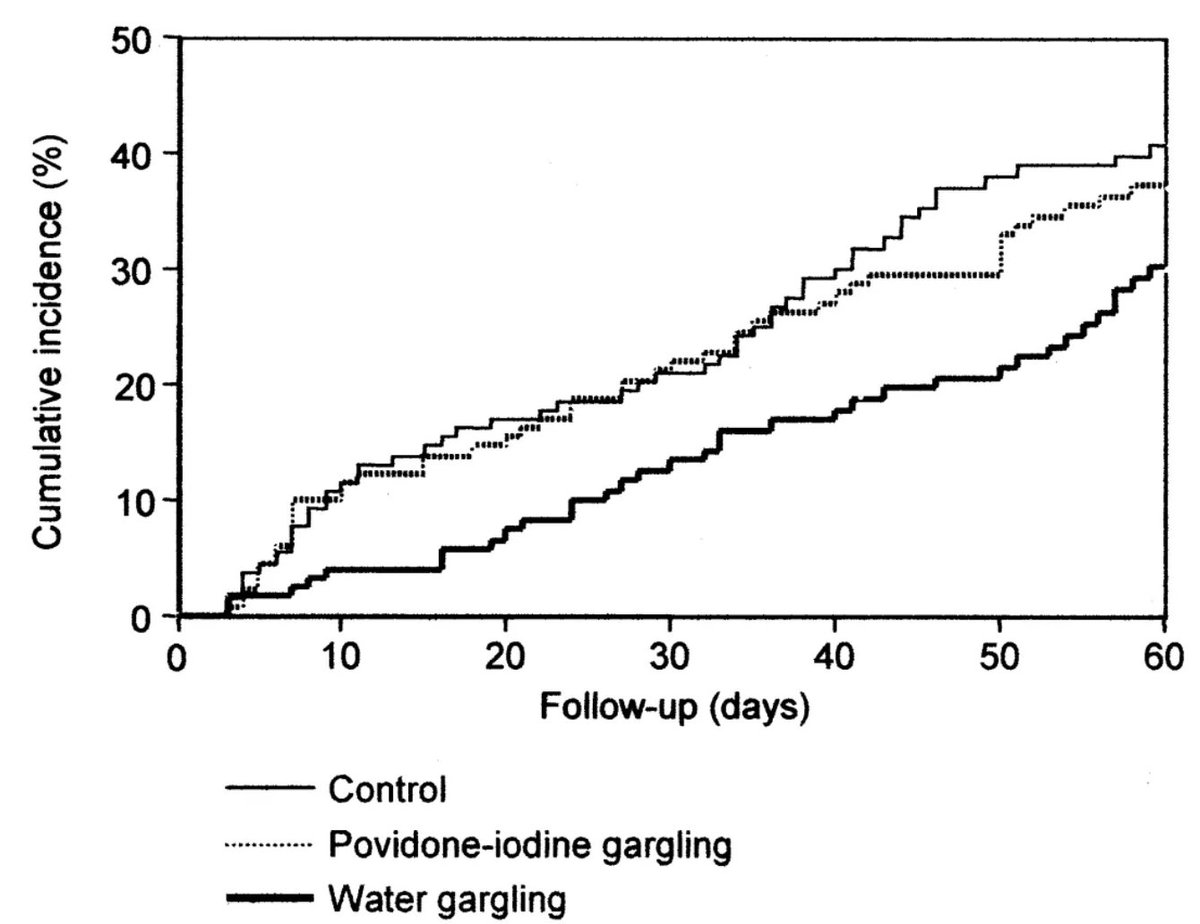
One of the cheapest cold-prevention interventions I’ve seen:

Gargling with plain water 3x/day reduced upper respiratory infections by ~36% in a randomized trial.
♥ 4.9K · ⟲ 285 · 👁 521.5KView on X ↗

Anduril and Palmer Luckey Win Wildfire XPRIZE for Rapid Fire Detection

Palmer Luckey says Anduril won the Wildfire XPRIZE for detecting and suppressing a wildfire within 10 minutes of ignition. He argues that even small gains could save the U.S. roughly $500 billion a year lost to wildfires.

Original post · 1 min read
Thanks, Peter! This is the beginning of the end for destructive wildfires. In a country that loses ~$500B every year to wildfires, even tiny gains make for huge savings, to say nothing of the incalculable value of lives and homes.
Peter H. Diamandis, MD @PeterDiamandis
Congrats to @PalmerLuckey and Anduril for winning the Wildfire XPRIZE - for detecting and suppressing a wildfire within 10 minutes of ignition!
♥ 25.1K · ⟲ 1.7K · 👁 836.4KView on X ↗

Konstantin Saifoulline Builds Interactive Raptor 3 Engine Explainer With Claude

Konstantin Saifoulline describes using Claude Opus 5.5 to build an interactive Raptor 3 rocket engine in the browser, letting users cut it open, follow oxygen and methane through turbopumps, and adjust throttle. He links to the airsup.ai demo.

Original post · 1 min read
Kids will grow up learning like this. It's insane.
Konstantin Saifoulline @konstantinsaifo
I asked Claude Opus 5.5 to explain how a rocket engine works by building an interactive Raptor 3 you can take apart in your browser.

Cut it open, follow the oxygen and the methane through both turbopumps, then throttle it and watch the shock diamonds move.

airsup.ai/rocket-engine
♥ 8.9K · ⟲ 587 · 👁 655.8KView on X ↗

Low Back Pain Linked to Stiff Hips Under Prolonged Sitting

Aakash Gupta explains that prolonged sitting stiffens the hip joint, forcing the lumbar spine to absorb rotation it is not built for, a mechanism he links to chronic back pain and the high US cost of back and neck pain. The post also cites tennis players' hip mobility work.

Original post · 2 min read
Your hip is a ball and socket built to rotate about 40 degrees. Each vertebra in your lower back can manage about 2. Most chronic back pain lives in that mismatch, and almost everyone treats the wrong joint.

Here's the mechanism. The average adult now sits 9 to 10 hours a day. Sitting keeps the hip parked in one position, so the capsule stiffens, the hip flexors shorten, and that 40 degrees of rotation quietly shrinks to 15 or 20.

But your body still needs the rotation. Every step you take, every time you twist to grab something or swing anything, that motion has to come from somewhere. So the demand moves one floor up, to lumbar vertebrae that were engineered for stability, and they start absorbing rotational load they were never built to handle. Physical therapists call this the joint-by-joint model. A mobile joint sits under a stable one, and when the mobile joint locks up, the stable one gets drafted into a job it's terrible at.

Which explains why stretching and massaging your sore back barely works. You're treating the overworked joint instead of the one that quit.

The scale of getting this wrong is wild. Low back pain is the leading cause of disability on earth, and the US spends about $134 billion a year on low back and neck pain. More than it spends on diabetes. More than heart disease.

Pro tennis players figured this out because their sport punishes stiff hips instantly. A forehand generates its power as rotation from the ground up through the hips, and a player whose hips can't rotate ends up asking his spine to. That's why the fittest athletes alive spend part of every day sitting on a mat holding positions for 30 seconds that look like they're doing nothing.

The part that hurts is usually just the part covering for a joint that stopped doing its job.
テニス6年生のインプレ日記 @fTR2JPf4s1MZOYj
テニス世界ランキング1位のアルカラスもやってる。これマジで腰痛にきく。これ始めてからぎっくり腰0になった。 twitter.com/kafuu_seikotuin/status/21044448404…
♥ 316 · ⟲ 41 · 👁 41.4KView on X ↗

New Nature Study Finds Semaglutide Extends Lifespan in Animals

Semaglutide and the Longevity Question

David Sinclair links to a article asking whether GLP-1 drugs are longevity drugs, citing a new Nature study reporting that semaglutide extended lifespan in preclinical experiments.

Original post · 1 min read
Are GLP-1 meds longevity drugs in disguise?
lifespan.com/blogs/magazine/semaglutide-and-th…
lifespan.comSemaglutide and the Longevity QuestionThere has been plenty of chatter about whether GLP-1 drugs might be longevity drugs in disguise. A new study in Nature adds the most direct preclinical evidence
♥ 483 · ⟲ 49 · 👁 71.0KView on X ↗

Sinclair Highlights Study Linking Muscle Atrophy to Fewer Myofibrils

David Sinclair shares findings from a Journal of Physiology paper showing muscle fibre atrophy during aging and disuse is mainly associated with fewer myofibrils rather than smaller myofibrils. He quotes David Sabatini calling the paper important.

Original post · 1 min read
The paper shows that muscle fibre atrophy during both aging and disuse is mainly associated with a lower number of myofibrils, rather than a smaller size of the myofibrils 💪
David M. Sabatini @DMSabatini
♥ 620 · ⟲ 34 · 👁 83.5KView on X ↗

Molekul Launches Searchable Database of Russian and Soviet Pharma Research

Peptide & Actoprotector Research | Molekul

PepMariner announces molekul.io, a searchable website cataloging Russian and Soviet pharmaceutical research on peptides, actoprotectors, nootropics and obscure compounds. The author says the site is a work in progress and invites requests for additions.

Original post · 1 min read
I finally put together a website for all the Russian/Soviet pharma research I’ve been digging through.

molekul.io

Figured this would be a lot easier than trying to search through months of my posts every time you want to find something.

Peptides, actoprotectors, nootropics, papers, old Soviet research, obscure compounds, etc.

It’s still very much a work in progress. I’ll keep adding papers, compounds and research as I find it.

Basically turning the rabbit hole into a searchable database.

Let me know what you want me to add.
molekul.ioPeptide & Actoprotector Research | MolekulExplore peptide, bioregulator, nootropic and actoprotector research. Original Russian sources, evidence limitations, and a transparent bibliography.
♥ 122 · ⟲ 12 · 👁 9.5KView on X ↗

Huberman Clip Outlines Daily Breathing Practice for Focus

Huberman Clip Outlines Daily Breathing Practice for Focus▶

Huberman Lab Clips shares a short video describing a 5 to 10 minute daily attention practice based on breath or a visual target, citing Wendy Suzuki's NYU lab research on focus and memory.

Original post · 1 min read
Doing this for 10 minutes a day will improve your focus:

- Sit or lie down, close your eyes and focus on your breathing for 5-10 min a day
- Your attention will drift. Bring it back to the breath. That is the practice
- Eyes-open version works too: hold a visual target, blink freely, return your attention to it over and over
- Any time of day works, though late night disrupts sleep for some people
- Miss a day, no big deal. Get right back to it the next day

Wendy Suzuki's lab at NYU: 10 min a day improves focus, memory and recall. Zero cost.

@hubermanlab
♥ 541 · ⟲ 54 · 👁 13.7KView on X ↗

Researchers Warn of Slow Dying and Multimorbidity in Aging Populations

Researchers Warn of Slow Dying and Multimorbidity in Aging Populations

David Sinclair shares a paper arguing that death is increasingly preceded by long periods of decline marked by multimorbidity, which he calls slow dying. He argues that efforts should target the biology of aging rather than its symptoms.

Original post · 1 min read
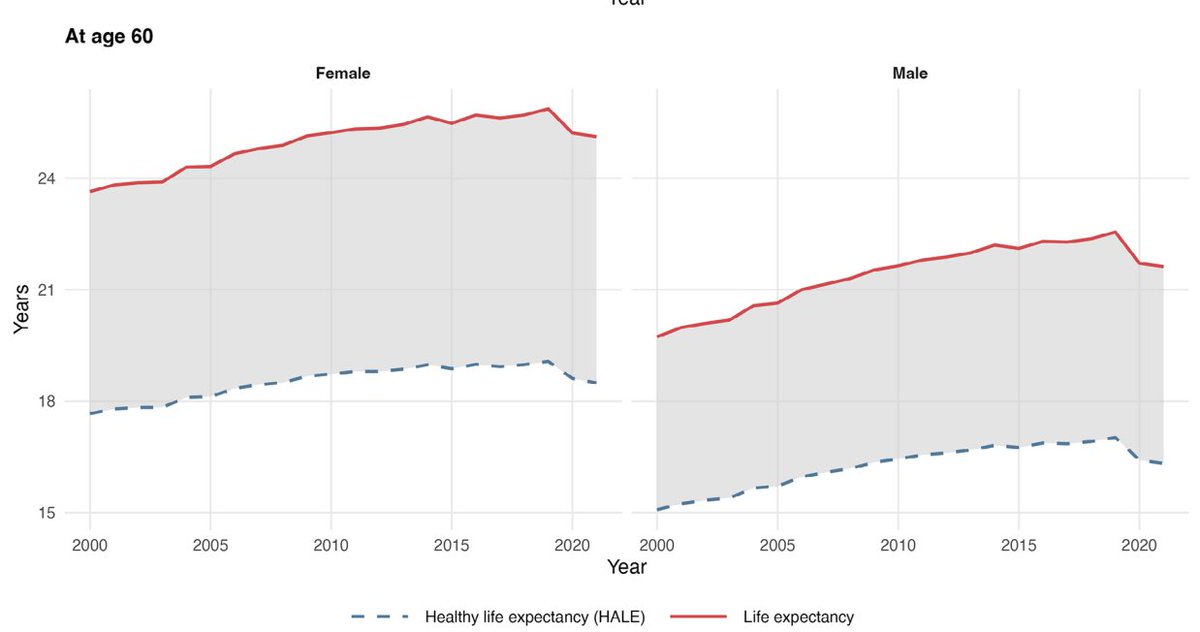
We must do better.

"Death is now less often sudden and more often preceded by prolonged periods of decline characterized by multimorbidity. This ‘slow dying’ has profound implications"

Let's target aging, the cause, not the symptoms

onlinelibrary.wiley.com/doi/pdf/10.1111/joim.7…
♥ 590 · ⟲ 50 · 👁 30.4KView on X ↗

Trackmind Shares Stanford Hidden Markov Model Paper Used by Quants

Trackmind Shares Stanford Hidden Markov Model Paper Used by Quants

Trackmind promotes a 17-page Stanford paper that it says sets out the Hidden Markov Model framework used by quant firms such as Jane Street and Two Sigma, released free. The post is an enthusiastic summary and quotes a separate thread on randomness and measurement.

Original post · 1 min read
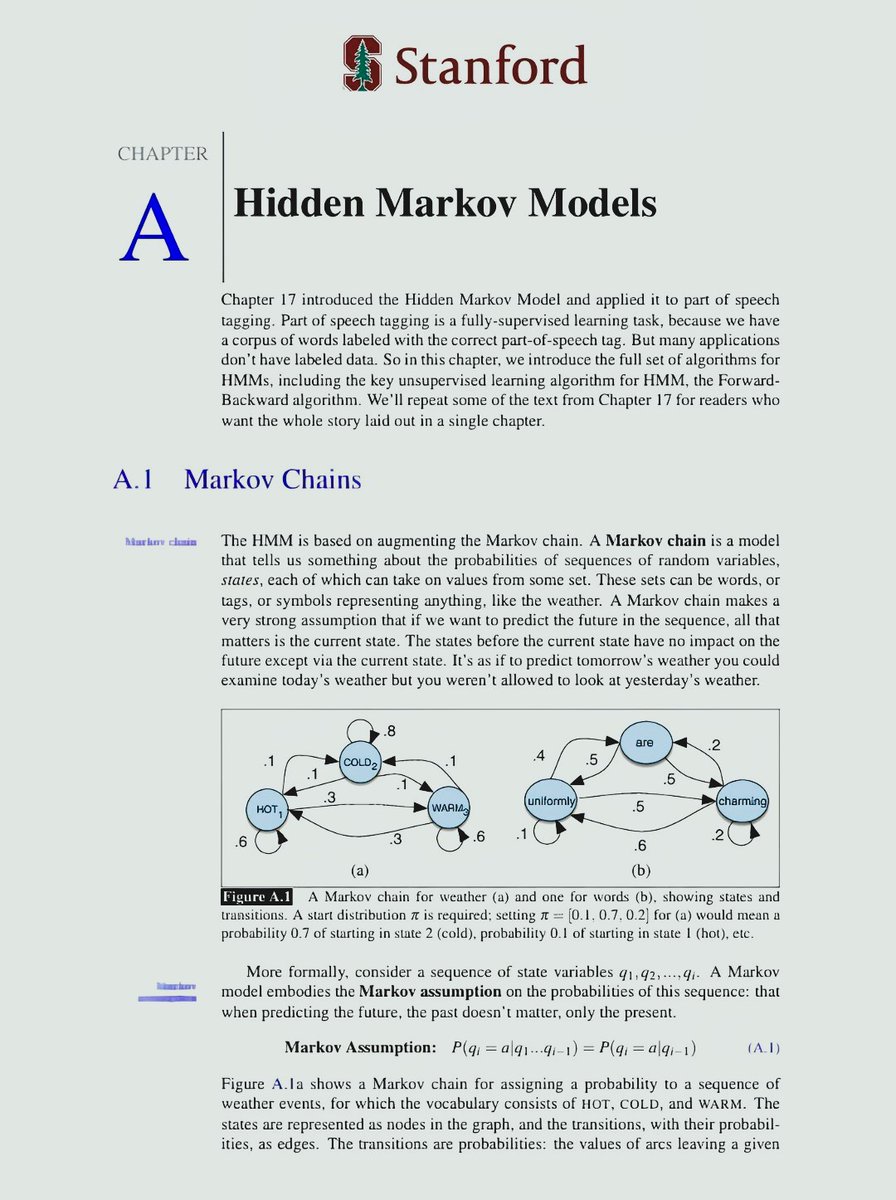
this Stanford paper is f*cking insane

they just compressed the entire hedge fund playbook into a 17-page pdf.

Stanford put out the complete Hidden Markov Model framework that quants at firms like Jane Street and Two Sigma are known to run, and released it for free.

the crazy part is this isn't some watered-down summary, it's the actual mechanics behind models these desks keep locked up internally.

most people assume this stuff never leaves institutional walls.

this one hands you the framework directly, no gatekeeping.

bookmark it and read before someone takes it down.
Trackmind @0xTrackmind
You Were Taught to Fear Randomness and Called It Bad Luck. The Real Thing Can Be Calculated. — Randomness is not the enemy of understanding. It is the last thing most people ever learn to measure, and once you can measure it, it stops being frightening and starts being useful.
Almost everyone
♥ 784 · ⟲ 112 · 👁 103.5KView on X ↗

Katie Mishra Reports Mood Improvement After Starting Vitamin D

Katie Mishra says she felt a significant rise in baseline happiness after starting vitamin D about six months ago and suggests people of Indian descent may be genetically deficient. She quotes a post citing a study linking high vitamin D to lower depression and panic.

Original post · 1 min read
and if you're of indian descent (me), you're likely genetically deficient

felt a significant change in baseline happiness after starting ~6 months ago. took years for the rebellious daughter (me) to admit @bloodcure was right
alexei @alexeixbt
vitamin D crushes depression: in a landmark study with over 7000 middle aged adults, high levels of vitamin D were associated with 43% lower depression and 67% lower panic.
♥ 629 · ⟲ 25 · 👁 130.8KView on X ↗

Sinclair Shares Study Linking Purpose in Life to Lower Mortality

David Sinclair amplifies a post citing a 2019 JAMA study of nearly 7,000 adults, which found that a strong sense of purpose was associated with lower mortality independent of wealth, health, exercise and depression. The original post stresses purpose as daily actions that matter beyond oneself.

Original post · 1 min read
Important
Anish Moonka @anishmoonka
Having a reason to get up in the morning cuts your risk of dying by more than half. A 2019 JAMA study of nearly 7,000 adults found that people with the strongest sense of purpose had the lowest mortality, and the effect was independent of wealth, health, exercise, and depression.

Purpose does not mean ambition. It means feeling that your daily actions matter to something beyond yourself. A grandparent raising a garden. A retired teacher who tutors. A caregiver who shows up every morning. The research does not measure achievement. It measures the feeling that what you do connects to something.…
♥ 960 · ⟲ 107 · 👁 88.5KView on X ↗

Visual Chart Compares Protein Return on Investment Across Common Foods

Visual Chart Compares Protein Return on Investment Across Common Foods

Neville Medhora shares a simple graphic, credited to Nicko Dumadaug, showing protein return on investment for different foods, and notes the same post included charts for carbs and other nutrients.

Original post · 1 min read
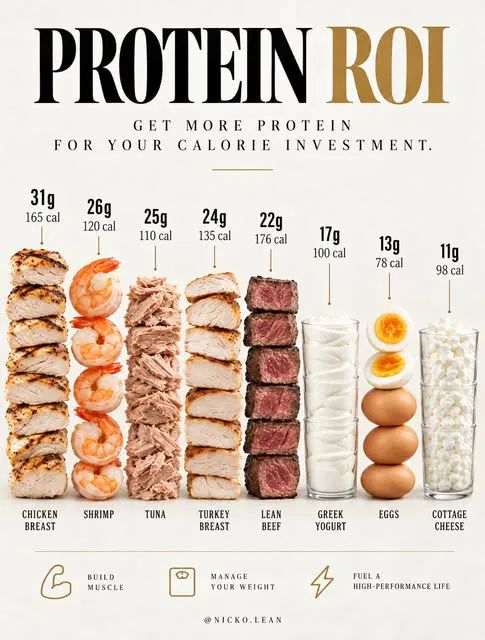
I LOVED this simple layout for showcasing the protein ROI (return on investment) for different foods.

This same post also had a bunch for carbs and others.

Sometimes I see easy visuals like this and instantly learn something new.

From: Nicko Dumadaug
♥ 6.7K · ⟲ 356 · 👁 602.1KView on X ↗

David Sinclair Highlights Sweet Amino Acid Found in Asteroids

David Sinclair Highlights Sweet Amino Acid Found in Asteroids

David Sinclair promotes an amino acid he calls his favorite, which he says is found in asteroids and tastes as sweet as sugar, citing his PhD research. He links to a new episode of his YouTube show.

Original post · 1 min read
This amino is my favorite. It is found in asteroids and is as sweet as sugar! Trust me, my PhD is on it
David Sinclair @davidasinclair
♥ 571 · ⟲ 38 · 👁 69.5KView on X ↗

Engineer Says Subtle Vulnerability Was Patched in an Hour

Engineer Says Subtle Vulnerability Was Patched in an Hour

Oren Yomtov reports that a critical, subtle vulnerability was found by AI-augmented researchers and patched within an hour, with no known attack. He argues well-designed software can still hide such issues that demand deep security experience.

Original post · 1 min read
i just won $200k using this one prompt
Anicet @AniC_dev
a new critical vuln was found by AI augmented researchers, patched by us 1hr later

this time it was quite twisted, took me a good amount of time to grasp

it was never used to attack us, as far as we can dig

I'm now convinced that even well designed/written software can have so many such small, twisted issues

it takes good experience with vulnerabilities and long chains of actions to suspect, find and exploit them

10yoe+ and solid CS knowledge is not enough

beyond the classic security footguns, that we, software engineers, know about and try hard to prevent

some class of issues, often mo…
♥ 2.3K · ⟲ 121 · 👁 330.3KView on X ↗

Microsoft Warns of Mini Shai-Hulud npm Supply Chain Attack

Microsoft Warns of Mini Shai-Hulud npm Supply Chain Attack

Microsoft Threat Intelligence reports an active npm supply chain attack that compromised maintainer accounts and published credential-stealing packages including keyv and servicetitan packages. The malware self-propagates by republishing infected package versions.

Original post · 1 min read
Microsoft Threat Intelligence is tracking active Mini Shai-Hulud npm supply chain attacks in which a threat actor compromised trusted maintainer accounts to distribute credential-stealing malware.

Compromised packages (confirmed malicious) include:
- keyv@6.0.0
- file-entry-cache@11.1.6
- cache-manager@7.2.10
- cacheable-request@13.0.20
- qlik/api@2.14.2
- cacheable/memory, /utils, /net
- 17+ servicetitan/* packages (eslint-config, anvil-themes, table, form, log-service, etc.)

In this attack, a malicious preinstall hook launches an obfuscated dropper (setup.mjs) that downloads a Bun binary from GitHub and executes a credential-stealing payload, either Math_Symbol.js or Math_Init.js.

The payload is a Mini Shai-Hulud variant, a self-propagating npm supply-chain malware family. It harvests npm, GitHub, cloud and continuous integration (CI) credentials, exfiltrates collected secrets, and uses stolen publishing access to inject itself into package tarballs, increment their versions and republish the compromised releases.

Microsoft observed the same pattern across all affected packages, suggesting a single actor using multiple stolen tokens.

Microsoft Defender for Endpoint customers should act on these alerts: “Trojan:npm/MalBun.A”
♥ 1.1K · ⟲ 239 · 👁 1.3MView on X ↗

Cardiologist Recommends Low-Dose Tadalafil for Blood Vessel Health

Cardiologist Afshine Emrani writes that he has long recommended low-dose daily tadalafil for vascular benefits. He cites a recent study suggesting the drug may make it harder for cancer to spread, and promises a thread on mechanism, evidence and who should avoid it.

Original post · 1 min read
1/10 I'm a cardiologist. I've recommended low-dose daily tadalafil for years — not for the bedroom, but for the blood vessels.

Most people think of these as sex drugs. I think of them as vascular drugs that happen to work below the belt.

And a study published two weeks ago suggests they may do something nobody predicted: make it harder for cancer to spread.

Here's the complete picture — the mechanism, the evidence, who should consider them, who absolutely shouldn't, and what I actually do.
♥ 2.0K · ⟲ 146 · 👁 1.1MView on X ↗

Sinclair Says He Takes Low-Dose Daily Tadalafil for Brain Health

David Sinclair says he takes low-dose daily tadalafil for long-term organ health, particularly the brain, citing vascular dementia as a preventable cause of dementia. The post quotes a cardiologist thread on the drug's vascular benefits and a study suggesting it may slow cancer spread.

Original post · 1 min read
I take low-dose daily tadalafil for long-term organ health, especially the brain. Vascular dementia is the second most common and most preventable cause of dementia
Afshine Emrani MD FACC @afshineemrani
1/10 I'm a cardiologist. I've recommended low-dose daily tadalafil for years — not for the bedroom, but for the blood vessels.

Most people think of these as sex drugs. I think of them as vascular drugs that happen to work below the belt.

And a study published two weeks ago suggests they may do something nobody predicted: make it harder for cancer to spread.

Here's the complete picture — the mechanism, the evidence, who should consider them, who absolutely shouldn't, and what I actually do.
♥ 4.3K · ⟲ 260 · 👁 780.0KView on X ↗